Desegregation Proposal Depends on Parents' Choices
The website for the East Village Community School describes a multicultural curriculum that helps children "appreciate diversity" and develop an understanding of racism.
Yet, a proposal to set aside seats for low-income students, something that seems to align with the school's values, has divided parents.
The debate directly reflects the changes in School District 1, which spans from the East Village to the Lower East Side. The vast majority of students in the district are Latino and black; at East Village Community School, more than half the students are white, about 20 percent are Hispanic and fewer than 10 percent are black.
The school also has fewer low-income children than the district overall, just about 25 percent compared to almost 80 percent.
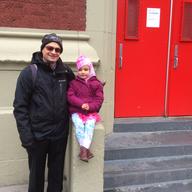
That's not how it was just a few decades ago. Todd Ferrara, a parent of an East Village student, attended the school in the 1970's. He said he was one of very few white students.
"I did fine academically," he said, recalling how he played bass in the orchestra. "I made it to Stuyvesant High School. I became a lawyer."
Rising real estate prices certainly played a role in the changes but so did different enrollment policies, according to Adam Lubinsky, a partner with the planning and design firm WXY, which was hired to study the district's demographics.
Back in the 1990's, Lubinsky said most schools in District 1 had about the same mix of kids as the overall district because they were allowed to consider race and family income when making assignments.
But Mayor Michael Bloomberg's administration switched to a blind lottery system, after a 2007 U.S. Supreme Court ruling made it harder to use race as a factor. Without any built-in controls, Lubinsky said a few schools became whiter and wealthier than the district average, while his study found others became almost entirely black, Latino and low-income.
"You definitely saw certain schools where the white population was beginning to really cluster," he said.
Which brings us to the latest effort in District 1. Its Community Education Council wants to make socioeconomic status a factor in future admissions so low-income students are spread around more evenly - a system called controlled choice. It's seeking parents' support, in order to encourage approval by the Department of Education.
Martha Hornthal, who has a daughter at the East Village Community School, feared some low-income kids could "slip through the cracks" if there weren't enough social services to help them.
Others, like Gamaliel Isaac, worried more about the impact on the school.
"If you try and transfer badly behaved kids into another school, it’s like taking a rotten apple and putting it in a barrel," he explained. "You spoil all of the apples right?"
That argument, equating low-income children with bad behavior, angered many parents. Nandi Bosia said she confronted a man who said something similar at a parent meeting.
"I said to him, 'I work on Wall Street. I still don’t make enough,'" she said. "I was at a family shelter. And I said, 'you all don’t even know that and I’m the fundraising co-chair.'"
Bosia, who's black, said her daughter sometimes felt isolated and wished there were more children of color at her school.
Chancellor Carmen Fariña is attending a District 1 Town Hall on the proposed enrollment changes tonight, Feb. 23, at 6:30 p.m.

WNYC is funded by sponsors and member donations