One District's Diversity Plan Rests in Chancellor's Hands
New York City Schools Chancellor Carmen Fariña said she wanted to see more diversity in the schools, but stopped short of endorsing a resolution by one district that would like to consider families' socioeconomic status in school enrollment.
At a town hall meeting on the Lower East Side on Tuesday, the chancellor said she would consider it, in consultation with a close deputy.
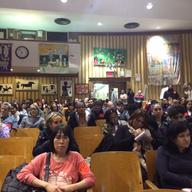
"I want to see diversity in schools organically. I don't want to see mandates," Fariña told the crowd at P.S. 20 on Essex Street. "I want to see how do different communities come up with different ideas."
The chancellor said diversity was one of her top three goals but there were several ways to achieve it, including rezoning schools.
"We hope to have at least, I don't know, 10 different ways of doing this in ways that make sense. But it also makes sense coming out of community interest and community involvement and also community conviction," she said.
Fariña noted that two of the seven schools selected for a pilot program to improve diversity are in District 1, which spans from the East Village to the Lower East Side in Manhattan.
But district leaders wanted to go further. They proposed a system known as controlled choice which would use an algorithm to assign incoming students to schools based on their top choices but also on whether they qualify for free and reduced price lunch.
"The whole premise is that we desegregate our district so we have equitable and equal access to education," said Arnette Scott, who had a child at the Neighborhood School.
The local Community Education Council commissioned a study that found six schools with higher than average test scores had more white students, and fewer low income students, than the district wide average. But many other schools had high concentrations of black and Latino students, students in temporary housing, English Language Learners and children who qualified for free and reduced price lunch.
The council cited studies finding integration helps everyone both socially and academically.
Scott said more than half of the 32 schools in the district supported the resolution for controlled choice, based on votes by their school leadership teams. But details are scarce; there was no firm proposal for what percentage of low-income students should be admitted in each school. The district is using a grant to consider these details, making it unlikely the proposal could be adopted by the Department of Education in time for the fall.
Scott acknowledged there are concerns about the plan.
"Some principals are worried that maybe their money won't be the same," she said. Those that lose students who qualified for free and reduced price lunch would potentially get less federal Title 1 money, she said, while schools that wound up with more low-income students might have trouble raising as much money from their parent associations.
Schools that support the resolution include the East Village Community School, where parents had a lively debate. Principal Bradley Goodman sent out an email saying the clustering of students by race and socioeconomic status is harmful to all students at all schools:
"We therefore support the principles, goals and ethos of a 'controlled choice' admissions protocol as long as it is an integral component of a larger effort to increase diversity in our public schools that includes school improvement initiatives, and is piloted with a gradual roll-out with transparency and evaluation," he said.
But not all parents were on board.
Parent Peter Liem, of P.S. 20, called the proposal "an awkward and ham fisted way" of trying to accomplish ethnic diversity and socioeconomic diversity "in a way that is probably not going to satisfy parents."
He suggested more dual-language programs like the ones at his school for Chinese and Spanish.

WNYC is funded by sponsors and member donations