Jazz Greats Dizzy Gillespie, Tyree Glenn & Walter Thomas
The Douglas P. Cooper Distinguished Contemporaries Collection | Dec 31, 2015
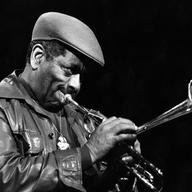
Doug Cooper sits down with trombonist Tyree Glenn and saxophonist Walter Thomas at Glenn's home in Englewood, New Jersey. When the doorbell rings, they are joined by Bebop originator Dizzy Gillespie.
The Interview
Cooper asks Glenn about his earliest musical memories. Glenn recounts that as a kid in Corsicana, Texas, he played the trombone and vibraphone in local bands before moving to D.C. In the early 30's to work with iconic Swing bands. He joined Duke Ellington in 1948 and then played with Louis Armstrong's All-Stars all over the world, 1965-1968. He led his own band and built up an extensive discography.
Walter Thomas brings up Dizzy's famous "bent up" trumpet, which Gillespie had damaged when it fell at Snookie's. Thomas had taken it to a shop which said the repair could harm the trumpet. Dizzy actually liked the sound he got out of it, so the Martin Co. specially designed a bent horn for him.
Cooper asks Gillespie about his unique manner of playing with his cheeks puffed out. He said he'd gotten a letter from a Doctor Compton at Walter Reed Medical Center, calling them Compton's pouches. Dizzy later dubbed them Gillespie's pouches.
(Gillespie's beret, spectacles and scat singing all contributed to his association with Bebop).
Cooper asks Gillespie about his interest in music beyond his own instrument. He talked about writing music and the African influence. Thomas injected the notion that all music had arithmetic connections. In 1956 Gillespie organized a tour for the State Department. It was so well received that he was called "The Ambassador of Jazz."
_______________________________________________________________________________________________________________
The Douglas P. Cooper Distinguished Contemporaries Collection (1967-1974) contains rare interviews with influential writers, statesmen, artists, songwriters, journalists and others who have left their mark on our culture.
The Origins of The Cooper Collection

Douglas P. Cooper
WNYC is funded by sponsors and member donations