Donald Byrd's Theory of Disruption
WNYC transcripts are created on a rush deadline and the text may be updated or revised in the future. Accuracy and availability may vary. The authoritative record is the audio record.
Richard Hake
It’s Morning Edition on WNYC. I'm Richard Hake. A new work of dance premiering tonight draws from the story of a racist mob attack in Oklahoma back in 1921. Greenwood will be performed by the Alvin Ailey Dance Theater. It explores the story of a massacre in the affluent black Greenwood district of Tulsa, known at the time as America's black Wall Street. Donald Byrd is the choreographer who created the piece. And it's our pleasure that he's with us this morning in the studio, Mr. Bird. Good morning.
Donald Byrd
Good morning.
Richard Hake
So the Tulsa race massacre. I mean, it took place after a young black man was arrested for attempted assault on a white teenager, then a mob set fire to the whole neighborhood burning 35 blocks of it to the ground. Historians believe as many as 300 people may have been killed, but no one was ever held accountable. Right. And now you've made a dance.
Donald Byrd
Well, now I've made a dance and I think I want to just clarify one thing. You know that we don't know whether he actually attacked or not. His name was Dick Roland. What we do know is that he went into the elevator that was operated by a young woman named Sarah Page, a young white woman. And at some point while he was in the elevator with her, she screamed, he ran out of the elevator and ran away. And then that led to the incident. So we don't really know what happened in the in elevator
Richard Hake
Right. And you also present different versions present different versions of the dance.
Donald Byrd
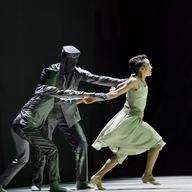
Yes. So there the speculations that he kind of stumbled it and step just stepped on her toe. And she screamed, and he was afraid and he ran away. And there's another version that they had, they knew each other, that they were romantically involved. And she screamed because he stumbled again and stepped on her toe. And then there's another version that says that he actually attacked her. So I kind of present those three versions in the piece.
Richard Hake
Now what brought you to, you know, kind of create this now?
Donald Byrd
Over the last several years, I've really been interested in America after reconstruction, and so and the emergence of the creation of the Jim Crow era, especially 1921, which was like right in the middle of it, actually. And so I, because a lot of this history is lost or unknown. So I've been very much interested in kind of putting it back in front of the public. And so doing it with dance, which I think kind of speaks to people's emotions, that that's a good way to do that.
Richard Hake
You've described your work as a theater of disruption. Yes. What do you mean by that?
Donald Byrd
What do I mean by that? I mean, some of it is technical. But I think basically what I mean by that is that it disrupts our thinking about things, especially in particular things around race.
Richard Hake
Who is this specific piece for? Who are you talking to here?
Donald Byrd
Well, I think it's for everybody, meaning that it's not because I think Black people, many young black people in particular don't know any of these stories from that period in time. It's for many white people who don't know them as well. And so it really is for a broad spectrum of, of audiences. And you know, the public that because it's unknown, it's not like it's the Declaration of Independence. And we might note something about it. These are things that have actually been forgotten. And in some cases, they were forgotten because they were deliberately kind of wiped from the consciousness by taking things out of the public record or the public records disappearing, that reference them. So it's really kind of trying to put it back in the public consciousness again.
Richard Hake
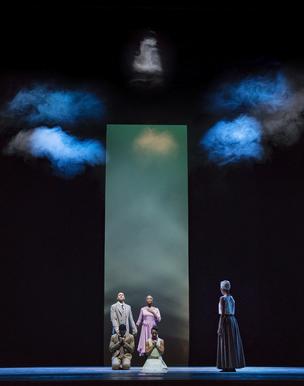
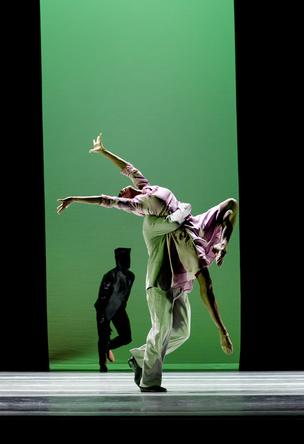
Alright, so now Alvin Ailey. So iconic. You can picture the dancers on the stage. Can you describe what this is going to look like?
Donald Byrd
What is it going to look like? Wow, what is it gonna look like? I mean, I think it's what's the word? I was thinking earlier, somebody said to me, it's almost like Jordan Peele piece, the film director, that it feels like that, you know, there's things about it that it just you're slightly on edge because it has a I want to say creepy, but that's not quite the word, but it's something like that, you know, it creates a certain amount of discomfort.
Richard Hake
But it should, it should.
Donald Byrd
Yeah, the materials. Yeah. So you're like on the edge of your seat, because what does that mean? What is that? Why does it look like that? Why does it feel like that? So the piece is a combination of things that are that we recognize as being realistic or naturalistic, and then things that are very abstract.
Richard Hake
Choreographer Donald Byrd. Greenwood opens tonight at City Center and runs through Ailey season which ends January 5. Mr. Byrd, thank you so much for joining us.
Donald Byrd
My pleasure.