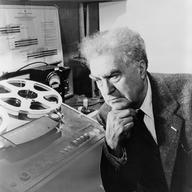
Edgard Varèse - Poeme Electronique
More than a quarter of a century had passed between Edgard Varèse's experiments in the 1920s with electronic sound and his then recent composition, Poeme Electronique (1957-1958). This particular piece was composed for the Phillips Pavilion at the 1958 Brussels World's Fair and was an example of what Varèse referred to as "organized sound", which expanded the composer's potential for sonic expression beyond traditional classical norms, be it through the use of rhythm, tone color, silence and layering via magnetic tape. Within his work, there are "no chords, no harmonies, no imitations of instruments, and no cliches of composition that have been done a thousand times over." Instead of strings and brass, there are sirens, human cries, explosions, and electronic squelches.
The Philips Pavilion itself, designed by architect Le Corbusier, had over 400 loudspeakers spread throughout the interior which created an immersive sonic experience for the fair goer. Adding to the already disorienting journey was a film that played shifting patterns of colored light and abstract images on the walls. One account said that the interplay of light and sound "evinced reactions almost as kaleidoscopic as the sounds and images they encountered – terror, anger, stunned awe, amusement, wild enthusiasm."
The original Poeme Electronique was meant to be played on three separate 1/2 inch tapes for three separate speaker systems. The piece played here, however, is only a 2-channel stereo recording that was released commercially the following year.
WNYC archives id: 58586

WNYC is funded by sponsors and member donations