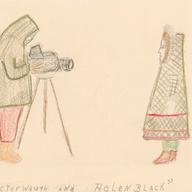
Explorer Dentist Worries Big Sugar
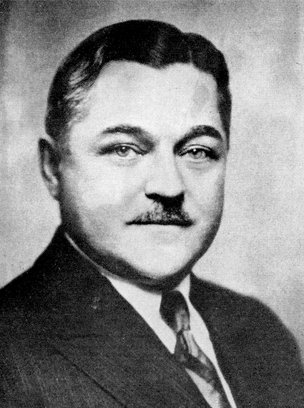
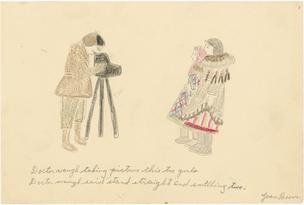
On April 16, 1940, Leuman Maurice Waugh (1877-1972), a dentist, photographer, and professor of orthodontics at Columbia University, sat down in the WNYC studio for an interview. Waugh wasn't your typical neighborhood dentist filling cavities and fitting kids with braces. He took his knowledge and concern for dental health to remote indigenous communities in the ice-bound reaches of Labrador, Canada between 1921 and 1927 and Alaska from 1929 to 1938.
Unfortunately, a recording of the interview has not survived. A transcript of it, however, has. Thanks go out to, of all people, the Sugar Research Foundation --a trade industry group of beet and cane growers and their refiners founded in June 1943. Now known as The Sugar Association, they distributed a transcript of the WNYC broadcast in an October 1944 confidential bulletin to their members headlined, "Sugar, The Miracle Product." The published radio transcript was followed by comments and correspondence from several other 'men of medicine' effectively rebutting Dr. Waugh by suggesting that, on the question of refined sugar's role in poor dental health, the jury is still out. After reading the WNYC interview below you'll see why the sugar growers and refiners were concerned. (Note: The interview contains some language acceptable in 1940, but not today).
L. M. Waugh, D.D.S. as interviewed on WNYC, April 16, 1940
ANNOUNCER: Dr. Waugh has made many adventurous voyages to visit the Eskimos in Northern Labrador and Arctic Alaska. He has made most of these cruises in small boats and has brought back valuable information about the relation of food to the general health of the Eskimos and particularly to the health of their teeth. He could tell us, if time permitted, of dangers encountered, of pathetic and humorous experiences, but there is no story more thrilling, or in fact more important to us, than the one he will tell today of how we can prevent decay of the teeth--yes, almost without the aid of the dentist.
DR. WAUGH: Thank you. The important message that I have for every member of this radio audience this morning is that it lies within the power of nearly everyone listening to prevent decay of his teeth. This can be accomplished by simple attention to diet and reasonable care of the mouth.
LISTENER: Dr. Waugh, before you continue, please explain in detail what diet we must maintain to prevent decay. I have the responsibility of rearing children, and I'm afraid that I may have to learn all over again how to plan meals.
DR. WAUGH: That will not be necessary. You need only to reduce the refined sugar in your daily menu. Do this and eliminate candy and you can control, and even prevent, tooth decay, which is the most common disease of mankind. Remember this: 'The unsweetened tooth does not decay'.
ANNOUNCER: A disease indeed, and a very serious one. It is the most constant and the most general disease of mankind. While it is usually not alarming at the beginning, it very often causes much suffering, and its effects may eventually spread to almost any part of the body and become so severe as to result in death. It is also man’s most expensive disease, the cost of dental care in the United States alone being reliably estimated at $445,000,000 annually. This does not include the time lost by school children and grown-ups while suffering from the disease and having it treated. This, if computed, would amount to much more.
ANNOUNCER: I know, Dr. Waugh, that for years you have devoted much of your time to determining the cause of tooth decay. Why did you choose the Eskimo for this study?
DR. WAUGH: Because of a statement made more than thirty years ago by Dr. Aleš Hrdlička, National Museum, Washington, D. C, He said, 'The primitive Eskimo is blessed with the best teeth of any known race'. At his invitation, we examined his large collection of Eskimo skulls at the Museum. It then became our ambition to see the living mouth and we naturally began our studies among these people,
LISTENER: Where did you begin your study and how long did it take?
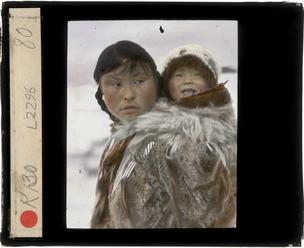
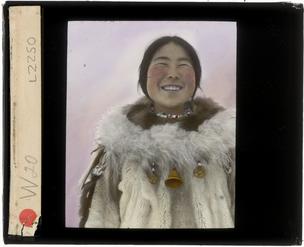
DR. WAUGH: Our study was begun in Labrador and embraced five summer- cruises. On our first trip, we reached only the most southern Eskimo settlements, at Hopedale and Makkovik, and, to our utter amazement, we found not the best teeth, but the worst that we had ever seen. We determined then and there to find out why. We were told by the missionaries that tooth troubles were unknown before 1902. Then prospectors came and traded "civilized" foods to the Eskimos, wheat flour, molasses, sugar, and tea. The Eskimos' native foods are seal, walrus, whale, fish, caribou, bear, trapped animals, and birds and their eggs, eaten mostly raw and often frozen in winter. There are no grains and no fruits or vegetables worthy of mention, and no sugar, molasses, or candy. As we cruised farther north among those regions more remote from the white man, we found the teeth to be progressively better, and, finally, when we reached Port Burwell in Ungava Bay, we found, in living subjects, the large, well-formed jaws, the regular, normally aligned teeth, free from dental decay and equaling the specimens in the National Museum. In this region, we examined the mouths of seventy-six primitive, nomadic Eskimos of all ages, having 2,283 teeth with only six cavities of decay. They bought hard-tack, flour, tea, and tobacco. Only a very few had ever tasted sugar, and that when they, on rare occasions, had visited the trading post. They could not afford any.
ANNOUNCER: What would you say were the most important things that you learned in your survey of five summers in Labrador?
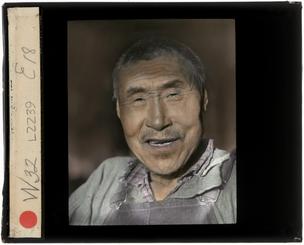
DR. WAUGH: 1. The primitive Eskimo eating his native food does not have tooth decay. 2. When he eats "civilized" or "store" food, his teeth begin to decay just as rapidly as ours, the children being especially affected. 3. This proves that tooth health depends on the food they eat. 4. The foods traded to them by the white man when their teeth first began to decay were refined wheat flour, molasses, sugar, and tea. Tea alone, it has been proved, cannot cause decay. Therefore, the exciting cause must be found in the other three; namely, refined wheat flour, sugar, and molasses. 5. The missionaries told us that wheat flour, both in bulk and as hardtack or sea biscuit, had been traded to the natives before 1884, and that, up to 1902, there had been no tooth complaints. It was when prospectors and traders supplied the natives with molasses and sugar that their teeth began to decay. The disease spread so fast that, in two years, the missionaries had to send for forceps for the extraction of the natives' teeth.
The study in Labrador may be summed up as follows: The primitive Eskimo subsisting on his native diet of proteins--35 to 65 percent--with fats making up the remainder of the diet except for a very little carbohydrate food, not any of which is fermentable, has the best teeth, with the least dental caries, of all races. When he begins to eat "civilized" foods, there soon is a marked deterioration of the teeth and jaws. He is very fond of sweets, especially sugar, syrup, and candy and the children eat these persistently when procurable. This habit results in rapid tooth decay, almost more rapid than in white children. Eskimo teeth are often worn almost to the gum as the result of chewing tough, uncooked, and gritty native foods and rawhide in making boots, clothing, and harness. The older generations, reared on native foods, invariably have vastly better teeth and stronger, larger jaws than do their grandchildren who are getting "civilized" or “store” foods, which are softer.
LISTENER: Now you have added something besides diet. You speak of cooked foods. How does this type of food affect tooth decay?
DR. WAUGH: The chewing of these foods during childhood unquestionably promotes growth, and the development of large, strong jaws and straight teeth is the result of this. Straight teeth are less liable to decay.
ANNOUNCER: Dr. Waugh, how many Eskimos were there in Labrador?
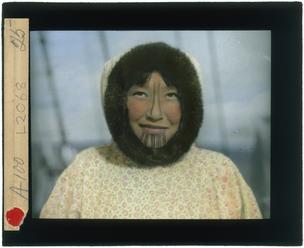
DR. WAUGH: Approximately 800, and we studied a goodly number from every tribe. Our research was continued in Alaska at the suggestion of Dr. Hrdlička because there were about 18,000 Eskimos there. From 1929 to 1938, we made five summer cruises and one winter aeroplane trip to this far-flung country. During the first two summers, we visited the thirty-two most populous Eskimo villages of the North Bering Sea and Arctic Alaska aboard the coast guard cutter Northland. We found conditions identical with those of Labrador, and our final conclusions were that the American Eskimo is veritably paying for his civilization with his teeth'.
ANNOUNCER: I know that you established the first bacteriologic field laboratory in Eskimo territory, in 1935. Tell us about that work.
DR. WAUGH: Our findings that summer of 1935, which were corroborated the following year when another worker accompanied us, were of the utmost importance because they proved that tooth decay in Eskimos and in whites is identical bacteriologically, the specific germs or bacteria being Lactobacillus acidophilus (Bunting).
LISTENER: Is there anything in the food or surroundings of the Eskimo that would make his teeth more naturally resistant to decay than those of any other race?

DR. WAUGH: No. That claim was thoroughly investigated with the help of the Indian Service, U. S. Department of the Interior, which financed the expedition. We were able to study native children in two primitive and one semi-modern Eskimo settlement. We found that conditions ranging from lack of sunshine and home comforts, with no milk (except mother's), almost no fruits and vegetables, and no grains of any kind, would, if anything, tend to make them more susceptible to tooth decay. Their good dental health is certainly not due to a superiority of native foods.
LISTENER: Dr. Waugh, I want to carry the message that you have given us, 'An unsweetened tooth will not decay,' to every person that I know, but the first question that I shall be asked will be 'Can you tell us of specific cases where tooth decay has followed the introduction of refined sugar into the diet?
DR. WAUGH: While our study in every district, both in Labrador and in Alaska, indicated that the addition of sugar to the diet caused decay, and we have many definite records to that effect, I shall mention only three. First, in the most populous primitive Eskimo village in Alaska, where there was no trader, only a government school and a mission, many children had been examined and no decay found, when two very primitive natives of about 8 or 9 years appeared. They were dirty and wore only tattered primitive skin garments and yet they had decayed teeth. The teachers did not know them and we were puzzled to account for their dental condition until the missionary explained that they were nomads, their parents living far away; that he had taken pity on them, since their parents were very shiftless, and had asked a family to house them while he fed them at the mission, which he did for several months. Here they received sweetened desserts and were given candy. The decay of their teeth was thus explained. The teeth had to be extracted.
In another large primitive village with no trader and no mission, and the only white people a Government teacher and his wife, almost no decay was found in 184 natives except in one boy about 9. His parents and four sisters had excellent teeth with no decay. This was puzzling until the teacher discovered that the boy had been taken to the trading post for a few weeks each of two summers, and, while there, he was given all the candy he could eat.
A report recently received from T. J. Pyle, dental supervisor of Alaska, is enlightening. He writes:
I do not have the exact figures yet, but I made a startling observation the other week on my annual visit to Eklutna where we have a bureau boarding school for about 115 children. I have done the work there for the past five years. It has been my habit to stop once a year to examine the children's mouths and do the necessary dental work. It is a place where the children live a well-regulated life. I have never had much work to do--usually placing between thirty and forty small fillings a year. On this visit, I found approximately 200 cavities among the same children who used to have thirty, and I did not have far to look to discover the trouble. During the past two years, the students have all earned money by making skin and ivory articles, and a year ago February someone hit upon the idea of establishing a canteen or student’s store to sell them candy, fancy soap, toothpaste, etc. When I saw the enormous increase in caries, I began to inquire as to how much candy they sold and found that in one year they sold 28,000 bars, exclusive of box candy, which was also sold in considerable amounts. When it is considered that such an increase occurred mostly among children who have been at the school several years and have lived the same during the past year as in other years, except for their higher sugar diet, it certainly appears that it was caused by the candy.

DR. WAUGH: This was an increase of about 600 percent of tooth decay in one year.
This observation is further strengthened by our most recent field laboratory findings. We went to Alaska again and selected a goodly number of primitives of all ages, fully removed from civilization, for the purpose of tabulating the effect of natural sugars and of refined sugars, syrup, and candies, upon natives free of tooth decay. The ages ranged from 12 years to old age. The subjects were able to get only their native food plus what we gave them. Their mouths were free from decay and their saliva had no germs of tooth decay. They came in once daily, and each group was carefully fed in the laboratory a definite quantity of refined sugar, as follows: One group was given one candy bar (chocolate caramel and chewy); another group one lollypop, medium size, and another, cube sugar, 6 lumps. Still, another was given three preserved figs in 65 percent cane syrup. Every native received the same amount of the same sweet each day and ate all of it. In two weeks, 88 percent showed the presence of the specific bacteria of dental caries (Lactobacillus acidophilus) and, at the end of five-and-one-half weeks, every mouth showed tooth decay, with an average of 3.6 cavities per mouth. Understand, please, that these cavities were formed in less than six weeks in mouths of Eskimos who had never before had a decayed tooth. The only difference in their food was the addition of refined sugar.
In the parallel experiment in which natural sugar as formed in dried raisins, figs, dates, and prunes was added to the diet, not one person developed any tooth decay. Therefore, natural sugar should be substituted for refined sweets as nearly as possible.

We cannot, therefore, emphasize too strongly that refined sugar, in any form, is the essential factor in decay. The longer sugar remains about the teeth, the greater the danger of decay, whether the sugar is eaten as candy, in sweet pastries and cake or sweetened breads, or as a syrup or a jam. The sticky kinds that cling about the teeth are the most harmful. The sweets become food for the bacteria which form the acids that cause decay. The sooner the mouth is cleansed after eating sweets, the less the danger. Therefore, the teeth should be cleaned and the mouth rinsed thoroughly within fifteen minutes after sweets are eaten. Candy should be eaten, if at all, immediately after meals. The habit of nibbling candy or of holding it in the mouth and letting it dissolve slowly is apt to result in decay of the teeth, with recurring dental bills. Remember that 'an unsweetened tooth cannot decay’ and that each one of has it in his power to control and even prevent the decay of his teeth.
DR. WAUGH: This broadcast would be incomplete without grateful acknowledgment to Columbia University for leave of absence and other assistance through all these years. In 1927, through a grant for research, the University financed the cruise to Labrador and Ungava Bay.
To the United States Public Health Service, Treasury Department, for having a commission to active duty and detail to the United States Coast Guard Cutter Northland, for her Arctic cruises in 1929 and 1930.
To the United States Coast Guard, Treasury Department, for the unusual interest shown in visiting for the first time a number of Eskimo villages.
To the Indian Service, Department of the Interior, for the grants which made possible three of the research.
To the Indian Service, Department of the Interior, for the grants which made possible three of the research expeditions to southwestern Alaska.
To the natives, missionaries, and government workers who so generously assisted. Detailed and individual acknowledgment has regularly been made to them all in the published report.
__________________________________
Thanks to the Colorado State University Libraries for posting the original Sugar Research Foundation bulletin of October 13, 1944, at the Digital Public Library of America.
This WNYC program transcript was first published in the July 1940 edition of the Journal of the American Dental Association, pages 1124-1128.
For more information about Dr. L. M. Waugh please see the Smithsonian NMAI for his collection materials at: Leuman Maurice Waugh Collection.

WNYC is funded by sponsors and member donations