After 2 Crashes, NJ Transit and LIRR Finally Screening for Sleep Disorders Properly
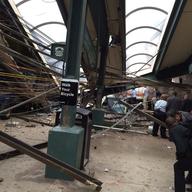
Federal investigators released their final report on two recent train crashes in our area. They looked at the causes of the accidents, and actions taken since the fatal NJ Transit crash at Hoboken terminal in 2016, and since the Long Island Railroad crash at Brooklyn's Atlantic Terminal last year.
In both cases the train engineers operating the trains suffered from undiagnosed sleep apnea. And both crashes occurred at terminals where no technology was in place to prevent the trains from crashing through the stopping blocks.
NJ Transit has screened all of its 373 locomotive engineers. Some 57 have been removed from their job, and 44 of those have tested positive for sleep apnea. NJ Transit said it has been screening since 2005, but stepped up its screening a month after the fatal Hoboken crash.
"They've made a lot of significant improvements since the accident and I think they've learned from what they found," Dr. Nick Webster, a medical officer at the National Transportation Safety Board, testified Tuesday at a board meeting in Washington D.C.
As of November, the latest date for which data was available, the MTA had screened 9,729 of its 17,000 employees who drive trains, buses and commuter rail lines. Of those, 2,079 have been referred for sleep studies, meaning they are considered at risk for sleep apena, and 1,185 of them were diagnosed with sleep apnea. Still, that means 57 percent of MTA employees that operate vehicles have not been tested for sleep apnea.
"The safety of our passengers, our employees, and the general public is our highest priority," MTA spokesman Aaron Donovan wrote in a statement. "The MTA has an established and aggressive sleep apnea screening and treatment program for all train and bus operators and locomotive engineers in line with the NTSB’s recommendations and we are moving forward with this program, even in the absence of a federal mandate.”
In August, the Federal Railroad Administration (FRA) and Federal Motor Carrier Safety Administration said it would no longer push for mandatory sleep apnea screening rules. NTSB members heavily criticized that move, pointing out that five train crashes since 2001 were caused by fatigued engineers later diagnosed with sleep apnea.
Nationwide, about 22 million Americans suffer from sleep apnea, according to the American Sleep Apena Association, or 25 million, according to the American Academy of Sleep Medicine.
The National Transportation Safety Board found that the engineer of the Hoboken crash should've undergone sleep apnea screening just based on his body type. At 6 feet tall and 322 pounds he's considered to have extreme obesity, an indicator of a likely sleep apnea. Further testing revealed that during his sleep, his oxygen levels dropped to 53 percent, a sign of severe sleep apnea. He has since been taken "out of service," according to NJ Transit.
NJ Transit has taken other measures since the crash as well, such as restricting train speeds at the entrance to terminals to 5 miles an hour, and having an additional conductor ride in the cab. All NJ Transit trains also have been inward- and outward-facing cameras in the cab cars to record the operations in case something goes wrong.
The LIRR operator of the train that crashed is 5 feet tall and 275 pounds, and found to also suffer from severe sleep apnea. He no longer drives trains, but cleans Long Island Railroad stations.
As for Positive Train Control (PTC), a braking system that would slow down speeding trains automatically to safe speed, federal investigators found it would've made no difference in these crashes. The technology is designed for main line trains going at high speeds going into curves, not pulling into stations.
All U.S. railroads are mandated to have installed PTC by the end of this year; NJ Transit is behind on its installation and is currently in the process of resolving a $12,000 federal penalty related to PTC.
The MTA has installed PTC at five sections of curved track it deems critical on Metro-North and seven stretches on the Long Island Railroad.

WNYC is funded by sponsors and member donations