Reporter's Notebook: Seeing the Vaccine as a Monument to Human Achievement
When I arrived at the Javits Center for my appointment, the scene resembled an airport. Here we were, hundreds of people standing in orderly lines in this gigantic, bright space, waiting for someone to check our documents. But this was no ordinary journey.
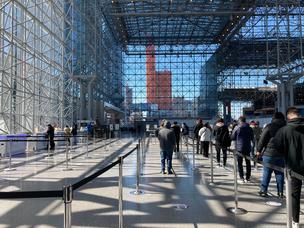
There was an announcement about specialized air filters, for our protection. National guard troops were positioned throughout the building. It felt like the end of a science fiction movie, when humanity has finally overcome the enemy. We were walking together into that new future where we HOPE we'll be safe from the virus. I smiled.
The vaccination site wouldn't allow any recordings beyond the entrance. And there weren't any surprises. You roll up your sleeve, it feels like a pinch. Everyone was professional and so efficient - from the man asking me if I had any allergies to the troops keeping everyone moving. But the end of this experience was what surprised me.
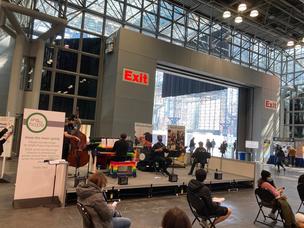
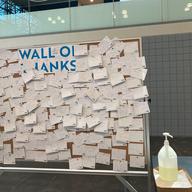
A quartet of musicians played cheerful music in the seating area where we had to wait the required 15 minutes to make sure we didn't have any bad reactions. It felt festive. People were taking pictures. And then I noticed The Wall of Thanks. Index cards people could sign with a message. Some wrote, "New York Tough." Or thanked the doctors and nurses.
I felt grateful, too. But as a reporter covering the city's recovery effort, I've been thinking a lot about history. So here's what I wrote:
"We often look to monuments, coliseums and bridges as triumphs of human achievement. Great structures that will outlive all of us and say, "we made this." But this vaccine is a monument, too. It's a monument to what great things human beings can accomplish when faced with a danger. It's a reminder of how we CAN focus on doing something to protect ourselves and our families, our society."
As I left the Javits Center, my fellow New Yorkers were greeting relatives outside and getting into taxis. In a few months, maybe they'd be back in their offices. Maybe they'd find new jobs, and have less trouble paying their bills. We don't know the future. Our city has lived with constant change for more than 400 years. But we can still appreciate this moment and this achievement, a new vaccine against a new disease.