
Focus on Discipline: How One NYC Student Was Suspended for 30 Days
Christina Thomas started her senior year at Abraham Lincoln High School this fall planning to graduate in June and head to college. She had never gotten into any trouble before. But, on the second day of classes, she found herself with a 30-day suspension, afraid her plans had been knocked off track.
The problem was a standoff with a school librarian over computer use. Through an escalation of words and a possible physical altercation, Christina landed herself a "superintendent's suspension," the highest level punishment and one usually reserved for serious physical fights, or bringing guns or drugs into a school. Her case offers an example of the detrimental consequences of lengthy suspensions, and perhaps the missed opportunity they represent.
The New York City public schools give out more than 50,000 suspensions each year. Most of the time it's for something minor, and students serve their time in school. But about 20 percent of the cases are known as superintendent's suspensions; they keep the student out of their school for anywhere from one day to several months. The students are sent to suspension centers where they take basic courses.
Many juvenile justice advocates believe these suspensions are overused and disproportionately given to black and Latino students. With Chancellor Carmen Fariña now considering changes to the discipline code, they hope she will encourage principals to use removals from school more sparingly because students like Christina could benefit more from alternatives or even shorter suspensions.
According to Christina, she was looking at job postings on Craigslist, when the librarian told her it wasn't an approved site under the Department of Education's Internet policy. Christina vigorously disagreed because it wasn't blocked, and because she considered it a good use of her time. But she said the librarian wouldn't budge.
"She takes my hand off the mouse, I’m like, what are you doing?" Christina recalled.
She said the librarian then turned off the computer monitor, but Christina turned it back on. Christina admits she used some curse words. And there was a real tug of war when the librarian unplugged the Internet cable. Christina reconnected it, and said the librarian grabbed it again.
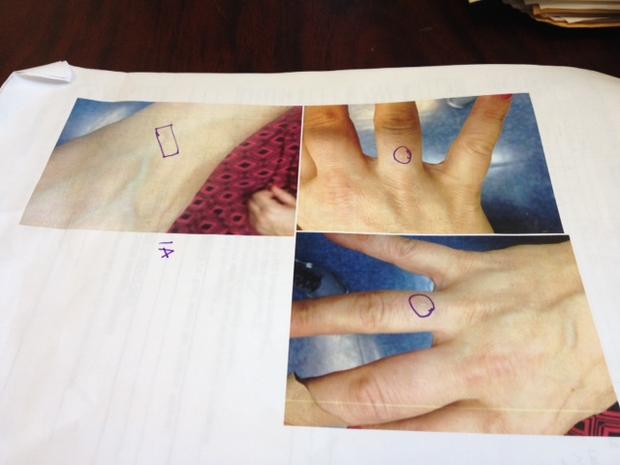
That's when this squabble became more serious. According to a transcript of the hearing, the librarian claimed Christina grabbed and twisted her hand in a way that left scratches. But Christina claimed she never touched her, and that the scratch came from the Ethernet cord. Christina was charged with threatening and injuring a staff member - a Level 5 offense under the discipline code.
Her attorney, Keren Farkas of Brooklyn Defender Services, said she believes Christina could have been charged with lesser infractions because the injury wasn't serious.
When the suspension was upheld, Christina was shocked. She worried it would affect her chances of graduating on time.
"It's like they want to see students fail," she said, during a tearful interview in her lawyers office.
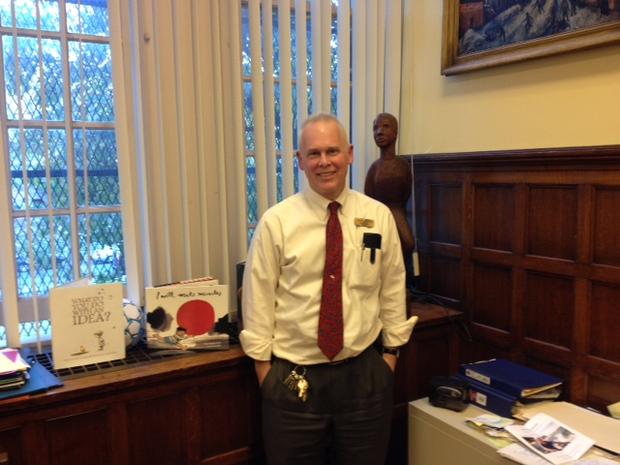
The librarian declined to comment on the case. So did Christina’s principal, Ari Hoogenboom, although he described what kind of behavior qualifies as a Level 5 offense.
"I very strongly feel that if you lay hands on someone, if you have a fight, I think you should be suspended," he said.
Hoogenboom said the school's guidance counselors help mediate when disputes are verbal, but physical altercations are different. He credited his approach with maintaining a safe environment. There were 19 superintendent's suspensions last year in the school of almost 2,300 students.
Under the discipline code, the principal has wide discretion in determining the length of a superintendent's suspension. In Christina's case, it could have been just six days. Hoogenboom wouldn't talk about his process, but he said he closely follows the discipline code. If students are not happy with his decision, they can appeal to hearing officers whose recommendations then go to the Department of Education.
"They are the ones who see the range, they see the range throughout the borough," he explained. "I think it’s fair that if a student does one thing in one school, that the penalty be fairly similar to if he did it in another school."
Lincoln high school did offer to reduce Christina's suspension to 15 days, but she didn't want to settle. According to the transcript, Christina admitted to threatening the librarian but denied scratching her. The librarian acknowledged that Christina didn't intend to hurt her.
"I don't think she was wrenching and twisting or turning my hand in order to be vindictive or physically malicious to me," she stated. "Her intention clearly was to get my hand off the computer equipment."
Bernard Dufresne, a staff attorney at Advocates for Children, said he thought the school missed an opportunity to encourage a conversation between the parties in a much more constructive setting.
"Principals in many ways see a suspension as the first option," he said, adding that suspensions were "not an investment in the student's academic outcomes" and that students often returned more disengaged from school.
While the current discipline code allows for other interventions, including mediation and restorative justice, there are not strong incentives to encourage many principals to change their ways.
As for Christina, she is back at Lincoln, catching up so she can still graduate in June.

WNYC is funded by sponsors and member donations