Germ City: How SARS Changed the Face of Air Travel
Two weeks ago, Emirates Airline flight 203 from Dubai was quarantined by the Centers for Disease Control and Prevention at JFK airport. Two days later, two more flights were quarantined at Philadelphia Airport. In all three cases, dozens of passengers complained of flu-like symptoms. But in the end, only a handful were sent to the hospital and those cases were ultimately dismissed as nothing more than the common cold and seasonal flu.
What explains the fact that so many passengers initially reported feeling sick?
Dr. Amesh Adalja, a senior scholar at the John Hopkins Center for Health Security, said it's common for people to feel ill (even though they're perfectly healthy) when they're surrounded by those who are.
"Sometimes the symptoms themselves become contagious," he said. "Fear is contagious, and I guess that's what ends up happening."
The question that follows is: Did public-health officials overreact? Did the pilot on that flight from Dubai make the correct call in contacting local authorities before the plane landed?
"I do believe that what that pilot did on the Emirates flight was right," said Dr. Adalja.
He also believes the CDC's response is necessary to advert future pandemics. Quarantining an airplane allows officials to evaluate the health of passengers before they return to their communities.
"It's much easier when they have a postcard with everyone's name and information on it," said Dr. Adalja, "so that they can contact them if something epidemiologically significant was on board."
In these most recent cases, public health officials were concerned about a potential outbreak of MERS, or Middle East respiratory syndrome, atypical influenza and other novel respiratory infections that can potentially spread during air travel.
In 2003, an outbreak of another deadly virus, SARS, or severe acute respiratory syndrome, spread throughout Asia. Over 8,000 people worldwide contracted the illness. It killed nearly 1 in 10 of those infected. In the United States, only 8 people were confirmed to have been infected by SARS.
New York City narrowly averted an outbreak that year when an infectious disease specialist from Singapore, Dr. Hoe Nam Leong, unknowingly contracted the illness from a patient and then visited the city for a conference.
"I went to New York with my wife, who was pregnant then, and my mother-in-law," Dr. Leong recalled in a recent interview.
At each step in the trip, he risked spreading the disease to others: The shuttle bus to the hotel, their walk through Chinatown, dining out at a restaurant.
It was only toward the end of their first day in the city that Dr. Leong began to show symptoms.
"I realized that something wasn’t quite right," he said, although at that point he still hadn't realized the seriousness of his condition. "I had chills. I knew I was sick."
He visited a hospital the following day, where doctors were unable to diagnose him.
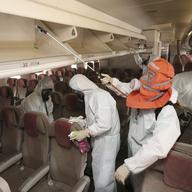
Dr. Leong and his family decided to cut their trip short and boarded a flight back home. Hours later, Singapore's Ministry of Health contacted the airline once his colleagues became aware of the situation. He was quarantined on the plane mid-flight and pulled off during a stopover in Frankfurt, Germany by health workers dressed in full-body protective suits.
"They took everyone off the plane. First the passengers, followed by the staff, and they came to get me," said Dr. Leong. "Then I started realizing that we might be at the brink of a new epidemic."
Dr. Leong was Singapore’s "Patient #3," and his story exposed many of the cracks in the global public-health system meant to prevent the spread infectious disease.
"Everyone has a role to play," he said.
Firstly, the hospital he works for in Singapore should have been more cautious in how doctors came into contact with patients. Secondly, once in New York, he should have been flagged by the doctors who treated him. And, as a specialist in infectious disease, he himself should have known not to fly.
"I honestly feel stupid," he said. "I shouldn’t have boarded that plane."
To prevent future outbreaks, the World Health Organization implemented international health regulations and increased disease surveillance to make it easier to identify sick passengers.
Germ City is a collaboration with the Museum of the City of New York and the New York Academy of Medicine. Additional reporting by Danny Lewis.
Music Credits: "The Summit" by Blue Dot Sessions

WNYC is funded by sponsors and member donations