Growing Up in Newark in the Years After Devastating Riots
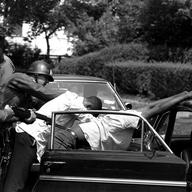
In 1967, the Newark riots left large swaths of New Jersey's largest city devastated and led tens of thousands of residents to flee to the adjoining suburbs. But Junius Williams, a local civil rights activist, wasn't one of them. In the aftermath of the riots, Williams decided to stay and start a family in Newark. He saw an opportunity to rebuild the city, and wanted to contribute to its restoration.
He raised his two daughters, Camille, 40 and Junea, 38, in the Weequahic section of Newark. What had been a predominantly Jewish neighborhood in the years leading up to the riots was almost entirely black by the start of the 1970s — a fact that did not go unnoticed by Camille in her youth.
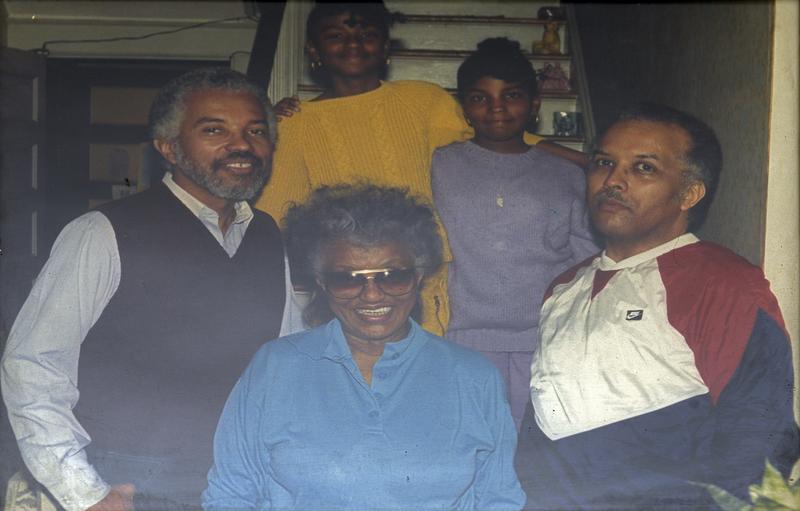
"One thing I never quite understood as a child — there are white people everywhere," said Camille. "But [not] where I live."
Junea and Camille grew up in a city that was still reeling from the effects of the riots, more than a decade later.
"I remember vividly instances where we would drive along Springfield Ave...there were storefronts or vacant lots, and [my parents] would describe for us, 'This is vacant, and here's what happened,'" remembered Junea. "It was really from that angle, to talk about what happened during the rebellion."
Vacant storefronts and urban prairie were a prominent feature of Newark's landscape in the '70s and '80s, along with rising crime rates and the crack epidemic. But the Williams family was determined to stay and help rebuild.
In 1970, Ken Gibson was elected as the first black mayor of Newark, and one of the first black big city mayors in the country. The majority-black city began to see itself reflected in its political leadership.
Junea watched her father invest in Newark, and she wanted to follow suit. She bought her first home in the city 12 years ago, after graduating from law school. She says that, much like her father, she wanted to make a conscious effort to invest in the community. Now she's raising her young son Justice in Newark and is about to buy a new house in the city in order to be closer to her father.
Her older sister, Camille, has also stayed in Newark. She says she wants to live near her family, especially her young nephew, who she is helping to raise. But in a city still struggling with high rates of poverty and violent crime, she acknowledges that living in Newark comes with risk.
And in a city that still wrestles with a fraught relationship between residents and the police — the very issues that prompted the riots 50 years ago — Camille says helping raise a child in Newark can be overwhelming.
"I see our black men being killed every day," said Camille. "There's not a morning I wake up that I don't pray for [Justice's] safety."
In part three of our series, The Newark Riots at 50, we hear from Williams' two young sons who grew up decades after the riots, as the city's rebuilding effort was well underway.
Click on the listen button above to hear Rebecca Carroll's interview with the Williams family. Radio producers Joseph Capriglione and Annmarie Fertoli contributed to this report.

WNYC is funded by sponsors and member donations