How climate change is making maple syrup less sweet — and sapping production in NY, NJ
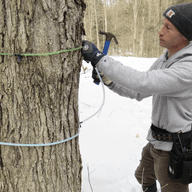
On a cold, February day in the hills of the Finger Lakes, thousands of leafless maple trees stood dormant, waiting patiently for the kiss of spring. Armed with a hammer and drill, Aaron Wightman trudged through deep snow in the Arnot Teaching and Research Forest.
Wightman pointed the drill into the bark of a sturdy tree and followed with a high-pitched thrust forward. Then, he hammered a spout into the wooden hole. In a few weeks, the tree would give forth a thin, sweet sap that would become maple syrup.
Wightman’s family has made maple syrup for generations. He has been tapping trees since childhood, but he’s seen warming winter-spring temperatures push the tapping season back by more than a month.
“We didn’t even tap until the end of February or early in March when I was young,” said Dr. Wightman, the co-director of the Maple Program at Cornell University. “Now we tap in early January.”
Americans are the world’s leading consumers of maple syrup, and New York State holds the title of the second-largest U.S. supplier after Vermont. Now, in the midst of a global pandemic when more of us are cooking at home, demand for the gold stuff has gone through the roof.
But this swell in demand coincides with a changing climate that brings warmer winter temperatures to much of the Northeast. And winter and early-spring temperatures determine how well precious maple sap will flow. The climate problem was so detrimental last year that it squeezed the global supply of maple syrup.
Unabated, it could even threaten maple syrup production on this side of the northern border.
Click listen in the player to hear more details, and visit Gothamist for the full story.

WNYC is funded by sponsors and member donations