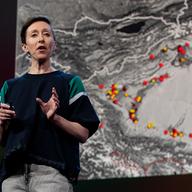
How facial recognition allowed the Chinese government to target minority groups
Part 4 of the TED Radio Hour episode What's in a Face. Check out Part 1, Part 2 and Part 3.
Journalist Alison Killing explains her investigation in Xinjiang, China, where the government has used facial recognition cameras to track Uyghurs and detain them in camps across the region.
About Alison Killing
Alison Killing is an architect and investigative journalist.
In 2021, she and her co-journalists won the Pulitzer Prize for International Reporting for their work investigating a network of detention camps in Xinjiang, China using satellite imagery and architectural techniques.
Her other investigations have included: understanding how social media can be used to track user's movements and migrant journeys.
This segment of the TED Radio Hour was produced by Katie Monteleone and edited by Sanaz Meshkinpour. You can follow us on Twitter @TEDRadioHour and email us at TEDRadio@npr.org.
9(MDEwODYxNTQyMDEzNjAxODk2Nzc2NzNmYQ001))

WNYC is funded by sponsors and member donations