Immigrant Detainees Held in Cells for Days During Lockdown at NJ Jail
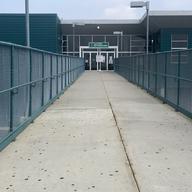
Detainees at the largest immigrant lock-up in the New York area, the Essex County Correctional Facility in Newark, were held in their cells for days earlier this month, as helmet-clad officers swept the facility for contraband, WNYC has learned.
Immigrants in the higher security wings were allowed 10 minutes, twice each day, to leave their cells and use the shower, phone and microwave, according to attorneys and detainees. The lockdown lasted from Feb. 4 to Feb. 8, and lawyers who represent immigrants at the facility said some stayed in their two-man cells for the entirety of those five days. A county spokesman rejected that, saying that ICE detainees were returned to "regular movement" after just two days.
"When the Essex County Correctional Facility receives credible information about security threats, it initiates a lockdown so that a search can be conducted to collect any contraband," spokesman Anthony Puglisi said in an email. He did not detail the nature of the threat. "This is done to protect the safety and security of the detainees and officers. Because maintaining the security of the facility is our highest priority, detainees are maintained in their cells while searches are conducted; they are returned to their regular routines as soon as the searches in their area are completed."
The jail's criminal wings were also under lockdown, county officials said. But advocates and attorneys for immigrant detainees note that they are civil detainees, who should be distinguished from criminally charged individuals. Under President Trump, immigrants are increasingly held in county jails and private prisons as they await hearings on orders of deportation or travel arrangements to return to their home countries.
The lockdown came just days before the inspector general for the Department of Homeland Security released a scathing report about conditions at the facility. Essex County has a contract worth about $40 million a year to detain about 800 immigrants for Immigration and Customs Enforcement.
The inspector general's report, based in large part on a surprise July visit to the jail, said immigrants are kept in "unsafe and unsanitary conditions." Inspectors found what appeared to be expired and discolored lunch meat, "foul smelling and unrecognizable" hamburger patties and moldy bread used for bread pudding. Jail officials failed to notify ICE about four recent security incidents, including a guard's gun left unattended in a bathroom that a detainee found while cleaning, the report said.
County officials said a food manager was fired and the other issues were immediately addressed. They also noted that previous inspections have given the jail high marks.
But the report so alarmed the president of the Essex County Board of Freeholders, which is the governing body that oversees the jail, that for the first time in eight years a freeholder subcommittee will hold a public hearing to examine the ICE contract. Freeholder President Brendan Gill made the announcement at a meeting Wednesday night.
Advocates have been calling for a hearing because the number of ICE detainees and the revenue that the county receives has skyrocketed under President Trump's aggressive immigration enforcement. They want better oversight and ICE profits used to improve conditions and provide attorneys for detainees.
While county officials said the timing of the lockdown just days before the anticipated release of the DHS report was unrelated, there was one common thread: Mattresses.
The DHS report alleged that the jail's mattresses were in such poor condition that detainees had to use ripped bed sheets to stitch them back together. But Puglisi disagreed and said that detainees often tear the mattresses themselves in order to stuff contraband inside. "Detainees will tear open the mattress and then use shoe strings, sheets or other material to sew them back up," he said.
Mattresses were confiscated and replaced during the lockdown. That was good news, according to one detainee, and appeared to indicate that the county was complying with some of the issues that DHS said required improvement. But then the detainees who had ripped mattresses were cited for disciplinary violations for damaging government property, according to the county.
Detainees and lawyers told WNYC that during the lockdown, the law library was closed. That meant detainees without lawyers (New Jersey, unlike New York, does not pay for attorneys for all immigrants who can't afford them) could not prepare for their hearings.
Dane Foster, a Green Card holder who was arrested by ICE last year because he had three previous marijuana possession convictions, told WNYC that he was held in a cell for 2 1/2 hours, a shorter period than other detainees. But he was still affected by the lockdown because he wasn't able to access the commissary, which he relies on to buy food.
Foster said that he began purchasing food after finding bugs in his meals (an exterminator was immediately called, he said). He said the meals provided at the jail include a "liquidy thing" known as "slop," soy burgers that look like "hockey pucks" and a "weird-looking" brown chicken dinner. "They say it's chicken," he said.

Also during the lockdown, Foster said that everyone's belongings were searched, which he described as a "ransacking." A cup that he had purchased from the commissary was taken, he said. Medicine, do-rags and batteries were thrown out.
Another detainee, who asked not to be named for fear of retaliation from ICE and guards, told WNYC that he spent the entire five days in the jail. Three days in, his cellmate was deported, so he was essentially in solitary confinement. "I have some books, that’s what I was doing. I read like three books in five days," he said. After the lockdown he began sharing the cell with a new roommate, but he said he lacks a bedsheet and his roommate doesn't have a blanket.
"I’m afraid to go back to my country, but I prefer to take my chances there than be locked up [here] for one year [or] two years because you don't know what's going to happen to me," he said. "I prefer to get killed in my country than be inside a jail because [they] treat me like a prisoner -- I’m not a prisoner."
Anna Byers, an attorney with the American Friends Service Committee who has clients at the jail, said the lockdown takes an "emotional toll" because immigrants are cut off from family members who would otherwise be visiting them.
"It's similar to being in isolation -- not seeing the sun, not seeing other people. People are not meant to be in that situation," she said. "Immigration detention is supposed to be civil detention. We hear that it's not supposed to be a punishment, but when things like this happen people are suffering in real time, and will probably suffer long-term with the ramifications of being held."
A 2013 ICE directive says that segregation from the general population "should be for the briefest term and under the least restrictive conditions practicable."
The two other county jails in New Jersey that have ICE contracts have also been criticized through the years for poor conditions. At the Bergen County Jail, detainees are forbidden from hugging their loved ones. And at the Hudson County Jail, an immigrant died in 2017. Hudson freeholders voted last year to end its ICE contract by 2020.

WNYC is funded by sponsors and member donations