Immigrants + Art History = Citizenship?
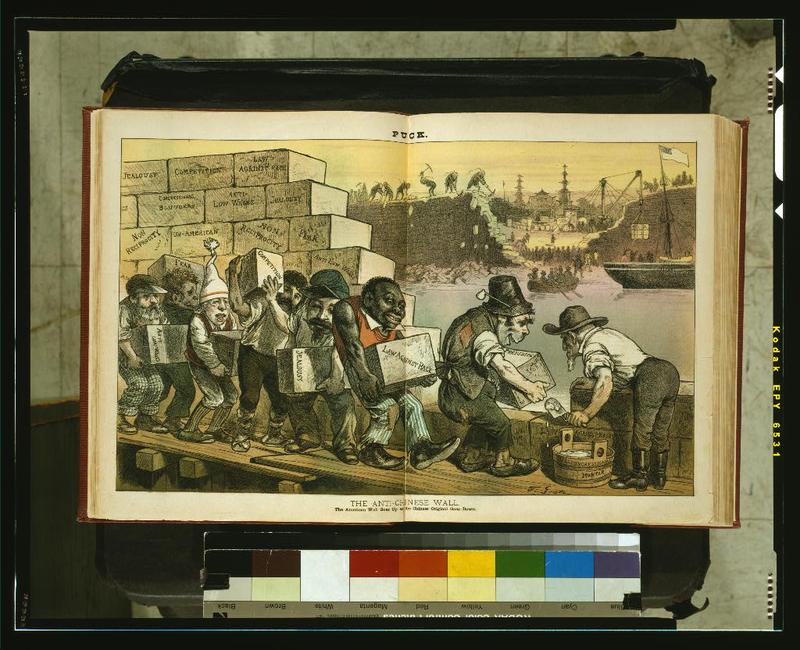
Manifest Destiny. The Chinese Exclusion Act. September 11th.
In bygone days the darkest chapters of U.S. history — think of them as among America's Worst Moments — might be downplayed for an audience of immigrants seeking citizenship, or altogether avoided for something decidedly sunnier.
At the New-York Historical Society, however, immigrants are receiving an eyes-wide-open exposure to the nation's history, one that doesn't shy from painful truths. The initiative is called The Citizenship Project, and it's a new effort by the Historical Society and CUNY, meant to prepare immigrants for the U.S. naturalization exam, and ideally, for lives as active, productive citizens.
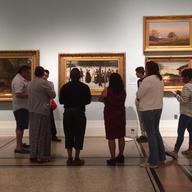
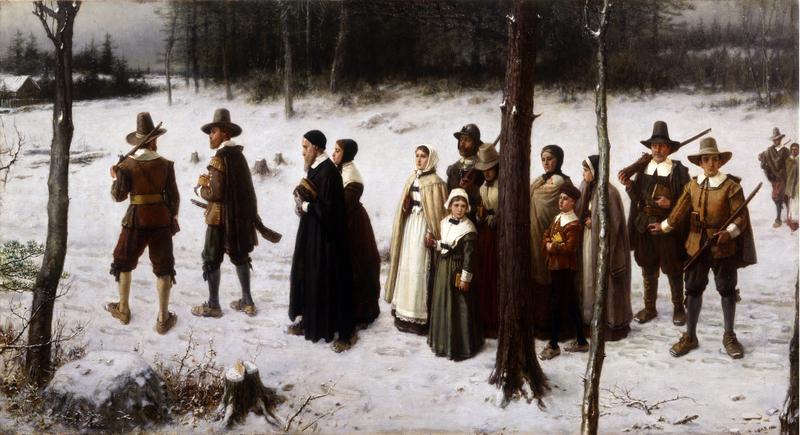
One evening during the summer, a group of adult students crowded around a 19th-century painting by George Henry Boughton, called Pilgrims Going to Church. Despite the fairly innocuous title, there's an ominous quality to the work: the pilgrims are walking through the snow, carrying guns, and several of them seem distracted.
"What might they be looking at?" one of the instructors, Sam Ginsberg, asked.
A student ventured a reply in halting English. Indian Americans?
"So maybe they've seen some Native Americans," replied Ginsberg. "Maybe they're just seeing some animals. Whatever they're seeing, they're nervous about it."
The course takes students through the centuries, addressing complex ideas like westward expansion, the Civil War and American colonialism as well as basic questions such as "Why does the flag have 50 stars?"
Roberto Chavez, another instructor, said he encourages his students to make connections between what they see in the museum and their own experience.
"Some of our students, they talk about the injustice of the mistreatment of Native Americans," he said. "Some of them will connect it to colonialism in Africa and other countries as well. The reactions are strong."
For many students the classroom training helps frame and, at times, clarify what's happening in the real world: the USA in 2017.
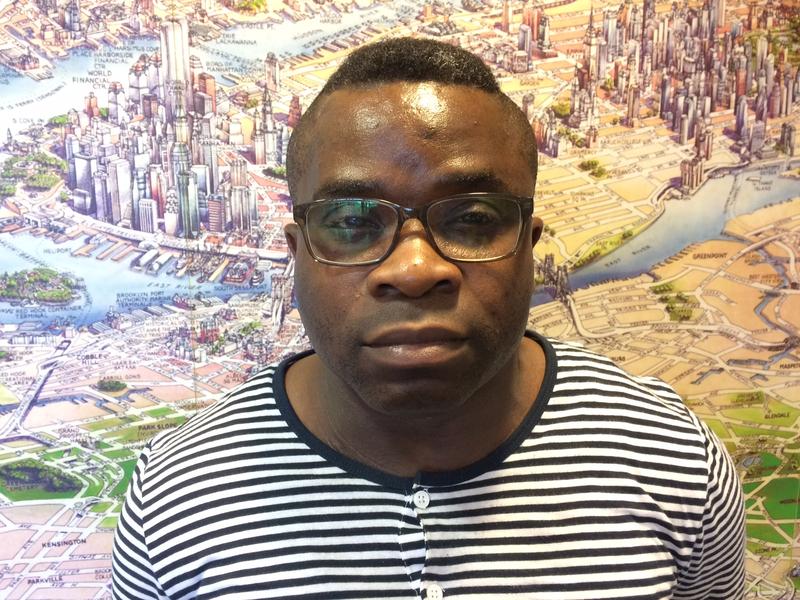
"Something like this should not just be for immigrants, it should be for the average American," argued Francois Pilatchom, an economics professor, originally from Cameroon. He'd been watching the events in Charlottesville play out and sounded fed-up.
"Somebody defending the Confederate flag should know a little bit more. Some education is necessary."
By offering a citizenship course, one might say the Historical Society is being subversive. Museums, especially historical museums, are among the most trusted institutions in America, according to polling by Reach Advisors. More trusted than news outlets, for sure, and this may be because they deal in actual, physical objects: things that can't be denied. This means they can shape conversations on issues like immigration in important, somewhat subtle ways.
"We are really at a time of change for the field," said Erika Sanger, executive director of the Museum Association of New York, which represents around 500 institutions across the state. She said the cultural sector hasn't been especially inclusive but is now waking up.
"So there is a real need to address how we can make these people citizens fast and incorporate them into our nation in a meaningful way."
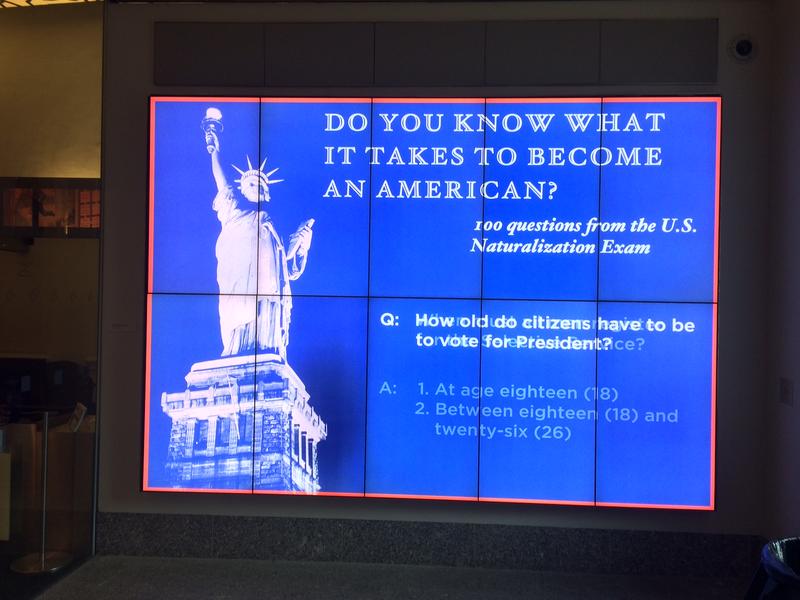
Sixty students have completed the Historical Society's citizenship course so far. Officials expect to teach as many as one thousand immigrants within a year.
Other cultural institutions in the city have facilitated programming for immigrants, including the Tenement Museum on the Lower East Side and the Queens Museum, with its New New Yorkers initiative, now in its eleventh year. The Minneapolis Institute of Art's educational program, the Art of Naturalization, is now in its third year, according to the Art Newspaper.
Chavez, the Historical Society instructor, said that despite all the negativity in the current political climate, his students are excited about the country in which they intend to become citizens. These include his mother. She moved to the U.S. from Ecuador forty years ago and now takes one of the classes at the Historical Society.
"She texted me the other day," said Chavez. "And said, 'Oh, mijito, we learn about the Star Spangled Banner, and we cry in class.'"
Another one of the students, Ya Yun Teng, moved to the U.S. from Taiwan twelve years ago and happens to work at another museum. She now wants to become an American citizen because "you are able to participate in this society in a very different capacity."
"And I guess I think about my own position, my own roles in society and I'd like to make some contributions or having the ability to shape it."

WNYC is funded by sponsors and member donations