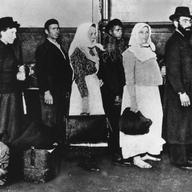
Immigrants Then vs. Now: Busting Misconceptions
It was during this week in 1907 that Ellis Island experienced its busiest day ever, with 11,747 immigrants processed on April 17. In terms of immigrant arrivals, that was also its busiest year ever.
This prompted researchers at the immigration think tank New American Economy to ask: How do immigrants from that era compare to today's immigrants?
So they sifted through census data then and now.
"In 1907, only 1.3 percent of immigrants who arrived were professionals," said Andrew Lim, NAE's Director of Quantitative Research. "These are people like doctors, lawyers, engineers."
At the time, 5 percent of the American workforce were professionals.
By contrast, 27 percent of American workers today are professionals. But among immigrants, Lim said over 34 percent are professionals, well above the American average.
In other words, immigrants now are far more skilled than they were more than a century ago. They're also far more likely to know English today: 83.8 percent of immigrants who arrived in 2017 spoke English partially or fluently, while nearly half of all immigrants who came to the country in 1907 spoke no English at all.
Still, historians and educators say the public clings to the myth of yesterday's immigrant: someone supposedly more skilled than today's immigrant.
"We're remarkably ignorant sometimes of our own history," said Kevin Jennings, president of the Tenement Museum, located in the Lower East Side.
He said many visitors think earlier immigrants weren't just more skilled, but more law-abiding.
"You would be amazed at how many people come to this museum and say that to us: 'My grandparents came here legally.' Well of course your grandparents came here legally. There were no laws."
It was basically open borders, he said. Unless you were Chinese, in which case it didn't matter how qualified you were, because in 1907 you weren't allowed into the country.

WNYC is funded by sponsors and member donations