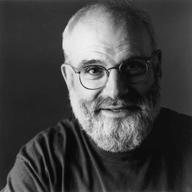
Physicians Pay Respects to Oliver Sacks’s Medical Contributions
If you measure Dr. Oliver Sacks’ achievements by the usual yardsticks of scientific academia – new discoveries and publications in major journals like Science, Nature and the Annals of Neurology – you might not consider him a success.
But Dr. Roger Rosenberg, a neurologist at University of Texas-Southwestern and editor of the journal JAMA Neurology, said you’d also miss Sacks’s real achievement: making important connections about how the brain works through close observation and shining a unique light into the corners of the nervous system that make us human. He said Sacks’s grasp of the “landscape” of the brain made Sacks a hypothesizer who influenced countless other neurologists, psychiatrists and others.
"New innovative, scientific observations were perhaps not his forte," said Rosenberg. "But he’s providing an understanding of the potential new in-the-future areas of research to understand processing in the brain. It's in a sense a clinical description of what may be coming."
Sacks, who died Sunday at age 82, is best known for his popular writings. In books such as "Awakenings," "The Man who Mistook his Wife for a Hat" and "An Anthropologist from Mars," he brought the inner workings of the brain to a popular audience. But while some consider the neurologist more of a philosopher and poet than someone who advanced science, researchers in his field say Sacks’s medical contributions are considerable, too.
"We live in an era of 'Big Data,' where there's this idea that if you just crank through thousands of data points and use sophisticated statistics, you'll learn the truth about something," said Dr. Scott Small, a neurologist at Columbia University Medical Center. "And he showed the more old-fashioned, time-honored and more enduring approach: if you take a single data point, a single patient and investigate them and characterize them clearly and carefully, it could really provide deep insight into neurological conditions and the brain."
Small said Sacks's insights haven't necessarily contributed directly to treatments, therapies and cures, but have added to the understanding of the brain and nervous system.
"He helped with the project of brain cartography," Small said. "He definitely described things in a literary fashion, but it's formed the basis for other investigators to try to more precisely map different functions of the brain to different regions of the brain."
Small said Sacks cultivated not only wonder and curiosity among lay people and professionals, but his work ethic inspired compassion.
"He reemphasized the importance of empathy, listening, caring and interacting with patients at a very personal humanistic level," Small said. "That might seem obvious, but it’s a good reminder to all of us."

WNYC is funded by sponsors and member donations