Herbie Hancock Reflects On Buddhism, Beating Addiction, And Butter Notes
Herbie Hancock's 50-plus year-long body of work is so massive, spanning so many genres and accomplishments, that any singular title you assign the man quickly ensures a drastic omission. It's hard to believe that the same musician who composed "Watermelon Man" in 1962 also wrote the hip-hop-infused crossover classic "Rockit" in 1983. Or that he pioneered the use of electronic keyboards and synths throughout the 1970's and composed an Oscar-winning score for 'Round Midnight in 1986. Or that he both played with one of the greatest jazz ensembles of all time with Miles Davis and bested Kanye West and Amy Winehouse for Album of the Year in 2008 -- one of his 14 Grammy wins.
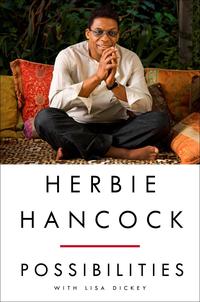
In his new memoir, Possibilities, Hancock, now 74, opens up about his array of successes and struggles that inevitably pile up during such a legendary career.
"Throughout my life I've run into a lot of brick walls," Hancock says in a conversation with Soundcheck host John Schaefer. "Or they could be brick walls, but because I had such a great mentor in Miles Davis during the 1960s, and later on in practicing Buddhism, I had a lot of support."
Throughout the book, Hancock tells stories that inform both his music and the influences in his life: There's the friend who convinced him not to use his first record deal advance to buy a station wagon, but to opt for the original 1962 Ford AC Cobra instead (a solid investment). There are endless bits of priceless advice he received from mentor Miles Davis. And there are the behind-the-scenes tales of how he composed some of the most enduring hits of the last 50 years -- like when "Rockit" nearly fell right into his lap.
For most of it, Hancock seems to ride just above the drama and cliches of the industry. But eventually, as we have only just now learned, certain temptations got the best of Hancock too. It's about as honest a look at such an iconoclastic figure in music you'll ever read.
Interview Highlights
Herbie Hancock, on figuring out what Miles Davis meant by "Don't play the butter notes.":
I wasn’t really sure what Miles said. But I thought it sounded like, “Don’t play the butter notes.” Well if Miles is saying that, it must mean something. So I started to think, butter is fat. Does fat mean excess or obvious? I was trying to find something I could relate to music. I started to think, what are the obvious notes? As a technical term, the third and the seventh of a chord. Those are the keys to the character of the chord. I left them out purposefully. Not just the chords, but in my solo I wondered what it would sound like to avoid the third and the seventh in my improvisation. I struggled with it and it all sounded kind of broken to me. It actually changed my style of playing forever. Because to this day it gives me so much more freedom of expression and even the idea of not just that specific thing he told me, but that way of thinking. There are so many ways to get variety and expression and that’s what Miles was talking about.
He actually said, “Don’t play the bottom notes.” I found that out, I actually gave some lectures at Harvard. Someone there in a Q&A period mentioned that they had read in Miles’ book that he had said, “Don’t play the bottom notes.” It would have meant the same thing. The main thing is Miles opened a doorway but I had to figure it out for myself. And that’s what a great teacher does.
On drug use and rehabilitation:
I chose this book to mention something that I was trying to suppress and completely forget about. Something that I had been very embarrassed about but I knew I went through this: Addiction with crack cocaine. It was late in my career, it was just my innate curiosity. I mean I wasn’t a foreigner to cocaine. I mean look at the time I was born in, 1940 and during the ‘60s. There was a time of exploration of a lot of things including acid and so forth. I never got caught up in any of them. I mean I tried a few things but they were occasional, recreational. I was just wondering. I know something about cocaine, but what is it about smoking it everybody’s saying it's really addictive? And I said, well let me know what everybody’s talking about, and then I’ll know, and then I’ll be done with it.
First time I did that, yes, I knew that I never should have touched it. So I said, never again. I knew that doorway to addiction and I had opened it. And I said okay never again. About three months later, I did it again. Three months later after that, I did it again. This went on for a few years. Finally thanks to my family and some friends I went to rehab and continued to practice Buddhism and I beat that battle. People will be shocked that I actually was addicted to crack. I tried to shove it out of my memory banks but that's never good. It’s denial. During the time of writing this book, my wife and my daughter encouraged me to talk about this in this book. And I thought, I’m a Buddhist. What do Buddhists do? We turn adversity into benefit or something positive.
On finding and practicing Buddhism:
I’ve been practicing Buddhism now since the Summer of 1972. I was turned on to it by Buster Willliams who was a bass player in my band. It came through a musical experience we shared with the band. We had an incredible night, and it was spirited by whatever was coming out of Buster. He was the engine for the magical set that we played on that particular day. I took him into the dressing room afterwards, because people had come up to the stage after we had played. Many of them were crying. They said, “We didn’t just hear this music, we experienced it.” Nobody had said that to me before.
So I took Buster into the musicians room after the performance and asked, "I’ve heard you were into a new philosophy. Whatever it is, if it can make you play bass like that, I want to know what it is." That’s when he told me about Buddhism and SGI, the Buddhist organization I belong to. My life has changed over the years, the basics of the practice remain the same. My understanding of how to apply the practice to my life is something that is continually growing.