Joseph Wood Krutch Goes Green…in 1952!
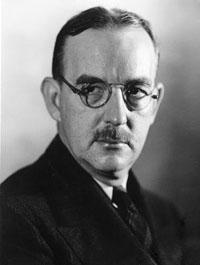
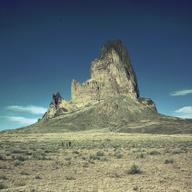
"What is a nature writer?" Joseph Wood Krutch asks the audience at this 1952 Book and Authors Luncheon. He realizes the term is vaguely derogatory or dismissive, most people's attitude being that writing about nature "is not doing anyone harm, is it?" He is not, he assures the Manhattanite crowd, advocating we all go live at Walden Pond, nor is he some strapping outdoorsman or romantic sentimentalist. In fact, he is a well-regarded cultural critic, literary biographer, and Columbia professor! So why, when it came time to take his sabbatical, did he opt to spend fifteen months in Arizona, the result being his current memoir The Desert Year?
"I was searching for some philosophical or spiritual connection," he explains. He then proceeds to expound a world-view in which the universe is divided into that which is alive and that which is dead. He laments that more and more we are surrounded by "the dead" in the form of cities and machines. This assault on materialism is vaguely political, as he mocks the current tendency to measure progress in terms of creature comforts or economic productivity. By understanding our fellow animals we get a better sense of what it truly means to be alive, and by being alone with ourselves, we arrive at a better understanding of our place in nature. These may sound like watered-down truisms today but one can tell by the intense, almost preacherly tone how fresh and possibly subversive this must have sounded in consumerist, Cold War-haunted America.
Joseph Wood Krutch (rhymes with "hooch") (1893-1970) had already by this point gone through several phases as a writer and thinker. He first gained notice in the 1920's with his much-discussed book The Modern Temper, which captured the public's imagination by its bleak picture of the cultural scene. As John Margolis, writing in The Columbia Magazine, summarizes:
Humanism…was inevitably and unalterably opposed to the natural impulses, as revealed by science, which have made the human animal possible. If humanism had been rendered impotent by science, science itself offered no solace to the human spirit: “The most important part of our lives—our sensations, emotions, desires, and aspirations— takes place in a universe of illusions which science can attenuate or destroy, but which it is powerless to enrich.” Love in this modern era, “has been deprived of its value.” The power of tragedy too was diminished. “The death of tragedy,” he wrote, “is, like the death of love, one of those emotional fatalities as the result of which the human as distinguished from the natural world grows more and more a desert.”
Krutch was an influential theater critic and social commentator throughout the decade. In the Thirties, though, he could not join many of colleagues when the intelligentsia swerved to the left. He taught at Columbia and wrote two highly regarded biographies, of Samuel Johnson and Henry David Thoreau. The interest in Thoreau presaged his growing interest in nature writing, which provided a surprising "third act" to his literary career. From the Fifties on, he produced a series of books and articles about what we would now call the environment, at a time when such a subject was virtually unknown. These works were not, as he cautions in this talk, mere gushing about walks in the woods, but a call to fundamentally alter our relationship with the universe and our living brethren. As the Humane Society website reports:
In his 1954 essay, “Conservation is Not Enough,” …Krutch offered a memorable statement of his basic philosophy. “What is commonly called ‘conservation’ will not work in the long run,” he wrote, “because it is not really conservation at all but rather, disguised by its elaborate scheming, only a more knowledgeable variation on the old idea of a world for man’s use only." Anthropocentric and utilitarian resource management were not going to save nature or humankind, he argued; we also needed “love, some feeling for, as well as understanding of, the inclusive community of rocks and souls, plants and animals, of which we are a part.”
The irony here is that Krutch was initially seen as a reactionary, his extolling of Nature offered as a counterblast to Communism's emphasis on materialism. Yet the path he started down would lead, in turn, to a second wave of leftist thought that would find its ultimate expression in the concept of ecology in the Seventies and the Green movement today. Thus, by a roundabout route, he seems to have arrived once again, albeit posthumously, at his initial position as cultural critic, presciently encapsulating the public's rather despairing view of its own predicament. As the New York Times notes:
Mr. Krutch's writings foreshadowed much of the new interest in ecology. He warned about the dangers of the population explosion, and criticized the unchecked growth of the suburbs, which he called "affluent slums."
Krutch spent the last years of his life living in Arizona, writing about nature, and even hosting a television program extolling the beauties of the Sonoran desert.
Audio courtesy of the NYC Municipal Archives WNYC Collection.
WNYC archives id: 150529
Municipal archives id: LT2317

WNYC is funded by sponsors and member donations