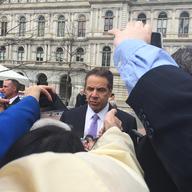
Cuomo Misses Key Opportunity to Address Albany Ethics
Gov. Andrew Cuomo and the leaders of the state Senate and Assembly are in the final stages of negotiating a deal on the state budget, a roughly $155 billion spending package that impacts transportation, local school districts and local property taxes.
What the leaders won't be haggling over, though, is how to better police the state legislature, even though the past year was marked by embarrassing corruption scandals that have marred the public's trust in government.
In January, Cuomo appeared committed to using the budget period — one in which he has great bargaining power — to bring a series of reform measures to life in the Albany-based House and Senate. But earlier this month, the governor told reporters that ethics reform could be dealt with in the months remaining after the budget is passed on April 1.
Government watchdog John Kaehny, executive director of Reinvent Albany, said it's a missed opportunity for New York's leaders — all three of whom have claimed to be committed to restoring the public's faith in state government. He said Cuomo has particular power during the budget session because he controls discretionary monies that could be used as a bargaining chip.
A strong leader was needed, he said, to bring the two sides together, because the legislature has conflicting ethics priorities.
In the Senate, where Majority Leader John Flanagan heads the Republicans, a bill passed last year that would strip legislators of their pensions if they're convicted of a crime. But that measure has gone nowhere; Democrats in the Assembly have been reluctant to pass a similar bill because it would upset their unions, which are their base.
The Assembly, meanwhile, supports legislation to limit the amount of outside income a legislator could earn in a second job. But the Senate opposes that plan, because it would hurt several GOP legislators who hold high-paying second jobs as lawyers or business owners.
Kaehny says the chances of passing an ethics passage after budget negotiations are completed are slim.
Good government groups have been pushing for new rules to prevent corrupt behavior for years, but their cries became louder following the December 2015 convictions of the former Assembly Speaker and former Senate Majority leader. Both were involved in corruption schemes in which they abused their public positions for personal gain.

WNYC is funded by sponsors and member donations