Making Art Out of Doomed Lives
Some provocative theater and literature is tackling the issue of troubled Latino youth.
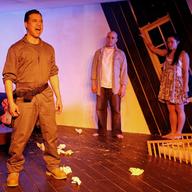
The new play "Se Llama Cristina," or "Her Name is Cristina," written by Octavio Solis, is about a young man and woman, both Mexican-American, who wake up in a strange room and piece together their identities.
It's a similar theme as that explored in the novel "We The Animals," by Justin Torres, in which three Puerto Rican-American brothers struggle to understand their place in the world.
In this interview, Solis and Torres tell WNYC's Soterios Johnson that their work is inspired both by personal experiences and by the stories of their Hispanic communities.
Solis said he was inspired to write "Se Llama Cristina" when his daughter was born, around 20 years ago. The play is about two young Latinos abused by their parents who struggle with their lives and the possibility of becoming parents themselves. “I had some issues with my father growing up, and I was very afraid that I might end up passing that along to my daughter,” he said.
Solis said his characters, played in the current production at Intar by Gerardo Rodriguez (man), Carmen Zilles (woman), Yadira Guevara-Prip (kid), and directed by Lou Moreno, are conflicted about their Mexican identity, the same way he was when growing up in Texas.
He said he was told to lose his Mexican accent to become an actor, and not to wear a white shirt in his head shot, because it made his skin look darker. “I didn’t know my skin was that dark to begin with,” he said. “There are these unconscious things that are placed in you that create a kind of stigma.”
Torres’ debut novel "We The Animals," published in 2011, is also a coming-of-age story, this one about three boys whose dad is Puerto Rican and whose mom is a white American.
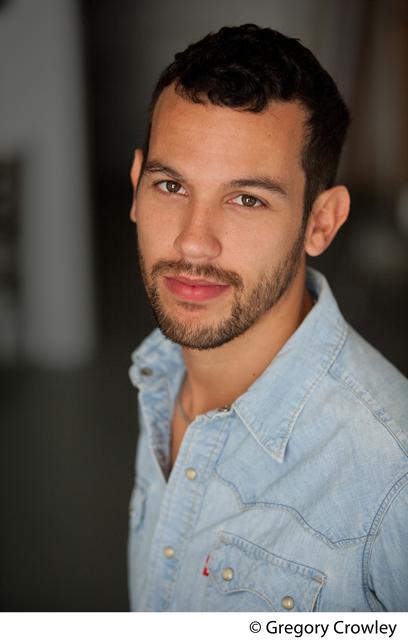
Torres was inspired by struggle with a mixed-race identity and with his sexuality. “I grew up with the expectation that I would be a straight, macho boy and that was never going to happen,” he said. “I felt like I had a foot in different worlds and it was interesting to figure out how to embrace what I needed to embrace and reject what needed to be rejected.”
Solis and Torres write about lives doomed to struggle and disappointment, which they say reflects the reality of many Hispanics in this country.
“They are people who are beaten down, who are living on the edge,” said Solis. “These people feel like they are in an endless cycle and they are never going to get out of the class they are in and perhaps having a child dooms them to that.”
But Solis said he also presents the idea of hope — a child can help a parent break that cycle and transcend it all.
Writing about their communities and their own experiences is not an easy process. Torres said he thinks his family understands why he needed to make fiction out of personal experience. “But I think they were hurt by the book nonetheless,” he said. “I hope the artistic value of the book redeems that injury, but I know it was a bit of an act of betrayal, I think.”
Solis said his parents were also bracing themselves. Still, he believes he and Torres have a responsibility to tell the truth as they have lived it.

WNYC is funded by sponsors and member donations