Men's Neckties
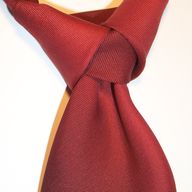
The host is New York Magazine writer Jason McCloskey who is in the current edition of New York Magazine on "the neckwear explosion."
His guests are Francine Farkas, Fashion Director of Alexander's Department Stores and Ralph Lauren, President of Polo Fashions.
Ralph Lauren says he began in the neckwear business about two-and-a-half years ago and states that we have just passed through the era of a traditional look, an ivy league look. He says what prompted the change is that people were tired of this look and felt it no longer was a distinctive look. That, in fact, employers didn't want to look like their employees and that a tie is the most inexpensive way to fit in. He suggests that it is the start of people changing their whole wardrobe.
Lauren says the necktie revolution has pushed people to change their wardrobe and helped them fit in and that the timing was right for a total change. He talks about what he introduced into neckwear and that his concept wasn't just a wide tie but a look from head to toe that included textured fabrics and tapestry designs. He believes stores needed something that was different and the first people he went to were specialty shops with good taste.
Farkas says her first reaction to the new tie and what followed was that it was a marvelous thing for Alexander's. She is satisfied that "finally we can move over and look at an interesting male..for so long men were so boring." She says men now dress in a way that will portray their personality. She talks about Alexander's extensive tie program and suggests it is a revolution in the stores and evolution in the men's clothing field. The first thing she did was to look at what was happening in Europe. She talks about coming upon Mr. Fish in London. That she was thrilled with his array of ties and shirts, silks and tapestries. It was all new and exciting. She seems to think, like Lauren that changes in the ties will spark an overall change in men's dress and fashion. She likens it to getting away from TV dinners after having them all your life.
Lauren talks about his transition from ties to suits and sportswear, the 30's Douglas Fairbanks Sr. look. He did not want to be stereotyped in neck wear in the 30s although he liked the 30s grandeur and taste. His concern has always been "traditional." He says we have been through the Edwardian era and now a classic period. He believes no one look will take over the industry because everything goes today and stores feel the need to show all the options. Television exposure to travel has made the difference. Lauren says people today are seeing things as they happen. That the buyer's outside of New York City are now "all swinging." They are no longer afraid.
Lauren says politics and Washington, D.C. have no influence on men's fashion except for President Kennedy and the promotion of "that style of life."
Farkas believes a man will adopt a mode of dress from a politician only if they are dynamic.
She talks about Alexander's "The Tomorrow Shop." She says they have every category of price and calls it a melting pot of designs. When asked about string crochet underwear and she brings up technicolor underwear and says BVDs are not pretty. Farkas says more than half of the Tomorrow Shop clients are under 25, but she does see a good number of older customers in at lunchtime getting their feet wet. She suggests it is a laboratory for them.
Lauren disagrees with Bill Blass' point of view about the eventual demise of the necktie. Farkas says the tie will continue. It may change but will remain.
Audio courtesy of the NYC Municipal Archives WNYC Collection
WNYC archives id: 151707
Municipal archives id: T4711