Mercury Rising: Which Fish - and How Much - Is Safe to Eat
Eating fish is good for us—it contains healthy omega fatty acids and other important nutrients. But fish also contains mercury, which is not healthy to consume. Jean Halloran, Director of Food Policy Initiatives at Consumers Union, helps us sort out what kinds of fish we should be eating more of and what kinds we should avoid.
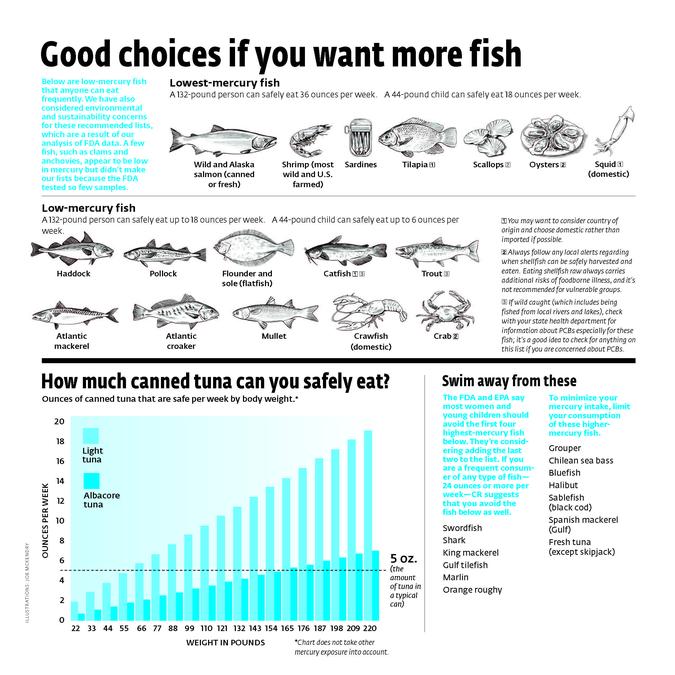
According to Halloran and Consumer Reports' article "The Great Fish Debate," women who are pregnant should not eat tuna at all, because mercury can damage the brain and nervous system of a developing fetus. For more information, check out the chart below, from Consumer Reports.
Fish with the Lowest Mercury
(Can safely eat 18-36 oz a week, depending on body weight)
- Salmon (wild or farmed, canned of fresh)
- Shrimp
- Tilapia
- Scallops, clams, oysters
- Squid
- Most eel
- Sardines (fresh or canned)
Fish with Low Mercury
(Can safely eat 6-18 oz a week, depending on body weight)
- Lobster, crab, crawfish
- Haddock
- Pollock
- Cod
- Flounder
- Trout
- Catfish
- Atlantic mackerel
- Mullet
- Herring
Fish with High Mercury
(Limit how much you eat)
- Tuna
- Grouper
- Bluefish
- Chilean sea bass
- Halibut
- Black cod
- Spanish mackerel
- Tuna (canned or fresh, except skipjack)
Fish with Very High Mercury
(Best to avoid, especially for children and women who are pregnant or may become pregnant)
- Shark
- Swordfish
- King mackerel
- Gulf tilefish
- Marlin
- Orange roughy