Early Radio Documentary and Recording at WNYC
In early May 1941, American broadcasters gathered in Columbus, Ohio, for the 12th Institute for Education by Radio. Although primarily made up of representatives of non-commercial educational stations run by colleges and universities, the group also included commercial network members and one municipal station, WNYC.
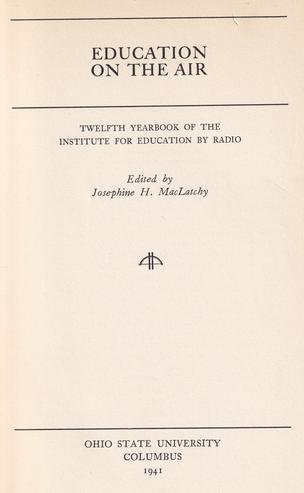
On the eve of the US’s entrance into World War II, the conference's main topics predictably focused on radio in wartime and the handling of news and special events programming. One session, for example, focused on cultural relations with the Americas, as a way to counteract the Axis powers’ regularly-beamed propaganda broadcasts to South and Central America. But there was also, for the first time, a panel on recent developments of an emerging genre: the radio documentary.
The panel was introduced and moderated by the Library of Congress' Philip H. Cohen, an experienced radio producer and the library's director of radio research. Cohen had also been a Rockefeller Fellow at the BBC, so he was keenly aware of their ground-breaking work in documentaries since 1935. Remember, this was long before lightweight, portable recording equipment and reel-to-reel tape, when lacquer disc cutting and the less-than-precise grease pencil markups for designated actualities were a central part of the production workflow. Cohen said in his introduction to the panel:
Effective documentation means that trained students, research workers and script writers must be traveling about the country; there must be fleets of sound trucks and sound equipment at their disposal to capture the sounds of this country and the voices of the people whose lives are being documented. Documentary broadcasting means that these records must be brought back to well-equipped sound studios, edited much as motion pictures are edited and finally made available in transcription form to local radio stations, schools, and other educational institutions.[1]
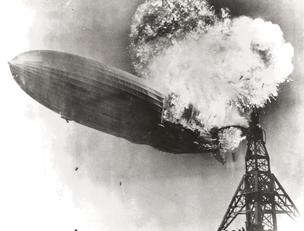
Just as it may be hard for millennials these days to conjure a world where the telephone is always tethered to a wall socket, it may be difficult to imagine the newfound freedom to record and rebroadcast people and events outside of the radio studio without remote telephone lines. Herbert Morrison's 1937 eyewitness recording of the Hindenburg explosion and crash was a watershed moment for documentary recording. And, up until 1939, radio newsreel programs used actors who recreated the week's top stories in the studio. Mobile sound trucks with engineers with record lathes and lacquer discs changed that.[2]

WNYC is funded by sponsors and member donations