New York's Highest Court Rules Immigrants Deserve Jury Trials, Even for Misdemeanors
Update Nov. 28: Saylor Suazo must get a new trial, and Bronx District Attorney Darcel D. Clark said she would consider appealing the case to the U.S. Supreme Court:
“We understand that while the Court of Appeals addresses the harsh realities presented by the possible consequence of deportation for noncitizens, its decision presents conflicts with existing Supreme Court precedent that must be resolved. This decision creates ramifications, including serious backlogs and disparities in the administration of justice, for the courts of this state. We are considering taking the case to the Supreme Court to address the crucial questions this decision presents.”
New York State's highest court has ruled that immigrants are entitled to a jury trial, even when they're accused of misdemeanor crimes that carry sentences of six months or less. The court ruled that the penalty of deportation was severe enough to warrant a jury trial.
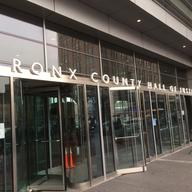
The case was brought by the Center for Appellate Litigation in New York. The Bronx Defenders filed a friend of the court brief; it represented the defendant in his original case, and in his immigration proceedings.
"Jury trials are fairer," said Ilona Coleman, legal director of the criminal law practice for Bronx Defenders. "In context of a misdemeanor case, you're looking at six members of the community that are deciding your fate as opposed to one judge who may not have similar life experiences that you have."
She said there is one other similar ruling in Washington, D.C.
In the New York case, Saylor Suazo, was accused of grabbing the mother of his children, throwing her to the floor and squeezing her neck with his hands. The Bronx District Attorney reduced the charges to B misdemeanors that carried a maximum penalty of three months in prison.
But that sentence isn't considered severe enough in New York City to require a jury trial, even though people charged with B misdemeanors outside the city do get jury trials.
Suazo wanted to face a jury of his peers, instead of a judge. As an immigrant who would surely be deported if convicted, he argued this penalty is serious enough to require a jury trial as guaranteed by the Sixth Amendment. But the Bronx District Attorney argued that deportation is a collateral consequence of a crime, not a penalty.
A judge denied Suazo's request and he was convicted. He then turned to the appellate division and again lost his bid for a jury trial.
But on Tuesday, New York State's Court of Appeals reversed that decision. In a five to two decision, the court ruled, "There can be no serious dispute that, if deemed a penalty for Sixth Amendment purposes, deportation or removal is a penalty of the utmost severity."
Writing for the majority, Judge Leslie Stein continued:
"There can be little doubt that deportation is a sufficiently severe penalty to puncture the six-month demarcation between serious and petty offenses," adding deportation "is frequently more injurious to noncitizen defendants than six months or less of imprisonment."
But in his dissent, Judge Michael Garcia wrote that this ruling would open the door "to further litigation, in both state and federal courts, over exactly which collateral consequences may make an otherwise 'petty' offense 'serious.'
"It is doubtful that importing federal immigration law into the penalty analysis was something the Supreme Court intended when it made the Sixth Amendment right to trial by jury for 'serious' offenses applicable to the states."
He said the Supreme Court has the ultimate authority to settle this issue and should.
The Legal Aid Society called it a "landmark case" that will provide clients a meaningful opportunity to fight against criminal charges that could lead to deportation.
"In New York State, and in the era of Trump, it is crucial that our judiciary weigh potential immigration consequences that could lead to nightmarish outcomes." It also called on the legislature to ensure that jury trials are required in New York City for all defendants accused of misdemeanors, just as they are in the rest of the state.

WNYC is funded by sponsors and member donations