Newark Mourns and Celebrates Ken Gibson, City's First Black Mayor
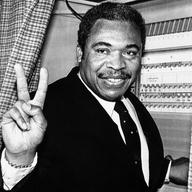
The life of the late Ken Gibson, the first black mayor of Newark and any major Northeastern city, will be celebrated at his funeral Thursday. He died last week at the age of 86 and was credited with opening the doors of City Hall for black political leadership.
"You're talking about my hero," Sharpe James, who served as mayor after Gibson, told WNYC. "He's Newark's undisputed trailblazer."
In the summer of 1967, civil unrest erupted in Newark, sparked by years of systemic racism and black disenfranchisement. What followed in the subsequent months and years reflected the changing political tide in majority-black cities across the country: a wave of black activism emerged.
In Newark, black leaders were set on changing the face of the city's largely Irish and Italian leadership. And it paid off in 1970, when Gibson, a then 38-year-old civil engineer, was elected mayor.
While local black power groups and civil rights activists played a pivotal role in getting Gibson elected, his first campaign manager, Junius Williams, said Gibson's style didn't match the revolutionary rhetoric of many of his supporters.
"He was slow and deliberate, almost to a fault," Williams told WNYC.
But Williams said it was Gibson's qualities as a moderate that helped get him elected in a city still scarred by the events of 1967.
"Ken Gibson was probably the only person who ran at the time who could help heal some of the racial wounds made obvious by that rebellion," said Williams, now a historian and author.
Gibson became a figure of national consequence. His victory made the front page of The New York Times and he graced the cover of Newsweek. He twice ran and lost a bid to become the Democratic nominee for governor.
He ultimately served four terms in City Hall, until 1986 when he was defeated by James, who was then councilmember for the South Ward. James remembered his former rival as a mentor and a friend.
"He raised the bar of expectation that many of us, the former sons and daughters of slaves, could dream big dreams," James said. "You can't beat that."
But Gibson's life was not without controversy. He was the subject of several investigations and in 2002, he pleaded guilty to income tax evasion. In a 2005 interview with the Times, Gibson said his proudest accomplishment had been reducing Newark's high rates of infant and maternal mortality.
In a statement, current mayor Ras Baraka said Gibson "paved the way for every major African American elected official in this state and many places around the country."
Gibson will lie in state from noon to 6 p.m. at Newark City Hall, followed by a funeral service at Symphony Hall.

WNYC is funded by sponsors and member donations