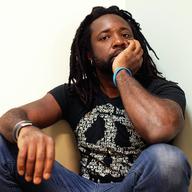
Novelist Marlon James Picks a Soundtrack for 'A Brief History of Seven Killings'
Bob Marley's songs have been used by the Jamaican tourism industry as calling cards for years. No surprise, then, that Marley's music has become synonymous with white beaches and rum drinks. Bob Marley posters with "One Love" printed on them adorn fraternity halls on college campuses, as totems exhorting an easy-going attitude.
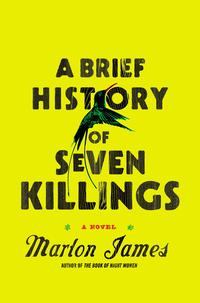
The idea seems to be that Bob Marley and reggae music materialized like a warm breeze from a place that naturally comported itself in a laid-back manner. A few paragraphs into the new novel A Brief History Of Seven Killings and the reader becomes aware that the Kingston they're in is not the logical birthplace of a children's song like "Three Little Birds." Rather, the lightly fictionalized ghettos of the cities are brutal, crime-ridden worlds unto themselves -- and it is this milieu from which Bob Marley began to wail.
In October 2015, Marlon James' A Brief History of Seven Killings was awarded the Man Booker Prize. Click the player above to listen to James talk about his book and about the music that inspired it.
Marlon James' book is a tale told by dozens of narrators, about a crew of petty street hustlers-turned-would-be-assassins. The book's central event is the true story of the attempt on Bob Marley's life -- in his own home -- in December of 1976. Spinning outward from that moment, readers travel many years and many miles with mafia dons, gangland peons, drug smugglers, Jamaican exiles, and even ghosts -- "duppies," in the Jamaican patois that characters frequently employ.
From Kingston of the 1970s to Brooklyn of the 1980s to Washington Heights of the 1990s, James' sprawling tale examines Jamaican culture at home and abroad and, of course, is saturated by music, Jamaican or otherwise.
In a conversation with Soundcheck host John Schaefer Marlon James talks about Bob Marley's legacy in Jamaica, and guides listeners through a handful of Jamaican-influenced songs from throughout the book's three decades.
A Soundtrack To 'Seven Killings' As Picked By Marlon James
Bob Marley & The Wailers, "Ambush In The Night" (1979)
Marlon James: It was an unwritten rule: Nobody touches [Bob Marley]. The great thing about his house was that, people who only a day before had been trying to kill each other, would be hanging out, breaking bread, discussing music and so on. The Prime Minister used to drive down and chill. The idea that the one neutral ground in Kingston could be shot up was unheard of, it was such a turning point, and this song speaks to it pretty directly.
Bunny Wailer, "Crucial"
M.J.: He's sometimes considered the most Jamaican-y of the Wailers -- which is funny, because he has the best pop instincts. (Them's fighting words.) Wailer was the one who was most successful at listening to the street.
Tenor Saw, "Ring The Alarm" (1985)
M.J.: He was one of the first major post-Marley figures to emerge, but not from the roots-reggae camp -- he was from the street, dancehall. It was a major turning point in the early '80s, especially since this song is about soundsystems, a dancehall song about dancehall culture. Both dancehall and hip-hop have the same genesis in a way; reggae, for all its merits, was still the music of people who could afford their instruments. Dancehall's instrument was flipping over the reggae B-side, which was usually instrumental, and rapping on top of that.
Boogie Down Productions - "The Bridge Is Over" (1987)
M.J.: It was a diss record, because Queens was starting to act up and act as if they played a major role in hip-hop. Sorry Queens! [Track emcee] KRS-One always knew what was going on in Jamaican music at all times.
Damian Marley, "Welcome To Jamrock" (2005)
M.J.: This was a song that sort of summed up how far we've come...and it wasn't very far. It's such a vital and explosive and brilliant song, but it's also a pretty depressing song. Some of the stuff you hear in [Bob Marley's] "Ambush In The Night," especially about suffering and the desperation that suffering leads to, Damian Marley's saying, "It's still there." Some of the troubles are new, some of the old problems we just give new names. So it's kind of a summing up of how far we've come since his dad.


