New York Invests Millions in Mosquito Vigilance
The City and State governments are investing $21 million over a three-year period, in a "Zika response plan."
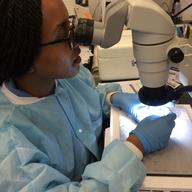
The plan builds on longstanding efforts focused on West Nile Virus, adding dozens more mosquito traps around the city and 51 new inspectors, exterminators, disease inspectors and lab analysts.
The main mosquito that transmits Zika is a tropical species called aedes aegypti. Its "cousin" in this region, aedes albopictus, has not been found to harbor Zika in the wild. Nonetheless, the city has been trapping and testing hundreds of them.
The city is also expanding testing for pregnant New Yorkers who have traveled to warmer regions. And officials have launched a campaign to disseminate prevention and testing information throughout the city.

WNYC is funded by sponsors and member donations
Top Stories From Gothamist
Trump-backed investigations into NY AG Letitia James cost taxpayers $1.4M and counting
Lobbyists, major labor unions, a co-owner of the Flatiron Building and Bronx District Attorney Darcel Clark all contributed to Attorney General Letitia James’ legal defense as she fended off an investigation from President Donald Trump’s Department of Justice.
Documents filed by the Democratic Attorneys General Association show that the national advocacy group spent around $625,000 to defend James from allegations by federal prosecutors in Virginia that she committed mortgage fraud in that state. A federal judge subsequently dismissed the case. Federal prosecutors are reportedly still investigating James in connection with her properties.
Taxpayers, meanwhile, have spent $1.4 million and counting to beat back another investigation by federal prosecutors in Albany, state records show. That tab is expected to rise as the case is appealed. That investigation, according to court filings, is examining James’ handling of a case centering on the Trump Organization’s valuation of properties, as well as another into the National Rifle Association.
On Monday, a former U.S. solicitor general argued that John Sarcone, Trump’s pick to lead the U.S. attorney’s office covering much of upstate New York, should remain barred from continuing the parallel investigation of James.
James and her allies say the charges and investigations are political. Her office prevailed in the Trump Organization case, prompting the Republican president to publicly pressure DOJ leaders to go after James.
That sense of unfairness motivated donors to her legal defense, they said.
“It was a national outrage that the Trump administration would just be so hell-bent on going after our attorney general,” said state Sen. John Liu, a Queens Democrat who donated $200. “We didn't want Attorney General James to feel like … she didn't have everyone in backing her.”
Emily Trifone, a spokesperson for the Democratic Attorneys General Association, said the organization raised more than $1 million for the legal defense fund. Trifone said it’s difficult to determine exactly who donated to James’ legal defense because all contributions go into the organization’s general fund.
Liu said he contributed after a Zoom call organized by the advocacy group 100 Black Men.
Jeff Gural, a real estate developer and co-owner of Manhattan’s historic Flatiron Building, contributed $5,000 to the Democratic Attorneys General Association. He confirmed his donation was aimed at James’ defense.
[object Object]Other prominent figures donated to the association in the days after James’ indictment. Clark, the top prosecutor in the Bronx, gave $500. Valerie Berlin, a cofounder of the lobbying and public relations firm BerlinRosen, contributed $1,000. Lobbyist Emily Giske donated $3,000.
A political action committee associated with SEIU 1199, a union representing healthcare workers, contributed $50,000 on October 9 — the same day James was charged with mortgage fraud. A union spokesperson said the donation was made to “protect our democratic institutions.”
Local 1180 of the Communication Workers of America, which represents New York City employees, contributed $3,000. A spokesperson didn’t return requests for comment.
Fearing that Trump would seek retribution against his perceived enemies, New York lawmakers created a special $10 million fund for James and others to use for legal defense. James’ office opted not to tap it, saying it wanted to save taxpayer funds, and instead turned to the Democratic Attorneys General Association.
The organization said it set up the legal defense fund to help any state prosecutors who ended up in Trump’s crosshairs. It’s still seeking contributions.
"As Democratic AGs continue to be on the front lines fighting to protect the rights and freedoms of all Americans, President Trump continues to ignore the law and target anyone who disagrees with him,” Trifone said. “DAGA will always defend all Democratic AGs and their staff who are targeted for political retribution by the Trump administration."
The federal investigation of James’ office stalled after Sarcone issued subpoenas for records from her cases against the Trump Organization and the NRA.
James’ office hired an outside law firm, Munger Tolles & Olson LLP, to challenge the subpoenas. Taxpayers are footing the bill because the subpoenas targeted the Office of Attorney General. A federal judge quashed them, finding that Sarcone was not properly appointed to his position and couldn’t lawfully sign off on the subpoenas.
A panel of appellate judges heard arguments over the matter on Monday. James’ office was represented by Donald Verrilli, a former U.S. solicitor general. Under the retainer agreement, partners like Verrilli bill for $1,650 per hour.
The state has paid the firm $1.4 million as of late March, spending records show. James’ office increased its overall contract with the firm to $2.5 million in February, according to the state comptroller’s office.
“Our office continues to defend its work in the Trump Organization and NRA cases against the federal government’s attack on the rule of law,” said Alexis Richards, a spokesperson for the attorney general’s office.
State audit finds gaps in NYC schools' oversight of tech and student data
New York City’s public schools system struggles to track which technology its schools use, report breaches on time and notify families when student data is compromised, the state comptroller’s office found in a recent report.
Comptroller Thomas DiNapoli released the audit late last month, about a week before the start of a widespread ransomware breach that ultimately left school districts and colleges around the country without access to the online education platform Canvas. New York City schools, Columbia University, Rutgers University and Princeton University were all among the institutions facing outages this week.
In a statement on Friday, Schools Chancellor Kamar Samuels said the department had recently learned of two data privacy issues. One was “globalized,” affecting up to seven schools, an apparent reference to the Canvas breach. The other, he said, was localized to one campus. Bloomberg cited a memo saying malware had been found on computers at one school community’s shared lab.
DiNapoli’s audit doesn’t address those incidents. It was based on a longer review of the period from March 2020 through September 2025. It found the city’s public schools system — which serves roughly 900,000 students across 1,600 schools — does not maintain a comprehensive list of the various applications each school uses and, as a result, does not have a “clear understanding of its environment, the type of information being stored in these applications, and the various risks associated with the data.”
Auditors reviewed 141 data breaches between January 2023 and February 2025 and found the department delayed reporting nearly half of those breaches to the state, in some cases by more than a year.
“One of the things that we noted in the report is a lack of a centralized inventory,” said Tina Kim, the deputy comptroller for state government accountability. “So, the district is not aware of what specific applications all of the schools are actually using.”
“And if you think about it, that creates a delay because you don’t have a centralized inventory,” Kim continued. “And the reason why inventories are also important is because it allows you to basically do a risk assessment and know if you’re using certain applications that are higher risk, you have to put in certain controls.”
They also found that school district policy didn’t address some areas related to data security and privacy, or publish related materials on the school system’s website. Auditors also said they found “weaknesses in technical controls” used to safeguard student data. And they said a quarter of the department’s roughly 161,000 employees did not complete required annual data privacy training in 2024.
“Historically, when you got a phishing email, there were red flags, there were misspellings,” Kim said. “But artificial intelligence can take away those red flags, and with new technology, you can actually do phishing emails at scale.”
“That’s why training is so important, because artificial intelligence lowers the barrier,” Kim continued. “It basically increases the number of people who have access to these tools and makes it a lot easier to actually do.”
New York City Public Schools didn’t immediately reply to a message from Gothamist seeking comment on Saturday. In a written response to the audit, however, Deputy Chancellor of School Operations Kevin Moran said protecting student data “is of the utmost importance” to the department.
Moran also pointed to a new student privacy webpage and a working group of parents, advocates and school leaders convened in the past year. And while Moran pushed back on some of the survey’s methodology, the department accepted most of the comptroller's recommendations, including developing a way to account for all student information systems and drafting a written data classification policy.
The comptroller's office said it would follow up in a year to check on the district’s progress in implementing its recommendations.
Is learning to read in NYC schools getting in the way of reading whole books?
When Bronx teacher Jessica Beck began teaching two decades ago, middle schoolers in her English class often read 20 books a year. Under the city’s new, mandated literacy curriculum, however, she’s hoping to get through four books in class by the end of June.
She said that’s because much of the kids’ class time is dedicated to reading excerpts and supplementary activities.
“They come to me and they're like, ‘Miss, this is so boring. I miss talking about books,’” Beck said.
With literacy rates at crisis levels among students throughout the five boroughs, the education department has recently implemented major reforms to reading instruction as part of an effort called NYC Reads. The city began with an overhaul of the early grades. By fall 2027 all middle schools must adopt one of two reading curricula, from EL Education or Wit & Wisdom. Officials said the two programs were selected because they align with the latest science on reading, focusing on phonics, vocabulary, knowledge building and comprehension.
But teachers and parents said they’re worried kids are now being forced to slog through mind-numbing exercises in workbooks, rather than nurturing the joy that comes from reading whole books.
The critique reflects concerns across the country about a decline in whole books taught at school. A national survey out this week found teachers assign four whole books on average.
“I have a firm belief that following characters for 300 or 400 pages builds a muscle that there's no other way of building,” said Jonathan Goldman, a parent at Manhattan School for Children.
Lists of the books included in the two city-approved curricula show middle school students are expected to read four to seven books in a school year, depending on the grade.
[object Object]Goldman, an English professor, said his daughter has been coming home with reading assignments that look more like test prep with short excerpts followed by comprehension questions.
“We keep being told that our kids don't have the attention span anymore that previous generations did, and I think that they don't have the attention span because they haven't been given enough opportunities to stretch out their attention span, frankly,” Goldman said.
New York City’s literacy overhaul reflects a nationwide course correction from teaching methods that experts said have now been disproven. Critics said popular strategies created bad habits by encouraging students to guess words by using pictures, while glossing over important lessons on letter sounds.
[object Object]As soon as the new curriculum was introduced at the elementary level, parents started raising alarms about fewer whole books. Now, as the effort expands to middle schools, those worries have spread. Parents fear the shift exacerbates the attention-span crisis for kids surrounded by screens.
But education department officials insisted that whole books are still at the core of the city’s reading program. They said the new curriculum creates more consistency and ensures kids have the skills they need.
And they said it’s working: Reading scores on state exams spiked last year. New York City students’ reading scores went up 7.2 points in grades three through eight, with 56.3% of those students testing proficient on the state reading exams.
Danielle Giunta, deputy chancellor for teaching and learning for the public schools, said the gains show the literacy overhaul has been a “game changer” for students.
She said the new curricula still centers whole books, with middle schoolers assigned popular titles including “The Lightning Thief,” “The Boy Who Harnessed The Wind,” “Hidden Figures,” “Farewell To Manzanar,” “Maus,” “A Midsummer Night’s Dream” and “Animal Farm.”
She also noted that kids have been borrowing digital library books in record numbers.
But she acknowledged that the new coursework “balances” whole texts with excerpts and activities. “New York City Reads is really centered on this concept of a literacy ecosystem, making sure there’s a breadth of exposure on a topic to different authors, to different perspectives,” she said.
“We often refer to literacy in [grades] K-2 as learning to read, and then from grade three on shifting to reading to learn,” she said.
Giunta encouraged parents to use a new tool that offers more insight into what kids are reading about in school.
Representatives from the two curriculum companies, EL Education and Wit & Wisdom, both said whole books are central to the curriculum and serve as anchors to related content meant to deepen students’ knowledge and skills.
“We believe whole books matter,” said Abbas Manjee, co-founder and chief academic officer at the company Kiddom, which includes EL Education. “Books are sacred.”
In EL Education, Rick Riordan’s “Percy Jackson and the Olympians: The Lightning Thief” is paired with a unit on Greek mythology where students research a Greek god, and each rewrites a scene with a character they invent, among other tasks. “Hidden Figures” is paired with a speech with historical documents and debates about space exploration.
The curriculum says teachers should have students read excerpts in class so they have time to reflect and respond, and “invite” them to read the rest for homework. There are assessments — like quizzes and tests — that accompany the units.
Evan Stone, CEO of Educators for Excellence, said the advocacy group made up of thousands of New York City teachers is very supportive of NYC Reads. He said teachers appreciate the new approach and “see real value in going very deep on a smaller number of texts.”
But many teachers and parents are frustrated with the changes. In addition to decrying a decrease in whole books, some have criticized the new “boxed curriculum” as too rigid and lacking diversity.
“The students you have and what’s happening in the world should determine what you’re reading in the classroom,” Beck said.
Susan Neuman, a professor of childhood literacy and education at NYU, said, overall, she’s “very impressed” with the curriculum changes, which have been effective in teaching kids the basics of literacy. But she said there’s room for improvement, including more time spent on whole books.
“We now have a systematic program that focuses on helping children connect sounds and letters and helps children learn how to blend these sounds into words,” she said. “ I really think that one of the things we need to do, and we may be neglecting to some extent, is time spent reading.”


How to Avoid Sneaky Phishing Scams


Justice for Epstein Victims Through NYS


New Doc Celebrates NYC's Weird and Wild Public Access TV Experiment

WNYC is funded by sponsors and member donations