City Comptroller: We Gave $10B to MTA Already!
As the MTA struggles to find billions of dollars to close a gap in its five-year capital plan, one city official says the agency should look to Albany, not to the locals.
(Maybe you've heard this one before.)
City Comptroller Scott Stringer released a report Tuesday he said demonstrates that the contributions the city makes to the transit system have been traditionally understated.
According to his parsing of the numbers, city residents and businesses pay over $10 billion a year to the MTA directly and indirectly, and the state pays just $600 million.
He also said that while the city's past contributions to the transportation authority's capital plan have been characterized as being around $100 million a year, the true number was closer to $175 million.
"Indeed, in terms of the amounts received to date, the New York City contribution to the last two MTA Capital Programs exceeded the New York State contribution by approximately $1.75 billion," states the report.
Stringer called that disparity "incredible."
"New Jersey, Connecticut, the federal government, state government have not fully given their fair share," he added.
The report drew a sharp rebuke from MTA spokesman Adam Lisberg, in part because it counts the fares and tolls paid by city residents as part of the city's contribution.
"It is incredible," he said in an email, "that the comptroller acknowledges in the very first paragraph of his report that 'the MTA needs more funding from every level of government,' but uses fuzzy math to justify letting the city off the hook for using some of its billions in future surpluses to pay its fair share for mass transit."
But Stringer didn't let City Hall off the hook entirely. "I think the city can do more," Stringer said in a conference call with reporters. "(If) the city does more, the state has got to pull their weight, right? Record surpluses. And we have to have a new relationship with Connecticut, New Jersey, and the federal government. But how else are you fully going to fund a capital plan? The city can't do it on our own."
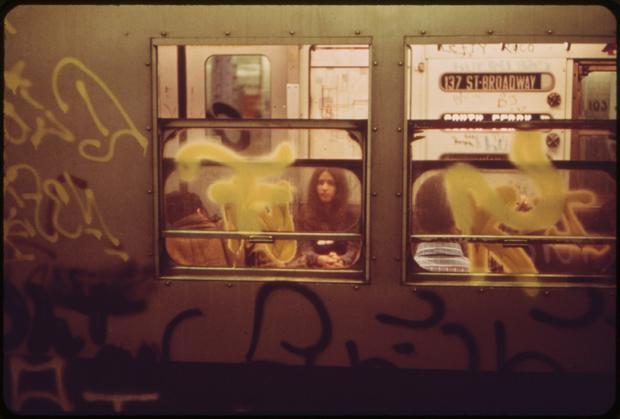
Meanwhile, he complained that the transit system is dirty and underfunded, and starting to devolve into the subway system of the 1970s, when "the A train was a rolling crime scene." (Or at least a rolling canvas for spray-paint.)
Charles Brecher, consulting co-director of research at the Citizens Budget Commission, agreed with the comptroller.
"To say the city should put up money for a system that serves the whole region isn't really sensible," he said. "The weak link is the system now is the cross-subsidy from drivers," referring to the Move NY plan to recalibrate tolls on bridges in the city.
Meanwhile, Albany is maintaining radio silence on whether it plans to help the MTA, which says it needs $14 billion over the next five years to maintain and improve the transit system. The governor's office has not returned WNYC's requests for comment.
Amy Spitalnick, a spokeswoman for Mayor Bill de Blasio, said the comptroller's report "underscores a fundamental reality: New York City and its taxpayers have disproportionately subsidized the MTA, particularly after years of declining state investment." The mayor has proposed increasing the city's contribution to the MTA's capital budget by $25 million for the fiscal year beginning July 1.

WNYC is funded by sponsors and member donations