That Old City Payphone Is Now a Wi-Fi Hotspot
The city's dusty old payphones are getting a makeover, as the first batch of them officially went online in a plan to convert thousands of them into free Wi-Fi kiosks.
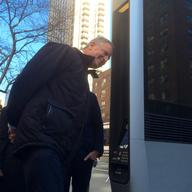
Mayor Bill de Blasio tested one on the corner of Third Avenue and 16th Street in Manhattan by using the free phone feature to call 311. The 6 foot 6 inch mayor stooped over the keypad as he asked the operator to find a pre-k program convenient to his Park Slope home.
"It worked beautifully," he told reporters afterwards, adding that the 311 operator also came through "with flying colors."
More than a dozen payphones along Third Avenue became operational Thursday in a program called LinkNYC. The kiosks have tablet computers that enable the public to make free phone calls, access the Internet and call 911. They also work as Wi-Fi hotspots within a radius of 150 feet, and they have USB ports that can be used as cell phone chargers.
At least 500 kiosks are planned to open from the South Bronx to Staten Island by July, with a total of 7,500 in all five boroughs over the next eight years.
The program is even cheaper than a call from a payphone. The mayor said it's fully funded by CityBridge, a consortium of three private companies that plans to generate half a billion dollars over the next 12 years through advertising on the kiosks.
"It will be the biggest and fastest network in the world and completely free of charge," said de Blasio. The Wi-Fi speed will be up to one gigabyte per second, faster than most public hotspots around the country, although one reviewer who tested the beta version found it wasn't quite so speedy.
The city said CityLink will protect users' privacy. The Wi-Fi network has an encrypted connection for the latest generation of cell phones. Although an email address is required to log on, developers said that's purely to stay in touch with users in case of changes in policy and that no email addresses will be shared with a third party.
However, Maya Wiley, counsel to the mayor, said aggregated, anonymous data will be collected and shared with the city to improve the system. But that data will be owned by CityBridge, not the city, meaning it will not be subject to Freedom of Information Law requests.
Apple's refusal to allow the FBI access to encrypted data from a terrorist's phone have led to new questions about the limits of privacy. The CityBridge developers said they would turn over any data if a subpoena is issued.
"We're not going to challenge the New York City Police Department if they ask us for information ... we are legally required to give to them," said Scott Goldsmith, president of media at Intersection. His company joined with Qualcomm and CIVIQ Smartscapes in the CityBridge consortium.
Goldsmith said the kiosks are also designed to be rugged. They will be visited twice a week for maintenance and cleaning. They have sensors, battery backup and cameras.
De Blasio said the kiosks are part of his bigger goal of providing affordable, high-speed broadband for every New Yorker by 2025. Wiley added that low-income users, who rely on their cell phones to connect with the Internet, will benefit by being able to lower their monthly costs by using the kiosks.

WNYC is funded by sponsors and member donations