OPINION: City's 'Talk to Your Baby' Message Is Not Enough
SchoolBook | Jun 17, 2015
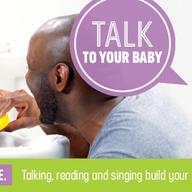
Last spring, posters with wide-eyed babies and doting parents appeared on subway cars. Their message: “Talk to Your Baby. Their Brains Depend On it.”
The $1 million city-sponsored campaign, part of a larger public awareness effort, was inspired by the seminal finding made 20 years ago that by age 3, a child from a low-income family has already heard 30 million fewer words than a child from a wealthier home. This disparity, the study found, sets lower-income kids behind educationally long before they enter kindergarten.
A growing body of research is adding nuance to this so-called “word gap” by demonstrating that it is not merely the quantity of words a young child hears that matters when it comes to building vocabulary and later school success. The quality of communication between parent and child may be even more crucial: talking in a baby voice, responding to a baby’s coos promptly, and even using the kind of exaggerated smiles and other facial expressions pictured in the “Talk to Your Baby” posters may all help kids learn language.
In one study published in Proceedings of the National Academy of Sciences (PNAS) in 2013, adult participants watched muted videos of parents talking to their toddlers, and were asked to guess from a parent’s nonverbal cues what words they spoke. Three years later, the children of parents whose words were easily identified had larger vocabularies than the kids of parents whose words could not be guessed. This correlation held true even when the researchers controlled for number of words spoken, implying that quality of communication had an effect on building vocabulary over and above any effect of quantity of communication.
In the study’s most striking finding, researchers found “high quality” communication as likely to occur in low-income homes as in more affluent ones. The authors speculated that the well-documented difference in vocabulary between preschoolers from poor and affluent families may result not from differences in the quality of their parent’s communication, but because of “the greater amount of talking by parents to their children in higher socio-economic homes, which, in turn, increases the number of quality learning instances encountered overall.”
In other words, quantity may matter largely because the more interactions a child has with a parent, the more chances she has for quality communication.
Of course, one sweeping policy implication of this research would be to chip away at the education gap by making it easier for young kids from poor families to spend quality time with their mothers and fathers. Raising the minimum wage so parents can work fewer hours and experience less stress, providing paid parental leave and incarcerating fewer low-income moms and dads may be good places to start.
In the meantime, a far less controversial solution—if also a far more modest one—has come from City Hall in another initiative designed to build young children’s language skills. “City’s First Readers,” which reached 200,000 families in fiscal year 2015, just received an endorsement from the American Academy of Pediatrics.
Slated to receive a renewed commitment of $1.5 million from City Council this fiscal year, the program is composed of eight organizations that share the collective goal of better preparing children under 6—and especially those from low-income families—for school. Though a few of the programs send specialists to child care centers, most see working with kids and parents together as central to their mission, aiming to increase both the quality and quantity of their interactions.
“It’s a program designed to help parents and caregivers be their child’s first teachers,” explains Daniel Nkansah, the coordinator of children's services for the Queens Library system, a participant of City’s First Readers. “Most immigrant parents have told us they want to get their child ready for school but they don’t know how. They don’t know that reading and things they can do at home will lay the foundation for school.”
Nkansah’s program engages families at libraries with cozy, inviting areas for parents and babies to read and play together and workshops where mothers new to the country can pick up English as they receive specific instruction on how to read to toddlers and preschoolers in ways that encourage them to ask and answer questions—skills important to school success. Two other “First Reader” programs reach families during routine pediatric exams.
The most intensive program under the City’s First Readers umbrella is the national research-based Parent-Child Home Program. It sends literacy paraprofessionals directly into families’ homes for 30 minutes two times a week over a two-year period. Bearing books, toys and games, these home visitors model for parents how to read, play, and converse with young kids in ways that get them talking.
“It’s all about not only using quality language and asking open-ended questions when you’re reading a book and engaged in a game, but also about using positive language instead of negative,” explains Sarah Walzer, the program’s CEO.
“It’s a back and forth where the child has heard more words and also has practiced how to use them," she said. "If you come to class without those language skills, you are likely to be less comfortable trying.”
Critical to the program’s success is that home visitors speak the same language and are typically from the same neighborhoods and communities as the families they visit—something that studies suggest may be key to establishing trust with families who are isolated and wary of anyone resembling a social worker.
“Their lives are hard and chaotic and they’re struggling just to keep a roof over their child’s head and food on the table and to keep their kids safe,” says Walzer. “This positive interaction and happy bonding with their child is something that sometimes they just don’t have time and the emotional bandwidth to do.”
Walzer says she has seen the ripple effect of a harried mom spending just a half-hour a day of fun learning with her kids. When a child learns how to, say, recite “Brown Bear” or recognize colors, parents “feel a sense of agency because they understand that they’re the person who makes that happen. It's not the home visitor coming in twice a week, it's them riding the bus and going to the grocery store with their child, and talking about what they're seeing, and it's a wonderful thing,” she says. “You see this amazing change in your child that lights up parents and kind of inspires them to do more.”
So what do the early literacy experts, like her, think of the “Talk to Your Baby” campaign? Can a subway poster also make a difference?
“It’s a good reminder for parents up and down the economic spectrum,” says Walzer, who then adds a cautionary note. “If you’re telling them to talk to their child in the grocery store when nobody talked to them in the grocery store, they aren’t going to know how to do that.”

Kendra Hurley
WNYC is funded by sponsors and member donations