Opinion: De Blasio Must Put Reducing Class Sizes at Top of His Agenda
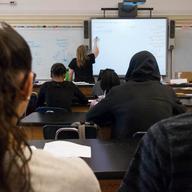
Last school year, class sizes in New York City public schools were the largest in 15 years in the early grades of kindergarten through third grade, and the largest since 2002 in grades four through eight.
This is particularly troubling as the demands on teachers and higher expectations of children have increased with the implementation of Common Core standards. We are also concerned that in Mayor Bill de Blasio's speech on Monday about how to help struggling schools, class size reduction was not mentioned – even though many of these schools have classes full to the brim, with 30 students or more.
The contractual limits negotiated by the teachers union and the city haven't changed in 40 years – and remain far too high. They are:
- 18 in prekindergarten
- 25 in kindergarten
- 32 in Grades 1- 6 in elementary schools
- 30 in Title I junior high and middle schools; 33 in other middle schools.
- 34 in academic classes in high school
- 50 in physical education classes in middle and high schools
- 50 in required music classes in high schools
We know of no research indicating that class sizes this large are acceptable. In fact, quite the opposite: a large body of research demonstrates that children in smaller classes perform better academically and socially than children in larger classes.
As two of the 73 educational researchers and professors who recently sent an open letter to Chancellor Carmen Fariña voicing concern about large class sizes, we fear that overcrowding will undermine many of the positive reforms underway in the New York City school system.
The National Educational Policy Center published a report this year stating that, "While lower class size has a demonstrable cost, it may prove the more cost-effective policy overall."
Furthermore, research clearly shows that class size matters for all students, and especially for students at-risk of low achievement, including children of color, those in poverty, English language learners, and students with special needs.
This is why class size reduction has been shown to be one of the few reforms to narrow existing educational achievement gaps.
Smaller classes also increase student engagement and high school graduation, lower disciplinary referral and drop-out rates, reduce teacher attrition, and increase college enrollment and completion. No teacher, no matter how skilled or well prepared, can be as effective in the large classes that exist in many of our city's public schools.
Despite these overwhelming findings on the benefits of smaller class size, the trend in New York City is getting worse as class sizes increase. Nearly a third of our city's students spent their year in classes of 30 or more, according to the Department of Education's own data.
While we acknowledge that the new administration is taking some very positive steps in educational policy, we are extremely concerned that the benefits of these reforms, such as increasing access to prekindergarten, establishing community schools, and inclusion for students with disabilities, may be undermined unless the trend of ballooning class sizes is reversed.
We realize that the city needs additional state funding to reduce class sizes. We urge the mayor and the chancellor to fight for those funds and for the governor to give New York City students their fair share. Our children, especially those in highest need with the weakest voices, deserve this fight.
It's time for de Blasio to make class size reduction a centerpiece of his educational reforms, so that our teachers can optimize their chance at success, and 1.1 million New York children can get the education they deserve.

WNYC is funded by sponsors and member donations