Opportunity for Refugees, Nourishment for New Yorkers
This is not a story about the politics of immigration.
This is not a story about walls or detained children, DACA or TPS, green cards or immigration courts.
This is a story about food.
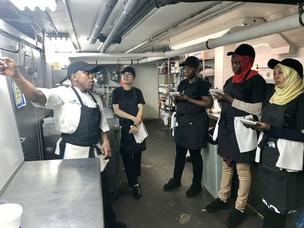
Although the Trump Administration views refugees as security risks, and despite the fact that they are being denied entry to the United States in historic numbers, delicious counter-narratives are emerging throughout the country and particularly in the New York area. Americans are breaking bread with refugees in homes, offices and restaurants — devouring food prepared with ancient recipes from the old country and techniques taught by grandma. In the process, new financial, emotional and social opportunities are opening up for refugees.
Click play above to listen to these stories. They're a modern version of how foreigners and natives have interacted for centuries. When you arrive in a new land, you share a meal. And when something tastes great, when something is spicy or sweet or sour, the need for a common language fades as a more universal connection is found.
These days, the food is being prepared in New York City-area kitchens by victims of persecution from abroad. They include a catering company in Long Island City where all the food comes from refugees' cookbooks, and a new nonprofit restaurant in Brooklyn where all the food is made by refugees and victims of human trafficking.
Eat Offbeat
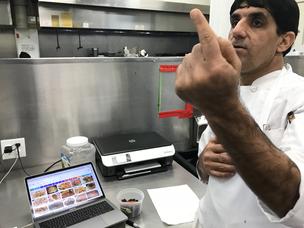
Founded by Manal Kahi, a Lebanese woman who arrived in New York to attend graduate school at Columbia University and soon realized she didn't like hummus on American supermarket shelves, Eat OffBeat takes refugees' recipes from home and repurposes them for corporate lunches and private parties in New York. The catering company partners with the International Rescue Committee — a refugee resettlement organization — to find refugees who have a love of cooking and then puts them to work preparing meals from across the globe.
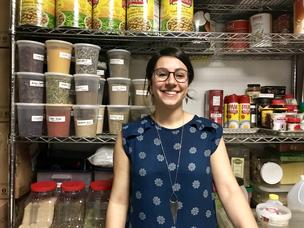
"Sometimes it's not about a recipe, it's really about that special moment where you add that spice...that makes a recipe so special," Kahi said. "And that's what we see happening every day at the kitchen here."
Emma's Torch
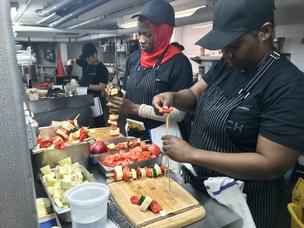
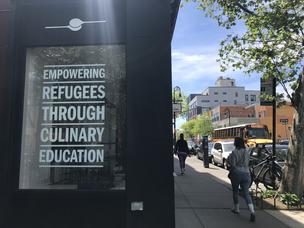
Last month in Carroll Gardens, Brooklyn, Kerry Brodie opened Emma's Torch, a nonprofit restaurant named for Emma Lazarus, whose poem about "huddled masses yearning to be free" adorns the Statue of Liberty. Everything here is cooked by refugees, asylees and victims of human trafficking as part of an intensive eight-week culinary training class held right at the restaurant.
Brodie's work is infused with her own experience baking milchika cinnamon buns with her South African Jewish family. "It's those memories of cooking with my mother that really inspire me," she said. "And that's not that different than the memories that she has of cooking with her mother in South Africa or the memories of somebody cooking with their grandmothers in Aleppo."
United Tastes of America
What began as the Syria Supper Club, in which refugees from Syria and Iraq cook dinners in Americans' homes for a small fee, has now expanded. In addition to organizing dinners, the renamed United Tastes of America is working to get refugees certified in food handling so they can build their professional credentials and get steady work in the food industry.
Refugees Welcome
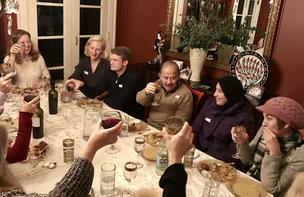
At these meals, which are often held at companies, half of the participants are refugees and the rest are employees. Refugees Welcome dinners are held around the world to "break bread and break barriers."
"The idea is that food is a common interest and a common activity that we all share, regardless of where we come from," said Gissou Nia, a human rights lawyer by trade who organizes the dinners. "It can bring people together, put people at ease, and give people something to talk about." She said the dinners show "the power of food as a tool of peace."
Refugee Food Festival
Sponsored by the United Nations refugee agency and held around the world this month, including in New York, local restaurants open their kitchens to refugee chefs to prepare meals from home. The events are particularly hooked to World Refugee Day -- which is today, June 20.

WNYC is funded by sponsors and member donations