Experts: Penn Station's Design Flaws Pose Security Risks
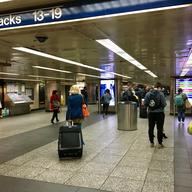
Panic ensued at Penn Station last Friday after unfounded reports of shots fired set off a stampede during the evening commute. The chaos has put the station under the spotlight once again, highlighting the potentially dangerous design flaws of the busiest transit hub in the country.
"The new Penn Station has always been wrong[ly] designed," said former New York Police Department detective Nick Casale.
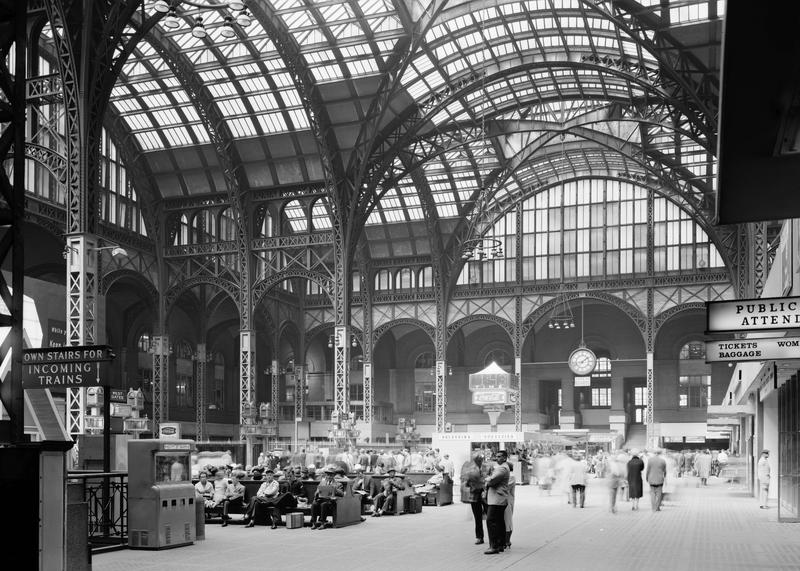
The original station, bright and airy, was demolished in the 1960s to make way for Madison Square Garden. The redesign came at a time when rail commuting was in decline. But today, about 650,000 commuters trek through the hub each day, packed together under low ceilings and trudging through maze-like corridors.
Casale was appointed the first ever Deputy Director of Counter-terrorism for the Metropolitan Transportation Authority (MTA) immediately following the Sept. 11 attacks. So he's used to identifying signs of possible danger.
During a recent tour of the station with WNYC, Casale spotted unattended baggage, unsecured construction areas and noted the lack of uniformed police presence. While these problems could be fixed with more manpower and resources, other issues like the lack of signage pointing to the nearest exit or police department persist.
"If anything does occur, it's confusing [to discover] which way to go to get away form the danger," Casale said.
Communicating with commuters in the event of an emergency presents another challenge. Though an Amtrak spokesman said the building has two public address systems that can send messages between Amtrak, The Long Island Railroad (LIRR) and NJ Transit, Casale said the station would benefit from a single system that could send real-time alerts, including to the MTA.
Stampede breaks out during rush hour at New York's Penn Station after false reports of gunfire https://t.co/M9RhwVO8Q4 pic.twitter.com/PZZsxy9PX1
— ABC News (@ABC) April 15, 2017
And then there are the station's low ceilings which pose another risk.
"Smoke and heat rise in a fire [and] what usually kills people isn't the fire, it's the smoke," said Vishaan Chakrabarti, founder of the Practice for Architecture and Urbanism.
Last year, his firm drew up plans calling to move Madison Square Garden and use the building's structure to build a new Penn Station with 150-foot-tall ceilings which, aside from being aesthetically pleasing, would help purge smoke in case of a fire or explosion.
Mike Tolbert, an Amtrak spokesman, said, "Penn Station has a smoke ventilation system and a fire prevention regime that includes sprinklers and fireproof materials."
The lower level — where commuters transfer between the LIRR, NJ Transit and the subway — is one of the station's most heavily trafficked areas. Ceiling heights in that area average 11 feet. Chakrabarti said more space would also aid police, who have to patrol with no clear sight lines.
"There is a true public health and safety issue in this station," he said. "And it's going to take some real leadership to fix."
Last year, New York Governor Andrew Cuomo -- who has referred to Penn Station as "a bleak warren of corridors" -- revealed plans to revamp it, including installing LED screens that display blue skies on some of the ceilings.
He also resurfaced plans to convert a historic post office west of Penn Station into a new home for Amtrak and parts of the LIRR, but Chakrbarti said the $1.6 billion project will only affect about 20 percent of the daily ridership. That would still leave about half a million commuters traveling through the slightly less bleak, but still complicated warren of corridors every day.

WNYC is funded by sponsors and member donations