Reaching Kids Means Conquering Poverty in Mount Vernon
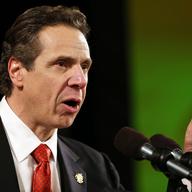
New York Gov. Andrew Cuomo zeroed in on teachers early during the legislative session.
He said bad teachers were robbing poor and minority children of that right to a good education that could pull them out of poverty.
“In the unfortunate case we have a chronically ineffective teacher, who in despite our help does not improve, we must protect our students by removing the chronically ineffective teacher from the classroom," Cuomo said.
His remarks touched off a war of words with teachers’ unions around the state that dominated much of the 2015 legislative session.
But educators on the front lines — those who work with the students in the schools that struggle most to pass reading and math tests — said Cuomo’s argument ignored a key factor, one beyond teachers’ control: poverty.
In the Mount Vernon School District, administrators say impoverished students often come to school with social, emotional and, sometimes, physical problems that interfere with learning. Parents work multiple jobs and cannot be at home to assist with homework or take off to attend workshops on testing that would benefit their students.
Students also wrestle with hunger, low self-esteem, or a lack of physical care.
The stakes for good test scores are high. Teachers face job loss or delayed tenure when their students perform poorly. Districts with consistently low scores, meanwhile, risk losing students to nearby charter schools. And when kids leave, so does the per-pupil funding the state allots for their education. Cuomo has promoted charter schools as an alternative to public schools. More recently, he has been campaigning for an educating tax credit to benefit private and parochial schools.
The Mount Vernon School District is one of eight in the state that have joined together and sued the state for more than $1 billion in funding they say would provide services for students who are behind, and don't have support at home.
Ken Hamilton, the district's superintendent, said he sees a cycle of poverty in the district that has to be broken and that to do that, the district needs proper state funding to provide for the needs of the students, and even their families.
The district did get $90 million in the state budget for the 2015-2016 school years. That's a $10 million boost over last year. But district officials said it's still less than what the district is due. An earlier lawsuit resulted in a plan to pump more money into schools — particularly those in poor cities — but the monies were frozen, and later cut, in the 2010 school year as a result of the recess, and never really made back up.
Ken Silver, the district's business manager, said Mount Vernon is maintaining services with the funding it gets, but it has gone years without fixing dilapidated buildings that are in serious disrepair, updated textbooks, or providing pre-kindergarten to all eligible children in Mount Vernon. He estimates the district is owed as much as $100 million more.
Whether they get that money could be clear this summer. That is when a decision on the law suit is expected.

WNYC is funded by sponsors and member donations