Review: "We Wanted a Revolution" a Radical Affirmation of Black Women Artists
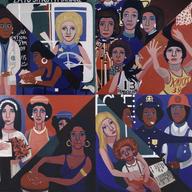
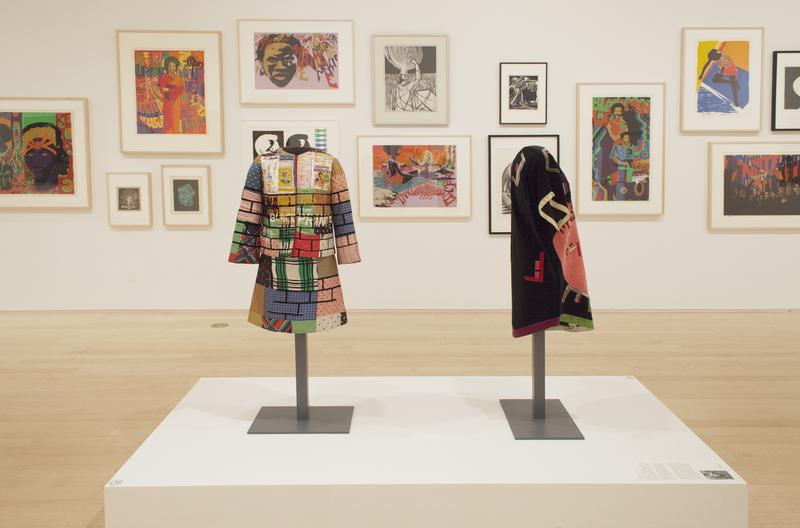
"We Wanted a Revolution: Black Radical Women, 1965-85" at the Brooklyn Museum is an eclectic watershed of vivid, glorious resistance and pointed political commentary. Curated by Catherine Morris and Rujeko Hockley, the exhibit includes a broad array of work from artists, writers and visionaries, such as Faith Ringgold, Betye Saar, Elizabeth Catlett, Barbara Chase-Riboud and Lorna Simpson.
Standouts include Catlett's bronze bust of a black man's head staring into the crosshairs of a target, an interesting choice for an exhibit about black women given that the black male is often held up as a stand-in for the entire black experience. Also Dindga McCannon's "Revolutionary Sister, 1971," a mixed media piece on wood with Jacob Lawrence-esque blues and green, oranges and reds, is simultaneously militant and serene.
There's a whole print section in the exhibit that features articles and mixed media from the 1970s, including a New York Times Magazine cover story by Toni Morrison that surveys how black women feel about "Women's Lib," indicative, of course, of the decades-long debate about where and when black women enter, or are even considered in the feminist movement.
It's a lot to take in, and if you are looking for a linear walk-through, you won't find it here. There is audio presented as both art and commentary, and some seemingly tangential displays — letters written by various art figures and administrators in protest of a 1979 exhibition by white artist Donald Newman called "The N***er Drawings," are interesting to see laid out under glass, and it's sort of thrilling to see one that is cc-ed Romare Beardon. But otherwise, it feels misplaced in the context of the overall exhibit.
See "We Wanted a Revolution" for the ways in which black women have always created art, and how that art has always been both beautiful and political, provocative and fearless.

WNYC is funded by sponsors and member donations