SAVEUR's Adam Sachs & Stacy Adimando Dish On Pasta
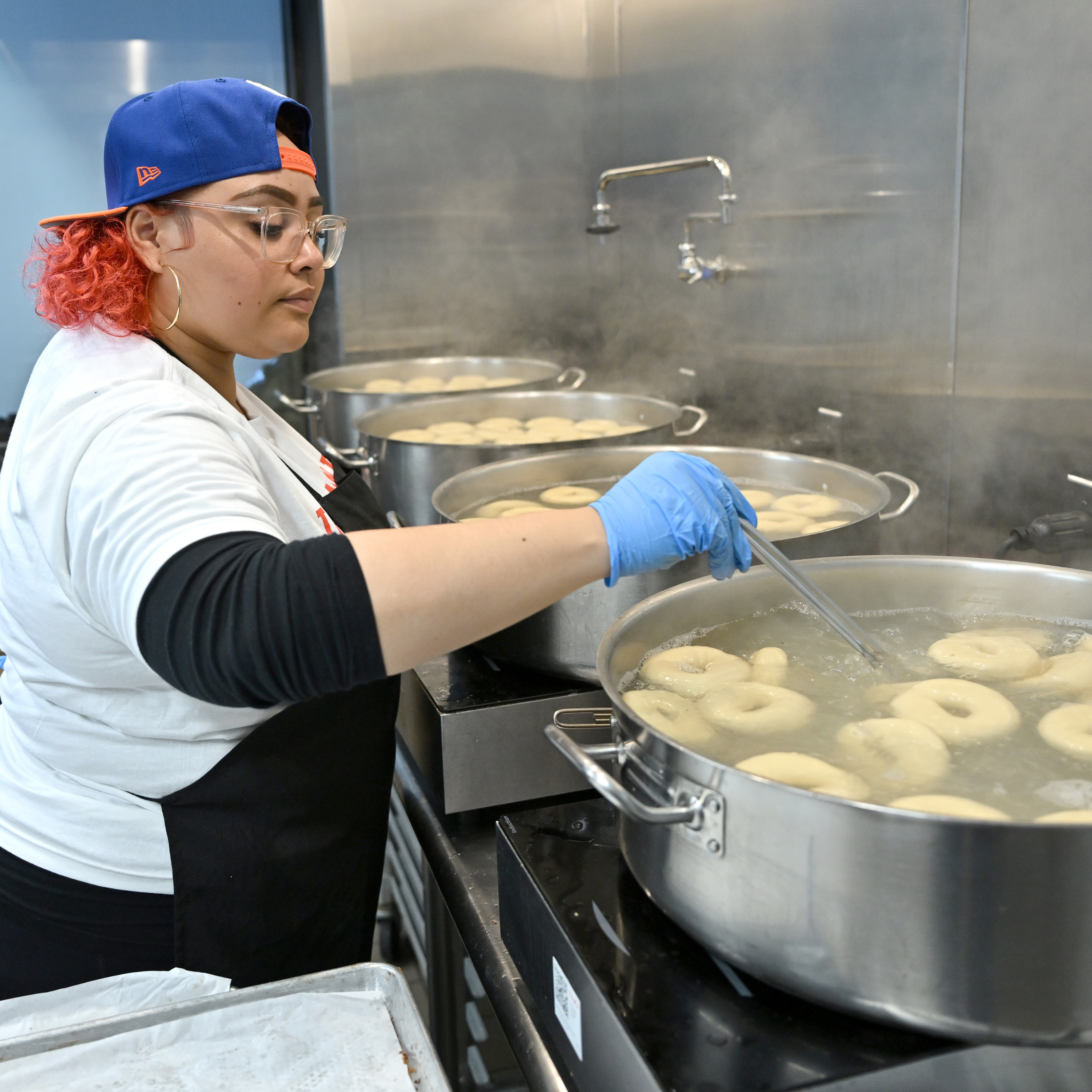
SAVEUR Magazine's editor-in-Chief Adam Sachs and its Test Kitchen Director Stacy Adimando joins us to talk about the magazine’s October/November issue, which is dedicated entirely to pasta! They’ll also discuss Adimando's article “Every Pasta Tells a Story,” which includes recipes that aren't well known outside their home regions. The article explores dishes like Lorighittas with shrimp, mussels, and orange as well as Blutnudeln with Blood Sausage Bolognese, and learns about the people, ingredients and traditions behind them.
Check out these SAVEUR recipes below!
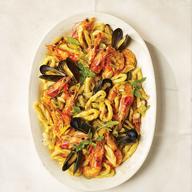
Lorighittas with Shrimp, Mussels, and Orange
Serves 4
Active: 1 hr. 20 min. • Total: 2 hr. 20 min. (plus optional overnight resting)
Made by looping a slender strand of dough around two fingers, then carefully twisting the pieces into what looks like a thin rope, Sardinian lorighittas take time and, ideally, multiple makers. Let the pieces dry slightly before boiling to best preserve their shape, resting them on a surface heavily dusted with semola flour to help prevent sticking and warping when lifted. Leave the heads on the shrimp for a deeper, sweeter seafood flavor, and finish the pasta in a combination of fresh orange juice and the juices from the cooked mussels.
2¼ cups plus 3 Tbsp. semolina flour, plus more as needed
6 Tbsp. extra-virgin olive oil, divided, or more as needed
2 garlic cloves, thinly sliced (1 Tbsp.)
1 lb. fresh mussels
1 cup very thinly sliced spring onions or scallions, mostly light green and white parts
1 bay leaf
Sea salt or kosher salt
Freshly ground black pepper
16 medium, head-on shrimp (about 1 lb.)
Finely grated zest and fresh juice of 1 orange
About 5 saffron threads
Fresh basil leaves, for garnish
1. Make the dough: In a large bowl, add the flour and 7 fluid ounces water; mix with a fork until well combined. Use your hands to gather the dough into a loose ball, then turn the ball out onto a clean work surface and knead vigorously, adding a little more flour as needed, until the dough is smooth and elastic, 5–7 minutes. Wrap in plastic wrap and refrigerate for at least 1 hour and up to 1 day.
2. Meanwhile, cook the mussels: Set ½ cup water next to the stove. In a medium saucepan over medium-high heat, heat 2 tablespoons olive oil. Once hot, add the garlic and cook, stirring frequently, until fragrant but not yet browned, 30 seconds to a minute. Add the water and bring to a strong simmer. Add the mussels and cover the pan. Cook, shaking the pan occasionally, until the mussels have opened, 3–4 minutes. Remove the mussels and their juices to a bowl, and let cool slightly. (Discard any that do not open.) Reserve the mussel juices. Pick about three-quarters of the mussels from their shells and discard the shells; reserve the rest whole.
3. Form the lorighittas: Working with small pieces at a time, roll the dough out into long thin ropes, about 1/8 inch thick and 11 inches long. Pinching one end of the dough between your forefinger and thumb, wrap each piece twice around 2–3 fingers. Pinch the ends together gently to seal the loop, then grab an end of the ring with each hand. Twist each collection of strands in opposite directions so that the pieces wrap around each other and create what looks like a rope or braided ring. Transfer to a baking sheet or flat board dusted liberally with semolina. Let dry slightly.
4. When ready to serve, bring a large pot of water to a boil. In a large saucepan, add 2 tablespoons olive oil, the green onion, and the bay leaf over medium heat; season with salt and a generous amount of black pepper and cook, stirring occasionally, until the onion is softened slightly, 1–2 minutes. Move the onion to one side of the pan and add the shrimp to the other side in a single layer; raise the heat to medium-high. Cook, turning the shrimp occasionally, until well seared all over and cooked through, 6–8 minutes total. Remove the shrimp to a plate and keep warm. To the pan with the onions, add ¼ cup plus 1 tablespoon each of the orange juice and reserved mussel juice. Quickly add all of the mussels and the saffron; let cook 1 minute to heat through.
5. Meanwhile, salt the boiling water generously and add the lorighittas; cook until the pasta naturally floats to the top of the water, 4–5 minutes. Using a slotted spoon or spider, transfer the lorighittas to the onion mixture. Add 2 tablespoons of the pasta cooking water, or more as needed to make the mixture saucy, and stir to coat the pasta. Remove the bay leaf and discard. Add the shrimp, the remaining 2 tablespoons olive oil, and more salt and black pepper to taste.
6. Transfer the pasta to a serving bowl. Top generously with orange zest and fresh basil, and serve.
Grano Arso Orecchiette with Zucchini Leaves
Serves 4
Total: 40 min.
Farina di grano arso, or “burned wheat flour,” originally referred to the flour made from scorched wheat scavenged on burned fields in Puglia. After harvest, farmers set fire to the remains of the year’s wheat crop to help fertilize the soil and control weeds and pests. It is believes that poor farm workers and neighbors were allowed to pick up any toasted bits left behind, which were ground into flour for pastas and breads.
“This is a very simple Pugliese dish from northern Murgia Barese,” says Antichi Sapori’s chef Pietro Zito, from whom this dish was adapted. “It was part of a historic period of poverty, so along with the zucchini they also ate the small leaves and cute buds of the plant.” Dried grano arso orecchiette (available online) is sauced with little more than extra-virgin olive oil and the juicy, succulent-like leaves of the zucchini plant to let the toasty flavors of the pasta come through. Blanching the leaves and stems softens any spiky fibers or lightly furry coatings.
3 cups tender, small leaves and shoots from a zucchini plant, large ones halved
Salt
¾ lb. store-bought or homemade grano arso orecchiette
3 Tbsp. extra-virgin olive oil, plus more as needed
4 large garlic cloves, thinly sliced
Freshly ground black pepper
Ricotta salata, for garnish
1. Gently rinse the zucchini leaves and pat dry with clean kitchen towels. (You can shave away any especially spiky parts of the plants if desired, but they will soften when cooked.)
2. Bring a large pot of water to a strong simmer; salt it generously. Set a large strainer over a large bowl and place it next to the stove. Working in 2–3 batches, add the zucchini leaves to the boiling water; cook just until wilted but still bright green, 30 seconds to a minute. Carefully remove to the strainer and repeat with any remaining leaves.
3. Bring the water up to a strong rolling boil and add the orecchiette. Let cook until al dente, about 5 minutes total.
4. In a large, high-sided skillet, 2–3 minutes before the pasta is done, heat 3 tablespoons extra-virgin olive oil over medium-high heat. Add the garlic and cook, stirring constantly, until lightly browned and toasty smelling, about 2 minutes (do not let burn).
5. Using a spider or large slotted spoon, scoop out the orecchiette and transfer to the skillet with the garlic; add a generous pinch each of salt and pepper and stir well to coat the pasta in the oil. Add the zucchini leaves; drizzle with another tablespoon or two of olive oil and season with salt to taste. Toss gently, adding up to a few tablespoons of the pasta cooking water as needed to keep the pasta moistened.
6. Ladle into shallow bowls and serve generously garnished with grated ricotta salata.
Mandilli di Seta with Pesto
SERVES 4
Active: 35 min. • Total: 1 hr. 5 min.
Served in square sheets, this pasta, with a name meaning “silk handkerchiefs” in Italian, resembles thin lasagna noodles and is often served with traditional basil pesto in Liguria. In this version, classic to Liguria and adapted from Da Laura, a tiny restaurant on the cove of San Fruttuoso, the pasta is lightly coated with pesto and draped onto the plate in a series of layers before serving.
1½ cup plus 1 Tbsp. 00 flour, plus more for dusting
¼ tsp. kosher salt
2 large eggs
1 Tbsp. white wine
2 Tbsp. olive oil, divided
Pesto Genovese (recipe follows)
1. In a large bowl or on a clean work surface, sift the 00 flour and salt. Make a well in the center of the flour and add the eggs, wine, and 1 tablespoon of the oil. Using a fork, stir to combine. Once the wet and dry ingredients are combined, use your hands to form a rough dough.
2. On a lightly dusted work surface, knead the dough until smooth and elastic, 10–15 minutes. Cover with plastic wrap and let rest about 30 minutes.
3. Generously dust a baking sheet with flour and set it next to a workstation. Cut the dough into even quarters. Lightly flour one of the dough pieces (cover the others with the plastic wrap and set aside). Using a pasta machine or rolling pin, roll out dough into very thin sheets (use either the second finest or finest setting on a pasta machine, or roll until the dough is almost translucent). Trim into 5-inch squares and set on the baking sheet.
4. In a large, heatproof bowl, add the pesto. Set it near the stove.
5. Bring a large pot of salted water to a boil and add the remaining tablespoon olive oil. Working in a few batches as needed to avoid crowding, add the pasta sheets and cook until tender, about 2 minutes. As the pieces finish cooking, carefully remove them with a spider or large slotted spoon and place in the bowl with the pesto.
6. Once all the pasta is done cooking, transfer ¼ cup of the pasta cooking water to the bowl of pesto and gently toss the sheets in the pesto until evenly coated. Transfer to a serving platter and serve immediately.
Pesto Genovese
Makes ½ CUP
Total: 30 min.
When making their signature pesto, locals in Liguria exclusively use sweet, delicate basil genovese and go as far as tasting every clove of garlic—and removing any green sprouts from the center—to avoid bitterness or overpowering the leaves. For the silkiest and brightest pesto, look for soft and delicate leaves with no signs of browning, and muddle the ingredients in a marble mortar with a wooden pestle; a blender’s blades can be too violent.
2 Tbsp. pine nuts, preferably Italian
1 tsp. kosher salt
2 garlic cloves, preferably a delicate red-skinned variety, peeled
2 bunches sweet Italian basil, leaves picked, thick stems removed (2 packed cups)
6–8 Tbsp. olive oil, preferably Ligurian
¼ cup Parmigiano-Reggiano
¼ cup Pecorino Fiore Sardo (Pecorino Sardo)
In a large mortar (preferably marble), add the pine nuts, salt, and garlic cloves. Using a large pestle (preferably wooden), pound and scrape the ingredients into a very smooth paste, 5–7 minutes. Add the basil in small amounts, working it into the mixture after each addition, until all the basil has been added and the mixture is smooth and creamy looking, 15–20 minutes. Slowly add the oil while stirring with the pestle until emulsified. Add both cheeses and stir with the pestle until incorporated.
Spinach Balanzoni with Brown Butter and Sage
Serves 6
Active: 2 hr. 15 min • Total: 3 hr. 30 min., plus optional overnight resting
The alluring bright green color of balanzoni (a pasta similar to a larger tortellini) comes from puréed spinach, which is added to a dough of super-refined 00 flour and eggs. “In Bologna, they always use 00 flour,” Funke says. “It’s a very rich city, so there’s that long and deep-seated mind-set that refinement—super white flour—is the top. So why would you use anything else?” The fillings, like the shape, are similar to tortelli—typically ricotta and parmesan cheese, ground sausage like mortadella, and beaten egg. You’ll see balanzoni served with a ragù bolognese, but most typically they’re served with butter and sage, which satisfyingly settles into the pasta’s channels and folds. Fair warning: Balanzoni require a little more dexterity than some other filled pastas because you fold them in the air rather than against a table.
For the dough:
3 cups (4 oz.) fresh spinach, large stems removed
2¼ cups plus 3 Tbsp. “00” flour (350 gr.), plus more as needed
3 large eggs
For the filling:
⅓ cup (3½ oz.) whole-milk ricotta
9 oz. mortadella, cut into cubes (2 cups)
1⅓ cups (3½ oz.) grated Parmigiano-Reggiano, plus more for serving
1 large egg
Scant ¼ tsp. freshly grated nutmeg
Kosher salt
For the sauce:
4 Tbsp. (2 oz.) unsalted butter
8 fresh sage leaves
Kosher salt
1. Make the dough: Set a medium pot of heavily salted water over high heat and bring to a boil. Add the spinach and cook until soft and bright green, 5–7 minutes. Strain and rinse with cold water to stop the cooking, then, using your hands, squeeze out as much moisture as possible. Set aside.
2. In a small food processor or chopping by hand, process the cooked spinach into a purée (you should have 3 tablespoons or 1¾ ounces; discard any excess).
3. On a clean work surface, pour the flour into a mound. Create a deep well in the center and add the eggs and spinach. Using a fork, beat the eggs and spinach. Then, starting from the interior wall of the well, gradually incorporate the flour into the wet ingredients as if scrambling eggs, until a thick pancake batter–like consistency forms. Use a bench knife or bowl scraper to cut and fold the remaining flour into the center until a shaggy mass forms; press it to form a dough.
4. With clean hands, move the dough and any remaining scraps and flour to a clean work surface. Sift some flour lightly over the board, then knead the dough until semi-smooth, about 3 minutes. Scrape the work surface of any dried flakes and continue to knead dough gently until it is smooth and supple and springs back when poked, and most or all of the flour is incorporated, about 15 minutes more. (If the dough is dry and tight, wrap in plastic and let rest for 5–10 minutes before continuing to knead.) Wrap the dough ball tightly in plastic wrap and refrigerate at least 1 hour or ideally 1 day before shaping.
5. Make the filling: In a fine sieve, drain the ricotta for 15 minutes. Meanwhile, set a medium bowl under a meat grinder fitted with a fine plate. Grind the mortadella into the bowl, then pass it through the grinder a second time (alternatively, you can mix the mortadella with all the remaining ingredients in a food processor). Add the drained ricotta, Parmigiano, egg, and nutmeg; season with salt to taste and mix until thoroughly combined.
6. Pack the filling into a piping bag fitted with a round tip, and refrigerate until ready to use, up to 3 days.
7. Prepare the pasta: On a very lightly floured surface using a mattarello or rolling pin, roll out the dough as thinly as possible into a large, even round (it should be at least 22 inches in diameter). Use a sharp knife or bicycle cutter to portion dough into 2½-inch squares. Using the piping bag, place a scant teaspoon of filling onto the center of each square. Picking up the squares one at a time, bring two corners together to form a triangle, then press firmly and repeatedly to seal and thin all sides and create as large a border as possible around the filling. Fold one point toward you to form a channel along the base of the triangle, then fold the opposite point similarly and bring the tips together; press firmly to thin, flatten, and create a sealed circle.
8. Set a large pot of water to boil. Generously salt the boiling water and add the balanzoni; stir immediately; cook until the pasta floats and is al dente, 1½–2 minutes.
9. Meanwhile, make the sauce: Set a large skillet over medium-high heat and melt the butter. Continue to cook, stirring occasionally, until the foam subsides and the milk solids begin to brown, 2–3 minutes. Add the sage leaves, lower the heat to low, and cook until the butter is deep golden brown and the sage is crispy and fragrant, 1½–2 minutes. Remove from the heat and season with salt to taste.
10. Strain the pasta thoroughly, then immediately add to the skillet with the butter; toss gently to coat.
11. Transfer the pasta (with the crispy sage leaves) to a platter and serve immediately, sprinkled with more grated cheese to taste.