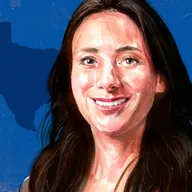
Sheila E. On Breaking Down Boundaries And Finding Solace In Music
Sheila E. was born into a percussion dynasty. Her father, Pete Escovedo, played percussion with Carlos Santana. So did her uncle, Coke Escovedo. Tito Puente was her godfather. So it might not come as much of a surprise that Sheila herself was playing percussion on stage by the age of five, and went on to launch a successful solo career and play with the likes of Lionel Richie, Marvin Gaye, Diana Ross, George Duke and Prince.
What might come as a surprise to fans, however, are some of the personal stories that Sheila E. reveals in her new memoir, The Beat of My Own Drum. Although it's long been speculated, Sheila E. confirms an engagement to Prince (he mouthed "marry me" to her during a performance of "Purple Rain" on stage) as well as one to a much older Carlos Santana when she was just 18.
She also writes about extended periods of sexual abuse in her childhood -- perpetrated by older male cousins. The traumatic experiences left her angry and confused, and unable to talk about them with her parents. So she turned to music.
"Music was one of the major healing components for me," she says in a conversation with Soundcheck host John Schaefer. "It was a way of expressing myself -- when you realize that you're angry and you're mad at everyone and not knowing why -- luckily it was the drums I got to beat on. That outlet was being able to creatively express myself without anyone saying anything to me."
Interview Highlights
Sheila E., on how her parents reacted to reading about the sexual abuse she endured as a young child:
Being a victim, you end up being told not to say anything, because you're afraid. It's still hard for [my parents] to think about it. When I do interviews, I'm very transparent about what happened, because it allowed me to be able to share my story, talk about it and help other people. It is challenging as a parent to think about that someone harmed your five year old. It's devastating, and still to this day it's hard for them to hear.
On transitioning from percussion to drums:
For me, it felt natural. The only way that I can describe it in that way is because I was an athlete. My mom was an athlete. Very competitive. And I was training to be in the Olympics -- I wanted to run track. I applied playing percussion to playing the drums. That was one way of looking at it. And when I used my feet to play, it just reminded me of running. It felt natural to play -- when I sat behind a kit, it was like, wow, this feels like home. It felt very natural for me.
On the musical relationship that she developed with Prince:
There are times musically for me that music sometimes is so powerful, you get in a place of -- you don't even notice that anyone else is there. When that happens to me, it's a good place to be. It's almost like a spiritual moment. That's what made me fall in love with music, when I got to that place and finally experienced it. It did happen a lot during the times playing with Prince. It was just a moment, and musically, when we get to this place -- him and I got there so many times -- for us, it was just him and I on stage. That's what it felt like.
On dealing with her racial identity growing up:
Where we grew up [in Oakland, California], there was either white or black. There was always a choice of, either you were white or black -- you can't be anything else but that. So you had to choose a side. My dad is Mexican and Indian, and even with him, I didn't really consider us Latin. Until I started playing soccer, I didn't realize where all those Hispanic people were coming from. It was weird to me. It was like a cultural shock. On my birth certificate it says "white." But on my mom's parents' birth certificates -- my grandmother is very Caucasian -- it says "negro." And they were born in New Orleans. I joke about it, but I do say I belong to everyone.
On becoming a sex symbol during the 1980s:
I take full responsibility of creating the monster that I was. Totally. I was like, here's my moment to shine -- this all stems back from being raped at five years old. When you grow up and you're angry and you don't know why, and everyone tells you what you have to do, then you get to a point where you say, now I get to do what I want to do. There are no rules, there are no regulations. I can do whatever I want, so you know what? I'm just going to walk around naked. That's basically what I did.
And it did affect my musicianship. Of course I got attention -- that wasn't why I thought I was doing it then. I did it because I felt good. But then later on, Lionel Richie said to me, you gotta watch what you're doing. And sure enough, the papers were saying, "What is Sheila not going to wear tonight?" It had nothing to do with my playing. And then I started to feel dirty, and I started to feel naked in the wrong way. And I realized then, I have to change this -- but I wanted to still show people that I was strong as a woman. Even though I'm playing drums, and even though you've never really seen this before, I'm still a woman.