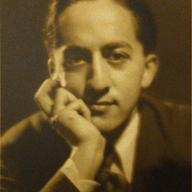
Sidney Sukoenig and Rachmael Weinstock
Sidney Sukoenig, piano, and Rachmael Weinstock, violin, perform at this 273rd Victory Concert, held at the Main Branch of the New York Public Library. Their program for the performance includes two sonatas by W. A. Mozart and Gabriel Faure and a sonatina by Antonin Dvorak. They open with the Mozart Sonata in B flat major K378 in three movements. The Faure Sonata in A Major Opus 13 follows in four movements. They conclude with Dvorak's Sonatina in G Major Opus 100.
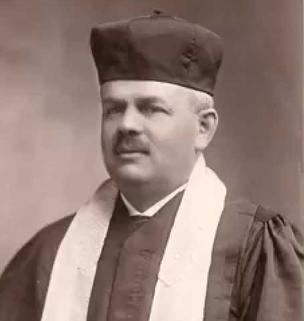
Sidney Sukoenig, the pianist, was born in New York City on August 26, 1907, the son of a famous Jewish cantor, Abraham Sukoenig, of the Park Avenue Synagogue. His father first taught him the piano, and at the age of eight young Sidney accompanied his father in song recitals. One year later, Sidney became soprano soloist of a boys' chorus at the Metropolitan Opera House, eventually supplementing this with appearances in oratorios.
Sukoenig matriculated for his B.A. degree at the College of the City of New York and graduated in 1927. His formal musical education took place simultaneously at the Institute of Musical Art, later known as the Juilliard School of Music, from which he was graduated with honors, winning the Loeb Memorial prize, the Elizabeth Sprague Coolidge prize, and the Seligman prize. He later studied with James Friskin and then with Ernest Hutcheson at the Juilliard Graduate School. He went to Europe for further study in piano with Isidor Philipp, Eugen d'Albert, Walter Gieseking, and Edwin Fischer—who awarded him a scholarship—and composition with Nadia Boulanger and Paul Hindemith.
On January 15, 1930, Sukoenig made his first public appearance when he performed the Schumann Piano Concerto with the Berlin Symphony Society. A recital in Berlin followed. "Musically warm-blooded," wrote a Berlin critic, "and in every technical respect a virtuoso, he is one of those artists who know how to fascinate their listeners.”
Concert appearances followed in Leipzig, Vienna, Hamburg, Budapest, and London. Returning to America, Sidney Sukoenig made his American debut at Carnegie Hall on November 2, 1930. "There is no question," said The New York Times critic Olin Downes, "that he has an unusual talent and the instinct of the born virtuoso." The following year, Deems Taylor wrote in the New York American, "Among the younger pianists whom you should set down as worth hearing is Sidney Sukoenig, who played a severe program in Carnegie Hall Monday evening, and made a large audience like it. He has an excellent technical equipment, pedals with rare intelligence and discrimination, and has an unusual range of tone and dynamics."
According to Carnegie Hall, Sukoenig's all-Bach recital of November 13, 1937, was the first in the history of the hall.
Besides recitals and appearances with orchestras, he concertized with Felix Salmond and the Musical Art Quartet, and in 1939-1940 he appeared in a series of chamber music concerts with the Perolé String Quartet, playing, among other works, his own Fantasy for Five, a one-movement Sonata Allegro for piano and string quartet, which had been awarded both the Coolidge prize and the Seligman prize.
Sidney Sukoenig was on the faculty of the Juilliard School until 1948, when he accepted a position as professor of piano at Syracuse University's Crouse College of Fine Arts, where he remained until his death in October 1961. While at Syracuse, he gave two faculty recitals a year, which were broadcast over radio station WAER; performed chamber music locally; and led the choir at the campus Hillel Foundation.
As a composer, he assisted his father in composing a Sabbath Evening Service for the Synagogue, published by Behrman House in 1929. He composed and published several settings of Jewish music over the years. In 2009, his son Alan discovered the manuscript of a never performed piece titled Elegy for Cello with Piano Accompaniment that Sidney Sukoenig composed in the spring of 1936 as his father, the cantor, lay on his deathbed. Alan immediately sent the manuscript to Sidney's grand-nephew cellist David Requiro, who premiered the work soon afterward and has incorporated it into his repertoire.
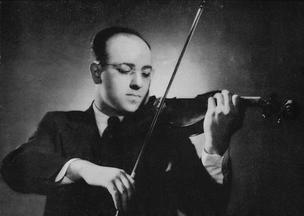
Violinist Rachmael Harry Weinstock was born in Newark, New Jersey, in 1909 and died in The Bronx, New York, in 1996 at age 86. He had an early fascination with the violin and by age 14 had become an assistant to his teacher. He enrolled as a child at Manhattan School of Music where he later earned Bachelor of Music (1957) and Master of Music (1958) degrees, studying with Hugo Kortschak, Alexander Bloch, and Diran Alexanian.
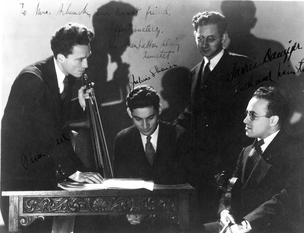
While a student at Manhattan School of Music, he and three other students -violinist Harris Danziger, violist Julius Shaier, and cellist Oliver Edel - formed the Manhattan String Quartet. Uniquely, the group performed programs from memory and made their formal debut at Town Hall in 1932. During a tour of Europe in 1935, the Quartet performed the Brahms and Franck Piano Quintets in Budapest with Bela Bartok at the piano. After their heralded 1936 tour of the Soviet Union, the group disbanded.
During the 1940's Weinstock was a violinist of the Roth Quartet and in the 1950's he was a member of the New York Trio. He played in Arturo Toscanini's NBC Symphony Orchestra for eight years, as well as in the Radio City Music Hall orchestra, Symphony of the Air, and the NBC-TV Opera Orchestra.
Weinstock appeared frequently in recital with such pianists as Dora Zaslavsky, Sidney Sukoenig, Artur Balsam, Joseph Seiger, and.David Garvey. Robert Sherman praised the violinist's "poise and sensitivity" and called his playing "beautiful" (New York Times, 1969).
Weinstock joined the Manhattan School of Music faculty in 1932, teaching chamber music and coaching ensembles. He was appointed to the violin faculty in 1933, where he taught until 1991.
He also taught at Manhattanville College, College of the City of New York, Brigham Young University, and the University of Tel Aviv, as well as privately. His students went on to join such ensembles as the New York Philharmonic, Royal Concertgebouw Orchestra of Amsterdam, and several chamber ensembles, including a later iteration of the Manhattan String Quartet.
____________________________________
Special thanks to Sidney Sukoenig's son, Alan Sukoenig, and Manhattan School of Music's archivist, John K. Blanchard, for their help with this posting. In addition we had assistance from Living Musicians, compiled and edited by David Ewen and published by the H.W. Wilson Co., New York, 1940.