State Prisons Training Inmates to Administer Overdose 'Cure'
Anthony Willingham wanted soon-to-be-discharged inmates to carry a blue nylon pouch with them at all times, once on the outside.
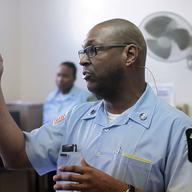
“The whole idea behind this is to do what?” asked Willingham, a correction officer at Queensboro Prison. “To get you guys to save someone’s life.”
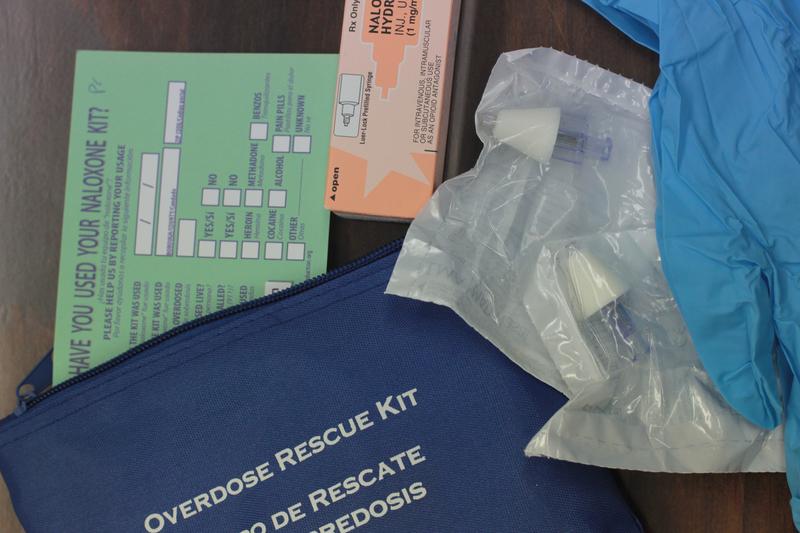
The pouches contained the drug Naloxone and a needle-less syringe used to spray a mist into the nostrils of someone who overdosed on opiods, the class of narcotics that includes heroin, morphine, Oxycontin and other prescription painkillers.
Willingham recently addressed about 30 inmates who had arrived at Queensboro, a short-term, pre-discharge prison in Long Island City. He knew that a lot of them would soon be back in their communities, where opioid overdoses are increasingly common.
Queensboro was the first facility to train its inmates to administer Naloxone and give them the kits to take home. The program has expanded to other New York State prisons over the last year.
“The first weeks and months after somebody is released from jails or prisons they have an extremely high chance of dying of overdoses,” said Dr. Sharon Stancliff, medical director of the Harm Reduction Coalition, a group that works on reducing drug-related deaths. “They’re going back to communities where drug use is widespread, so it’s both about making sure that they stay alive in those really vulnerable times, but also giving them tools to save lives in their own community, and I think that’s a very positive message for people who are leaving prison.”
Naloxone, sold under the name Narcan, has grown in popularity outside the prison walls, too, with more pharmacies selling the kits without prescriptions and many emergency response and law enforcement agents carrying the kits with them.
But as important as it was to equip people to reverse overdoses and save lives, experts told WNYC that state and local governments should invest much more in treatment for opioid addiction.
“When somebody’s overdosing, there were many missed opportunities to step in to prevent this overdose from having occurred in the first place,” said Jeffrey Wickersham, a research scientist at the Yale University School of Medicine.
Treating addiction and its underlying causes is more complex than preventing overdoses. Wickersham said effective treatment usually required long-term medication, such as Methadone or Buprenorphine, milder opioids that typically don’t get patients high.
Although that’s the broad consensus of the medical establishment — including the National Institute for Drug Abuse and the World Health Organization — this “substitution therapy” or “replacement therapy” is often controversial. Stancliff said many doctors were reluctant to prescribe these medications — but they shouldn’t be.
“There’s really nothing wrong with taking a medicine for the rest of your life,” she said. “Many people are going to be treated for their blood pressure, their diabetes, their HIV, for many years. With opioid disuse disorders, that is probably what needs to happen for a majority."
Most federal and state prisons and jails, if they treat patients at all, typically offer group therapy or 12-step programs such as Narcotics Anonymous. Evidence suggests neither worked very well, unless accompanied by medication.
At Queensboro Prison, after Willingham’s presentation, inmate Carter Ward, 55, said he was looking forward to taking the Naloxone kit with him when he gets out of prison in June, after serving 25 years for second-degree murder.
“I want to be a part of what’s happening to save lives,” he said, “because, when you’ve been in and you feel that you are responsible for taking people’s lives, if you can do anything to save someone’s lives, it shows that, ‘Listen, I’m not the same person I was before.’”
Ward and others said there were not enough treatment options for substance abuse in the state jails and prisons. And Queensboro superintendent Dennis Breslin didn’t disagree.
“We could be doing more, if we had better resources, more resources,” he said. “I think the [New York State] Department [of Corrections and Community Supervision] knows what the deal is, and I think if we had more resources, we’d be doing more than we are.”
He noted that the prison system’s Edgecombe Residential Treatment Facility had a pilot program with a drug called Vivitrol, a long-term opioid replacement that lasted 30 days.
Over the past year, a handful of discharged inmates successfully used the Naloxone kits and saved lives. One of them was Kevin Small, who a couple weeks after getting out of Edgecombe last spring, spotted a man passed out on the sidewalk. It was someone he recognized, someone he recalled had a problem with heroin.
Small called 911, got out his kit, administered a series of doses, and saw the man return to life. An ambulance came and whisked the man away. A few weeks later, when they ran into each other, the man hugged Small and thanked him.
“I asked him: ‘You going to get into a program?’ and he kinda side-skated the question,” Small said. “But he was very appreciative of what I did for him.”

WNYC is funded by sponsors and member donations