PHOTOS: The Subway Line That Changed Brooklyn Is Turning 100
It was the first subway line to go south of Prospect Park. You know it as the B, J, M, Z, L, N, R and Q lines. But in 1915, it was the BMT — the Brooklyn Manhattan Transit Corporation. It was the city's second subway line, built during the so-called Dual Contract period — when two different companies, the BMT and the IRT, built the subway system.
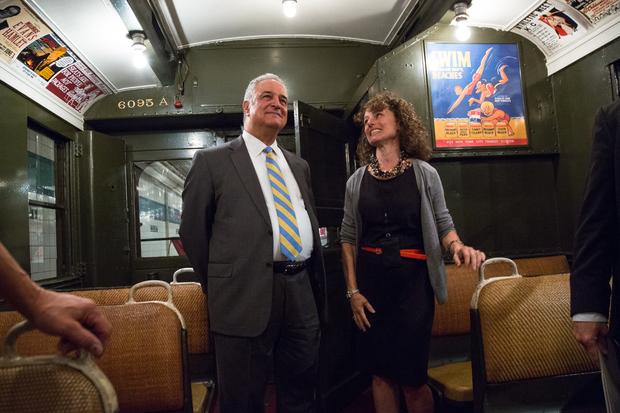
"If you're under 50 years of age," said Carmen Bianco, the president of New York City Transit, "you probably don't know that our subway system was originally built in three separate networks."
(The IND, which operated the Eighth Avenue line, began service in 1932.)
Bianco was at the New York Transit Museum on Monday to celebrate the 100th anniversary of the BMT.
Prior to the building of the BMT, "once you got south of Prospect Park, there really wasn’t that much development," said historian Joe Cunningham. "There were still farms, there was still open areas. When the system was completed, with all four lines going to Coney Island, it totally changed. It developed Brooklyn.”
It also was a trend-setter for the subway going forward. "The BMT was an innovator," said Bianco. "Propulsion, braking, car coupling and door control...the IND system owes much to the BMT, as does the rest of our current NYC subway operation."
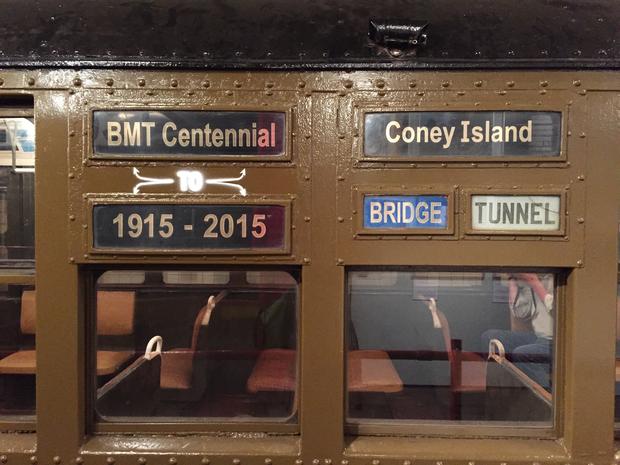
Bill Allcot, the MTA's superintendent for car equipment, sees the history of Brooklyn written in one of the BMT's original cars. Much like the borough itself, the cars started out as spacious and uncrowded. But then ridership grew.
"As the city evolved," he said, "they needed more seats for capacity. Hand grips" — stanchion poles placed at different intervals in the car — "were an extra modification."
As were overhead poles to grab on to. And then more room was needed for standees, so drop-down seats were permanently placed in the upright position.
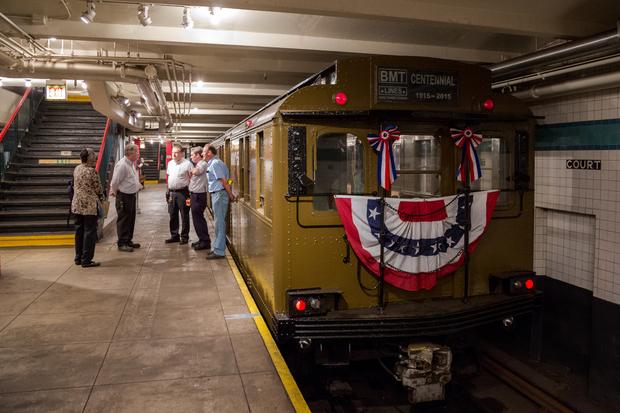
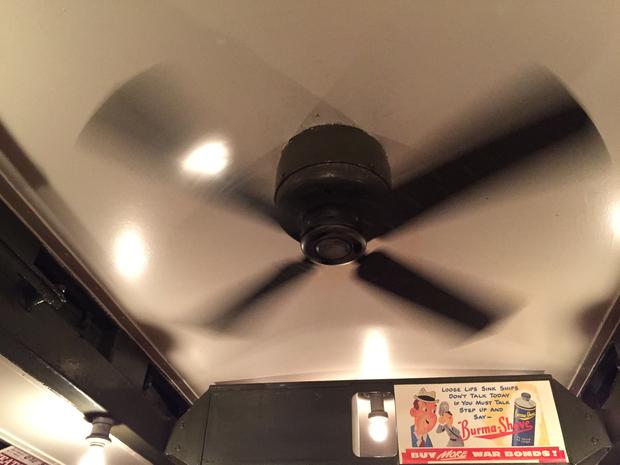
And air conditioning? Forget about it. The cars had ceiling fans, as well as a vents on the roof. "The vents open in both directions," said Allcot. "As the train is moving, cool air comes in, and the warm air exits."
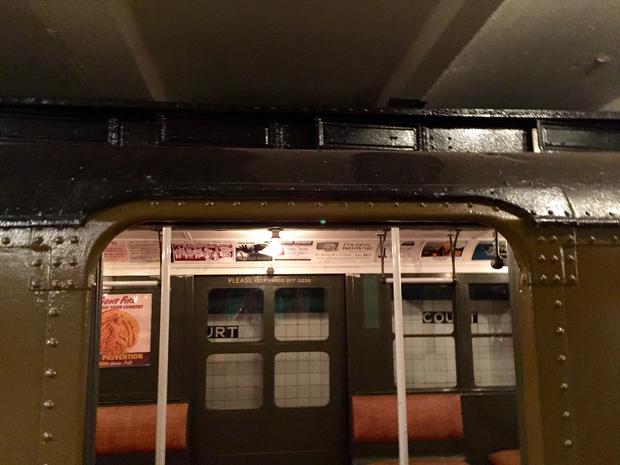
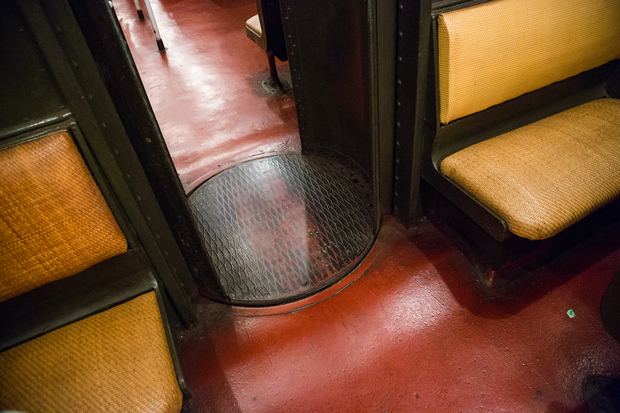
The cars were illuminated with 36-watt bulbs. It made for dim lighting — but stronger bulbs would have meant hotter cars. The seats were originally wicker, although women complained that when it frayed, the wicker destroyed their stockings. (A wicker-emulating plastic was pressed into use.)
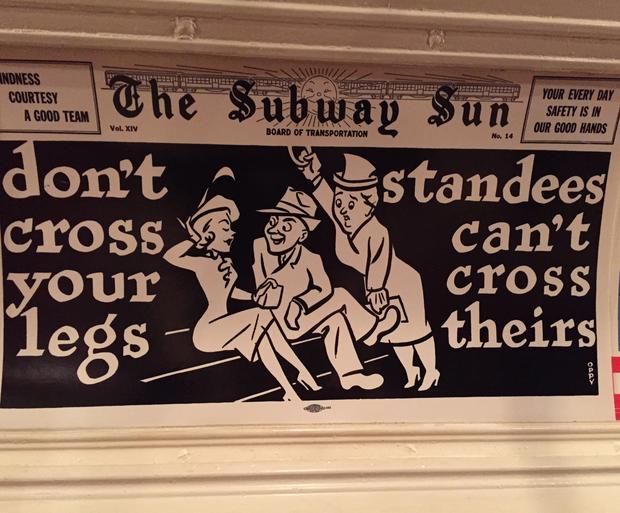
The new subway line not only brought development all the way down to Bay Ridge, it turbo-charged Coney Island. For a nickel, Manhattanites could get on at Chambers Street, take a subway over the Manhattan Bridge, ride down Fourth Avenue on what's now the N line, and then arrive at the ocean in under an hour. (Fun fact: that's how Coney Island became known as "Nickel Empire.")
And you too can travel back in time the weekend of June 27 and 28, when the MTA will operate nostalgia trains as part of the BMT's centennial. According to its website, "customers can ride the vintage subway cars between noon and 4 p.m. with just the swipe of a MetroCard. The Brighton Beach


WNYC is funded by sponsors and member donations