Uprooted: The 1950s Plan to Erase Indian Country
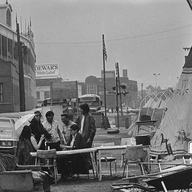
In the 1950s, government pamphlets and films promised that Native people who agreed to relocation would find a better life in cities. But when they arrived, they were met with open discrimination and struggled to find good jobs and housing. As their numbers in cities grew, however, Native Americans from hundreds of different tribes found each other and solidified their political power. They created American Indian Centers and schools, and formed activist organizations like the American Indian Movement.
Today, about two-thirds of Native Americans live in cities, not on reservations. Many Native people have joined the middle class, but termination and relocation did long-term damage — and the effects are still evident. Native Americans are at the bottom of lists of grim statistics when it comes to poverty, drug addiction, and homelessness.
The silver lining is that Native Americans have entered a new era of Indian policy call “self-determination,” which recognizes tribal sovereignty. This has empowered a new generation of Native leaders to return to reservations with the aim of making them self-sufficient and economically successful. They’re doing this with their urban relatives in mind — and expanding the scope of nationhood beyond geographic borders.
This documentary looks at how native leaders are confronting inequities and charting their own, uniquely indigenous future.
This program is complementary to "Spotlight on Indigenous Relocation".
Airs Saturday, November 23 at 3 pm and 10 pm on AM 820.