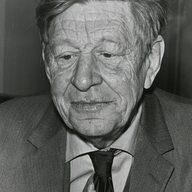
W. H. Auden
Douglas Cooper conducts an interview with Pulitzer Prize-winning poet, W. H. Auden at his fall/winter home on St. Mark's Place, New York City. (Auden's last-ever interview, followed by analysis from Auden author and expert, Dr. James D. Brophy)
The Interview
Auden recalls growing up in a region of limestone landscapes and mining. One day a friend asked why he doesn't write, and at that moment he knew that was what he was going to do.
You've got a subject that intrigues you, and then you've got issues with diction. When you can bring those two together, you can write. What you think you've done, is to have found something from your unique perspective as a person who can say I, that is of sufficient interest to share with other people. Poetry makes it the better to enjoy life or to endure it. The second thing is, this is our chief means of breaking bread with the dead.
Auden says he'll pull things from the publisher if he no longer believes it. Then it's a "forgery." And he sometimes revises, for language, not for thoughts or feelings. Finally, you've got to write for your age, say 64, not for a hypothetical date, like May 17, 1971.
"I've had a very lucky life". Even though the world can be a pretty depressing place. I've lived through two World Wars, the Depression, Hitler.
He resides fall and winter in New York, spring and summer in Austria. He says he does most of his writing in Austria. "Here, I don't even go out; but I guess it's useful to be reminded of the horrors of City life."
Behind the Scenes
I waited until the evening, and called W.H. Auden about 8 PM to propose an interview. He told me he'd been fast asleep. I apologized and said I'd call again. Three days later I called at 6PM. He was sound asleep, and I asked if he'd suggest a good time, to which he answered, "late morning."
On one intervening day, I spotted a photograph of his haggard visage in the newspaper, at the opening of a homeless shelter on the lower East Side, near where he lived. The caption read, approximately, "Arrival on the first day at new indigent facility".
Auden, known for his unpublished acts of kindness to aid complete strangers, had the poet was interpreted to be awaiting a handout, rather than providing a gift.
_______________________________________________________________________________________________________________
The Douglas P. Cooper Distinguished Contemporaries Collection (1967-1974) contains rare interviews with influential writers, statesmen, artists, songwriters, journalists and others who have left their mark on our culture.
The Origins of The Cooper Collection

WNYC is funded by sponsors and member donations