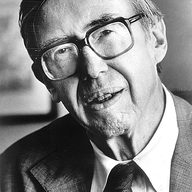
Walter Lord
Douglas Cooper drove to Manhattan for a long recording session with author Walter Lord. Though Lord was very prolific, his journalistic work on the Titanic disaster of April, 1912 addresses all the key failings which combined to cause what he titles A Night to Remember, and was the subject of our discussion.
The Interview
Cooper starts from scratch as Lord describes his early interest in the Titanic "as a hobby," at age 9 or 10. However, it was his editor's suggestion—years later—that he write the book.
Asked about his research for the tome, Lord explained that because it was an accident, the survivors didn't gather at one geographic point, but headed for homes, domestic and abroad. So he wrote letters to the editors of major New York and Chicago papers, and England's Manchester Guardian. He rounded up 67 eye-witness passengers from the night of the sinking.
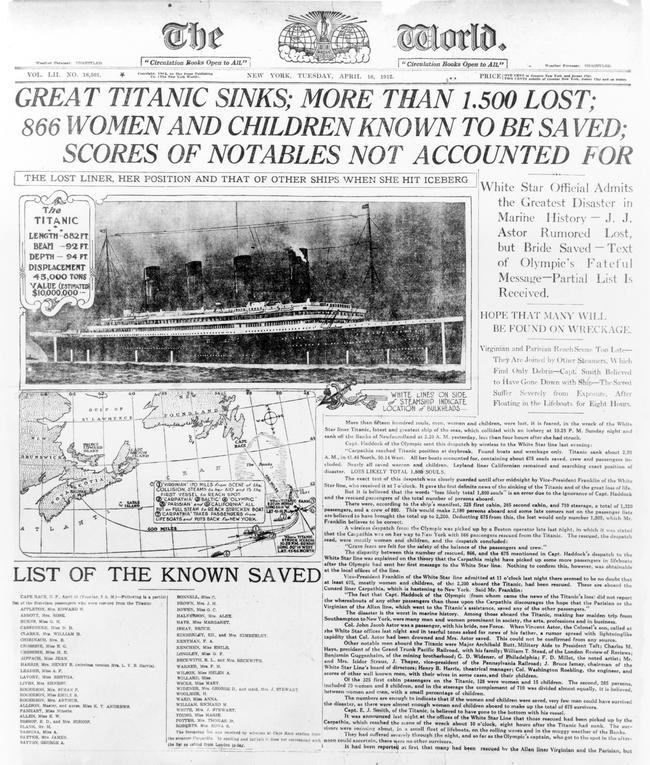
Ultimately, a sequence of naive moves, coupled with hubris on the 45,000-ton liner, were the root causes of loss of life. The captain ignored warnings of icebergs; life went on as usual after the iceberg cut a 300 foot gash in the ship's side, filling 5 of 15 compartments with water; the radio operator was taking trivial passenger messages, and was using the new SOS vs. the established CDQ for emergencies.
The Chairman of the White Star Line, Bruce Ismay helped passengers deboard. The wealthy co-owner of Macy's, Isador Straus and his wife Ida, determined to stay with the liner, while Ismay ultimately took an empty lifeboat to safety on the rescue ship Carpathia. The Strauses died, while Ismay lived on in infamy.
The beautiful first class of the Titanic, with its fine wood and stained glass became vertical descending by the bow. And not only were there insufficient lifeboats for all the passengers, they went off less than half full.
During the rescue ship's four days to New York, disparaging rumors became tabloid journalism. While Lord told me that it was a "mixed bag," the gallantry and bravery displayed by many of the late departures onto lifeboats was a hallmark of the day. The single most influential feature of that night was the damage to America's confidence in technology.

WNYC is funded by sponsors and member donations