When Black Athletes Took a Stand (Part 2)
In the second of two segments looking back at the 1968 Olympic Games in Mexico City, we examine the decision of the rising young basketball star Lew Alcindor to boycott the games. While the games are now remembered for the iconic moment in which U.S. sprinters John Carlos and Tommie Smith raised their fists on the medal podium, the man we now know as Kareem Abdul-Jabbar decided not to play for the United States that year, at the start of his career, instead conducting a, "boycott of one," from his native Harlem.
Sociologist Harry Edwards formed the Olympic Project for Human Rights in October 1967, to protest racial segregation in the United States and elsewhere, and racism in sports, in general. Edwards explains that the project was informed by the inhumanity of the treatment of African Americans in the U.S., but it was also about the human rights, of "all humanity, even those who denied us ours."
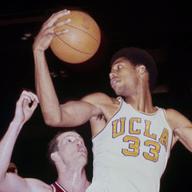
The group advocated a boycott of the 1968 Summer Olympic Games in Mexico City. One of the stand-out speakers at their meetings was Lew Alcindor, a 7-foot-2-inch center at UCLA who had taken the college basketball world by storm. By the time he graduated, he would lead the Bruins to three consecutive national titles and an 88-2 record.
We know him today as Kareem Abdul-Jabbar, but even then the young athlete had a keen social conscience. He hailed from New York City and had witnessed the riots that broke out Harlem, in 1964, after police shot and killed a black teenager. He talked to the group about the fear he had felt that he would be shot, as a young, very tall, black man running from the unrest. And he had also been profoundly affected by the murder of Emmett Till in Mississippi nine years earlier.
When the boycott largely failed to materialize, African American sprinters Tommie Smith and John Carlos made the Olympic team, won gold and bronze and famously raised their fists on the medal podium, in what became known as a, "Black Power Salute," during the playing of the US national anthem.
(Smith and Carlos changed sports history. That's Part 1 of our story.)
“The black athlete is the most influential, most important, most visible black employee this country’s ever produced,” said ESPN commentator Howard Bryant, the author of The Heritage: Black Athletes, a Divided America and the Politics of Patriotism. “When you start thinking about integration and change in this country, where did it come from? It didn't come from the sciences and the humanities. It really did come from these black athletes.”
Even though his form of protest was less visible, Alcindor explains that he received, “a firestorm of criticism, racial epithets and death threats.” In one interview on the "Today Show," NBC sportscaster Joe Garagiola, Sr., suggested Alcindor leave the country, if he did not want to put his talents to work for it. The college player thought his career would be permanently damaged by the decision. But of course, it was not.
He went back to UCLA where a supportive coach and Alcindor's extraordinary talent led to an astonishing college career, and later the NBA. He has won six MVPs and became the all-time leader in points scored and career wins—a record that stands to this day. Meanwhile, he began his conversion to Islam and, in 1971, began publicly using the name Kareem Abdul-Jabbar.
Abdul-Jabbar continued to take stands on civil rights issues and, in 2016, emerged as a prominent defender of San Francisco 49er quarterback Colin Kaepernick shortly after he kneeled during the national anthem—the latest example of “The Heritage” of social protest by black athletes.
For more segments in our series, 1968: 50 Years Later, visit our series page.

WNYC is funded by sponsors and member donations