WQXR: A Call Letter Primer
New York’s classical music station is WQXR, and, if you’ve listened to it during a station break, you know its programming is also transmitted by WQXW in Westchester. But what about WQXQ, W59NY, W2XQR, and W2XR?
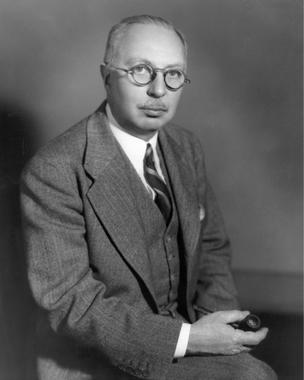
It all began in 1929 with the last, which actually started out as a television station – well, an experimental television station. It was run by John V. L. Hogan in a lab in space shared with a garage in Long Island City, with an antenna on the roof.[i] TV requires both pictures and sounds, and in 1929 those were transmitted either consecutively or on two different stations. Hogan’s stations operated at frequencies well above the AM-radio band.[ii]
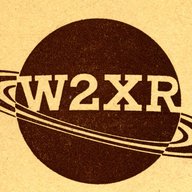
In 1933, the Federal Radio Commission authorized double-bandwidth radio stations just above the AM band, and the first was licensed to Hogan’s W2XR. W was the designation commonly used for stations in the eastern part of the U.S.; 2 was the designation for the New York and New Jersey zone; X was experimental, which characterized television in those days; and R was the first letter of Hogan’s company, Radio Pictures.
Hogan played classical music records on the sound station when he was transmitting still images (radio facsimile), and some radio listeners were able to pick up those transmissions.[iii] Seeking a larger audience, Hogan sent his engineers to businesses in the neighborhood to adjust their radios so they could tune in W2XR. Taking advantage of the double-bandwidth station, Hogan was able to transmit high fidelity and got special transcription recordings that were of higher quality than the usual fare.
Eventually, the sound broadcasting took over from the television. W2XR went from a 50-watt transmitter in 1929 to 250-watt in 1934, and, when it became a commercial radio station in 1936, 1,000-watt. What should the commercial station be called? Q rhymes with 2, and, when written in cursive script, even looks like 2, and it’s the first letter of quality. WQXR was born, but the changing call signs weren’t done.
WQXR’s initial double-bandwidth channel allowed high-fidelity transmission but not freedom from interference. For the latter, Edwin Armstrong developed FM. But where could Armstrong get high-fidelity content? From WQXR, of course!
A special, equalized, high-fidelity telephone line was run from WQXR’s studio (in Manhattan) to Armstrong’s station in Alpine, New Jersey, for the world’s first regularly scheduled FM broadcast on July 18, 1939.[iv] Armstrong returned the favor by lending WQXR an FM transmitter so it could begin transmitting as W2XQR on November 26 of the same year.[v]
When FM became a commercially authorized service in 1941, the call sign changed to W59NY, and, when the rules changed again in 1943, it became WQXQ. Finally, in 1948, the FM version became WQXR.
Whew!
______________________________
[i] Bill Jaker, Frank Sulek, & Peter Kanze, The Airwaves of New York: Illustrated Histories of 156 AM Stations in the Metropolitan Area, 1921-1996, Jefferson, NC, and London: McFarland, 1998, p. 169
[ii] “Early Television Stations,” Early Television Museum <http://www.earlytelevision.org/mechanical_stations.html>
[iii] Christopher H. Sterling, editor, Encyclopedia of Radio 3-Volume Set, New York and London: Fitzroy Dearborn, 2003, p. 2582
[iv] Jaker, et al., p. 170
[v] Sterling, p. 2583

WNYC is funded by sponsors and member donations