Young Students Call for More School Diversity
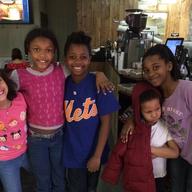
Eight-year-old Njideka Kene said she likes being in third grade at the East Village Community School. "Not to brag, but it has a lot of fun things," she said, describing its art, dance and music classes.
As an African-American, Njideka is a minority at her school, which she said mattered, sometimes.
"Some people are excluding some people out of games because of their race and of their color," she said during a recent group conversation with a reporter at a coffee shop.
The racial breakdown of the school includes more than 50 percent white students, 10 percent black, and about 20 percent Latino. It sits in School District 1 where most public school pupils are Latino and black. That racial discrepancy is one reason why families are considering a proposal to change the enrollment rules in District 1, which includes the East Village and Lower East Side.
The goal would be to distribute students more evenly among the schools by setting aside seats for low-income students. It's a topic of great interest for adults but one that most profoundly affects children which is why WNYC convened a small group of third graders from East Village Community School.
Njideka's classmate, Ismael, who is also black, said he thinks the school should "have more brown kids." He had his own experience last fall in which race was definitely an issue.
"They said I looked like I got dipped out of the barrel of poo," he stated.
The school's principal, Bradley Goodman, said he took the incident very seriously. He sat down with the other child to explain why this was such a hurtful comment and Ismael's mother said she was satisfied with the outcome. He also hired trainers to conduct sensitivity training for teachers to help them become more attuned to issues of race because they aren't always so blatant.
Njideka recalled feeling really bad when she was excluded from a game by white students.
"They tried to make stupid excuses like, 'Oh well, we haven't played this game in a really long time,'" she recalled. But she didn't buy it because, "like, I saw them playing point two seconds ago."
It's hard to tell how much of this is third graders becoming cliquish. But Njideka and her friends Naima Gomez and Maya Eaton described other cases in which they felt left out and attributed it partly to skin color.
Njideka and Ismael said they have friends of all races at their school but they thought kids would be less prejudiced, less likely to exclude people based on race, if there were more kids of color.
"If we don’t stop it now then it’s going to get a problem when we grow older and it’s going to happen to our kids," said Njideka.
Ismael added that adults should listen to kids more when trying to solve problems.
"I don’t think they’d always constantly listen to us because we are not adults, but they could actually try to listen to us because we are all humans," he said.

WNYC is funded by sponsors and member donations