A master magician on how to avoid your blind spots
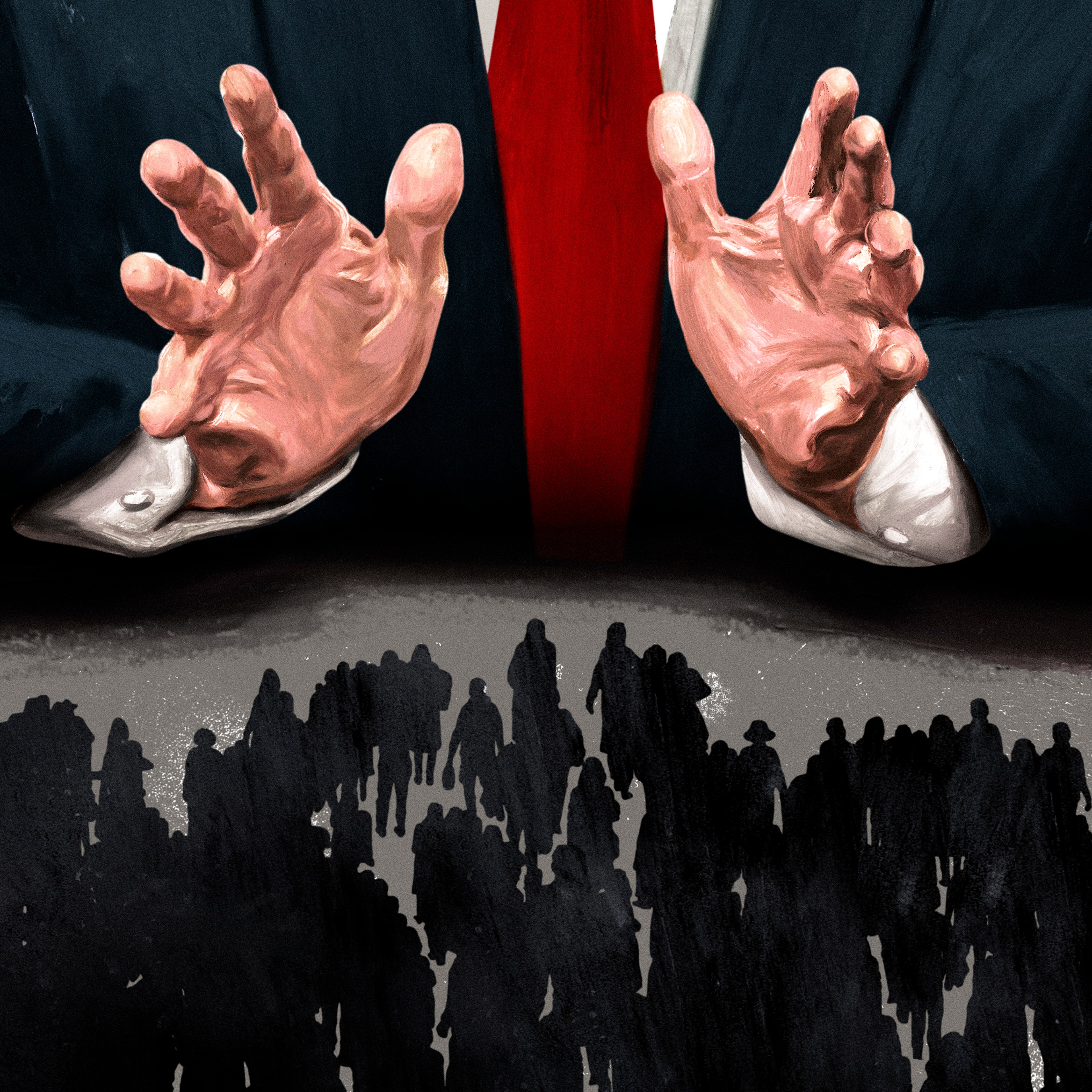
We all have our blind spots, but with AI and the spread of misinformation, we are more vulnerable to them than ever. Can we learn from a master illusionist on how to avoid falling trap to them?
Guests
Keelan Leyser, a professional magician, who’s been performing magic tricks for more than four decades. Co-author of “Unseen: Blind Spots and Why We Miss What Matters Most.”
Book Excerpt
From Unseen by David Lewis and Keelan Leyser. Copyright © 2026 by the author, and reprinted with permission of Bloomsbury Sigma.
____
____
Transcript of Full Broadcast
The version of our broadcast available at the top of this page and via podcast apps is a condensed version of the full show. You can listen to the full, unedited broadcast here:
Part I
MEGHNA CHAKRABARTI: This is On Point. I’m Meghna Chakrabarti. Today, we’re going to start off with a little magic.
KEELAN LEYSER: So we’re gonna go to my top camera so you get, like, a bird’s-eye view of my hands. You can see my hands here. Okay, so I have,
CHAKRABARTI: This is Keelan Laser. He’s a professional magician who’s been amazing audiences for four-plus decades.
CHAKRABARTI: Keelan lives and works in Las Vegas, so he did this magic trick for me over Zoom. Now, you heard him say that he has this top camera. It’s a bird’s-eye camera view, and in that view, I saw a small black wallet, slightly smaller than an iPhone. It was laying flat to the right of Keelan’s hands, and then Keelan explained to me that inside this wallet there was his lucky card I said, “I’ve got a lucky card.”
LEYSER: Just out of interest, not one of the four queens, but if you were to have a lucky, lucky card that wasn’t one of the four queens, what would it be?
CHAKRABARTI: It would be the five of clubs.
LEYSER: The five of clubs.
CHAKRABARTI: I just made that up. Is that okay?
LEYSER: Oh, okay. No, that’s fine. So it’s not a real lucky card, but for the purposes of this, that would be your lucky card.
CHAKRABARTI: Well, to the left of the wallet is a thin stack of four playing cards.
They’re one on top of the other, all face down, and all I can see is the filigreed blue back of the top card. Then Keelan explains that all the cards are queens, those four cards. They’re all queens, two red queens, two black queens, so the queen of hearts, diamonds, spades, and clubs.
LEYSER: Now, I’m gonna remove two of these queens invisibly.
That’s where your imagination part comes in. They’re either gonna be the two red queens or they’re gonna be the two black queens, but they’re gonna be two queens of the same color. So for example, I’m gonna remove one queen out there, one queen out there. I’ve slid them out, and I’ve placed them on the palm of my hand.
Now, using your imagination, which two queens have I removed? Is it the two red queens, or is it the two black queens?
CHAKRABARTI: The two red queens. As Keelan said, this part uses my imagination. He’s not touching the cards. He’s not touching them at all. His hands do gesture over them, but he is not removing any of the cards from the stack.
They remain there untouched.
LEYSER: Absolutely spot on. It is the two red queens. You can see them sitting right there, invisibly on my hand.
CHAKRABARTI: So I nailed it. My imagination nailed it. You can’t fool me. But then Keelan asks the same question about the invisible red queens. Again they’re not really in his hands.
There are no cards in his hands. But he asks, in my imagination, does he have the queen of hearts or the queen of diamonds in his palm now? And as I mentioned, he has yet to touch any of these cards. In reality, on the table, his palm is empty facing my screen.
LEYSER: So Meghna, now you can clearly see which one it is.
It’s either the queen of hearts or it’s the queen of diamonds. You can see it there invisibly in my hand, and I’m gonna stick it face up back into the stack of the four queens or the other three queens. Which one have I replaced back? Is it the queen of hearts or is it the queen of diamonds?
CHAKRABARTI: Queen of diamonds. So at this point in the trick, Keelan has yet to visibly touch the stack of cards on the table.
Then, for the first time, he grabs the stack and spreads out the four cards. Three of them remain face down, but the third card from the bottom is somehow face up, and it is the red queen of diamonds.
LEYSER: Absolutely spot on. Place the queen of diamonds back into that stack. I have spread the cards out. And one of the cards that is face up is the queen of diamonds.
Now, I was so sure you’d replace back that queen of diamonds, so unbelievably sure I placed it on a red back. And I was so unbelievably sure you’d replace back that queen of diamonds, I actually didn’t even bother needing to bring any of the other queens to the table. No. And they are all-
CHAKRABARTI: They’re all blank. Okay, so let me clarify something. So the blue cards, the four blue cards that were stacked face down on the top of the table, well, turns out one of them had a red back. It wasn’t a blue back, and that was the queen of diamonds that I had identified? That’s the only one that actually had a red back, and as you heard, the other three were all blank.
Okay, so they were all blank. I loved this, but, you know, as a hard-hitting journalist, I’ve also got to bring some skepticism to the table. So here’s what I think. Keelan only said he only said that the four cards were all queens. He never actually showed them to me until this point in the trick, so it seems pretty likely that three of the cards were always blank.
For the red queen of diamonds there was a 25% chance I’d choose that one, not terrible odds, but Keelan always gets this right, always. So there has to be a delightful sleight of hand here somewhere. But again, he never touched the cards until the reveal, so, well, I guess that’s magic. But then the trick just gets better.
Remember how I said that my lucky card is the five of clubs? Keelan then reaches to his right hand, and for the first time, he picks up that black wallet that has been sitting there undisturbed on the table. He opens up the wallet, and inside?
LEYSER: My lucky card is also the five of clubs, and you can-
CHAKRABARTI: Get out of town. So there you go. Oh my gosh. Okay, wait, wait, wait. I have to just recap this because I want to come clean with you a little bit, Keelan. I love the, the charm of magic and illusions, but I’m a skeptic. This five of clubs thing really blew my mind.
LESYER: There you go. Your blind spot’s in action for you.
CHAKRABARTI: No kidding.
Now, by the way you can see, we’re gonna have a video of this trick that Keelan performed for me via Zoom. We’re gonna have a video of it on our website, OnPointRadio.org. Be wowed, folks. It’s really awesome. Simple, but just so effective. So effective, in fact, that I did ply Keelan for the secret to the trick, and he of course abides by the magician’s code and did not tell.
But the trick was a perfect demonstration not only of how magicians and illusionists take advantage of your blind spots for wonder and amazement, but also how blind spots can leave us quite vulnerable. Think more broadly for a moment. Politics, misinformation, deepfakes, AI, even commerce in general all seek to exploit our blind spots, to make us believe things that are not true or behave in ways that we might not want to.
So who better than a magician to tell us how to protect ourselves from manipulation? That’s why Keelan has co-authored a new book along with his friend and colleague, the late neuropsychologist Dr. David Lewis. The book is called Unseen: Blind Spots and Why We Miss What Matters Most. And by the way, Dr. Lewis was a fellow of Britain’s Royal Society of Medicine, a pioneer in neuromarketing. That’s a field that’s seeking to bridge consumer behavior with neuroscience, and sadly, Dr. Lewis died last year. But Keelan Laser is here with us, and he joins us from Las Vegas. Keelan, welcome to On Point.
LEYSER: Thank you very much for having me, and that was a beautiful explanation of that routine, so thank you very much.
CHAKRABARTI: It was an explanation of how I have no idea how you did it. So, can you tell me which of my blind spots… I hope this is not being too, asking you to reveal the trick… but which of my blind spots did you take advantage of to make that work?
LEYSER: Expectation blind spots for sure. Choice blind spots. I wasn’t really managing where you look, which is where what most people think of magicians. They always think, “Oh, the hand is quicker than the eye,” or, “He made me look in a particular place while he did something, something, did something somewhere else.” I wasn’t really managing where you looked.
I was managing where your brain went. So, as I say, people always assume magic is about the eyes. And most of the time it isn’t. It’s just about assumptions. I don’t have to plant those assumptions. Your brain supplies them for free, and, it supplies them instantly. I say something, you complete it, and once you’ve completed it, in your mind you defend it ’cause it feels like your own conclusion, your own free choice.
And that’s kind of the power of it. So, it’s the gap between what I actually said and what your brain assumes I said or assumes I showed you, and that’s where every trick lies. And, it’s where advertisers and politicians live too, really, on a daily basis.
CHAKRABARTI: So we’re gonna talk about the different types of blind spots you and Dr. Lewis identify in the book. But, I just wanna say for a quick second Keelan, you’re also called a digital illusionist because you actually use digital technology and robots and AIs in some of your, your shows. So again, just to be a little skeptical here, we were doing this over Zoom, so I relied on your Zoom setup on your end in, in Vegas with the cameras and everything.
You didn’t trick me with some kind of real time deep fakery, did you?
LEYSER: I did not. I wouldn’t put it past me, but for that,no, that was just a very simple, basic card trick because we only had a few moments. I could’ve done that on your Zoom. But I was intending to do a few more things and then time was short and sadly I couldn’t do some of the digital stuff that I wanted to do.
But, if you ever come to my show in Vegas, you will see a lot of tech, a lot of AI robotics and stuff like that’s embedded and blended into my show.
CHAKRBARTI: Okay. Great. And by the way you said that show is called “Hacked,” right?
LEYSER: Correct … Hacked.
CHAKRABARTI: Cool. Okay. So we have just about 30 seconds before our first break here. Can you tell me even though you’re obviously an expert at illusions and guiding the mind as we later in the show talk through the different kinds of blind spots, does your expertise then make you immune to falling prey to similar sort of blind spots in your daily life?
LEYSERY: That’s the most humbling thing about writing this book.
Just because I’m a magician doesn’t mean I am fully immune to it. Obviously, I can be aware, but I fall for the same traps that everyone else does. Knowing how a trick works doesn’t stop it from working on you, certainly in terms of the world of optical illusions. So I can watch a colleague perform a trick that that I’ve performed hundreds of times myself and still experience the illusion.
Part II
CHAKRABARTI: Today we’re talking about your blind spots and how magicians use those blind spots for entertainment and wonder, but how the blind spots we all have leave us quite vulnerable to manipulation and exploitation. And by the way, we have an excerpt of the book at our website, OnPointRadio.org, and also there you’ll be able to find a video of the delightful trick that Keelan did with me about my lucky card.
CHAKRABARTI: So Keelan, let me ask you, first of all, you define blind spots as that space between what our brain tells us that we are seeing and what’s actually there, and that that gap is really quite large. And there’s one really salient fact about why that gap is quite large, and that is that our brain simply cannot process all the, the information that’s coming into us every second.
Can you tell us more about that?
LEYSER: Absolutely. Our brain receives 400 billion bits of information per second, but it really only selects out about, about 20. That’s how much your brain can consciously process at any one time, 20 bits. Everything else gets silently edited out before you even are aware it existed, and that’s the number that really stops people.
If your brain tried to process just 60 seconds of incoming information in full, it would take over 800 years to work through. So the brain’s solution to that is to take s- shortcuts. It predicts, it fills in the gaps, it sees what it expects to see rather than what’s actually there, and most of the time it, it works beautifully, but those shortcuts are also your blind spots.
And as a magician, I’ve spent decades learning exactly where those shortcuts are and, uh, slipping things past them, and that’s how magic works. And what David brought as a neuroscientist, as a neuropsychologist was the science of why those gaps exist in the first place.
CHAKRABARTI: Right. So I suppose intuitively this makes a lot of sense, right? Because we cannot process all the information coming into us through our senses at all times, and in order, to increase our chances of survival, I’m thinking of this from an evolutionary perspective our brains are basically pattern-seeking machines, like you said, to make sense of the world, or we focus on things in order to provide some level of predictability or be able to respond to particular dangers in our environment.
And when that happens, all other information’s just falling away because we’re focused on the danger to us. So it makes a lot of sense. But in the book you talk about how the blind spots we have emerge from what’s happening inside our brain and also what’s happening externally.
So tell us a little bit about the endogenous or the, the way our visual systems work that produce, in a sense, almost literal blind spots.
LEYSER: Exactly, and that’s a really elegant and slightly unsettling insight at the heart of the book: the brain isn’t a camera passively recording reality.
It’s more like a detective constantly making its best guess about what’s out there based on incomplete evidence and then acting on that guess. Your brain is running sort of constant predictions, and it prioritizes those predictions over raw incoming data. What you expect to see routinely overrides what’s actually there.
So internally, the blind spots comes from those prediction shortcuts, the brain filling in the gaps with what it thinks should be there rather than actually stopping to check. And as you say, that comes from evolution. And it’s a matter of survival. Those cavemen that stopped to find out more information about what that noise was rustling in the grass got eaten, and those that didn’t stop to think about it and just ran regardless of the information are the ones that produced children and survived.
CHAKRABARTI: Okay, so that focus and the sifting of information, or the distillation, let’s put it that way it’s really on display in one of the kinds of blind spots that you describe in the book. You mentioned it earlier, change blindness. So it’s like how often we don’t notice changes that are going on in our environment, and this is one that I suppose magicians use a lot to their advantage.
I’ll say in the book there’s — I won’t say exactly what it is — there’s an image in the book in this chapter, no spoilers here, but there’s an image in the chapter that then is subtly changed. And they’re side by side, the changed image and the original image.
And in the book you set us up for success, right? You say, “Look, people don’t notice changes. Their eyes tend to focus on certain things and completely ignore others. So here’s two pictures. There’s a change in it. Find the change.” And Keelan, I’ve got to say, I spent some time staring at these photos.
I was even, like, running my hands over it, and I’m like, “I am gonna find this change, and I’m going to be the person. I’m going to be the smart one who is the exception that proves the rule,” and I did not find it. Why? Why is that?
LESYER: There is a great video demonstration of that, as well. When you’re so focused on finding the change, and I’m not gonna say which one it is, because there’s over 30 in the book, something else happens to really kick you when you’re down. That’s one of my favorite ones, and I put it on social media.
And I think it was, like, not even, 95% didn’t spot the biggest change of them all that was staring them in the face the entire time, which I find fascinating. It is one of the most jaw-dropping plot of blind spots in the entire book when, I’m talking about change blindness here, because it reveals how confidently wrong we can be about something that’s right in front of our eyes.
We assume that if something changes in our environment, we’ll notice it but we don’t. Not unless our attention happens to be pointed directly at it at that precise moment. There’s another video demonstration in the book about me pickpocketing. I did a TV series many, many, many, many years ago where I went to Brighton Beach in the UK and, under the guise of doing a love test, it was really we were just trying to make something up to bring people to do this test. And, the idea was that we had this little black ball, and they would bounce the ball on a table, and the higher the ball bounced that’s how loving that they would be. Okay, so it was just basically a ruse to get them to do something. And they dropped this ball, and while they’re dropping this ball and focusing on how loving that they were or how attractive that they were, I was stealing their watch from their other hand and passing it to my friend behind them. And then, and he ran off with the watch and placed it on a board. And then they turned around, and their watch had vanished off their wrist and appeared on the board. And you can see their reactions. It’s all genuine reactions. They had no idea that their watch had been removed because they were so fixated on watching that ball bounce.
CHAKRABARTI: Oh, yeah. I mean, what’s, what’s remarkable about that is you are literally… these are watches that are bound onto people’s wrists. You are physically touching them, and they still don’t notice that the watches are gone.
LEYSYER: Exactly.
CHAKRABARTI: I mean, to me, this is what change blindness, why it’s actually so shocking because in the example of the trying to find the change in the pictures the very fact that, in this case me, but anyone, is focused on finding the change is one of the reasons why they’re actually likely to miss it.
I mean, it is so counterintuitive. And then, of course, once you’re told what the change is, it’s screaming out at you from the photo. But there’s real world, many, many real world implications to this. And you, you have tons of examples in the book. One of the ones that I actually found most intriguing were tests that were done on radiologists who were looking at X-rays or scans of cancerous parts of the body.
Can you tell us a little bit about sort of what this was, what this test found?
LEYSER: Yes. So there is the famous gorilla experiment, a very famous study in psychology. It’s, um, the invisible gorilla where, um, participants are asked to watch a basketball match and they’re asked to count how many passes that the basketball players make from the team in white to the team in black.
And, they’re so focused on watching the basketball that they miss a guy in a, in a gorilla outfit literally walk across the court and then the spectators are asked did they spot the gorilla and a good proportion of those people never spots the gorilla. That same experiment was also done on radiologists.
They were given scans and a little gorilla was placed in the scans and they were so focused on looking for the cancer that they missed the gorilla actually on the scans. And if it can happen to them, it can happen to anyone. The kind of radiologists examine, looking for cancer nodules, these were expert radiologists, highly trained, highly experienced, looking carefully and they still missed it. Twenty out of 24, I believe, was the statistic that missed it completely. They’re looking straight at it and their brain simply did not register that the gorilla was on the scans.
CHAKRABARTI: It’s fascinating just because they’re experts at their field, it doesn’t make them, how can I put it? It doesn’t make them immune to falling prey to certain blind spots.
LEYSER: Exactly.
CHAKRABARTI: And again, because they’re human. It has nothing to do with their expertise. But what’s raised here is like, okay all of us, when we get focused on seeking out one thing, we miss information about everything else.
So my question to you then would be, if part of the goal here is to protect ourselves from being manipulated due to the existence of in this case, change blindness, how could we protect ourselves from that?
LEYSER: So you can protect yourself in a few ways. You can’t really eliminate change blindness completely, but you can build habits that dramatically reduce how badly it costs you. So the first thing is just slowing down before making important decisions. Change blindness thrives on autopilot. The moment you’re rushing, distracted, or on autopilot the gaps get wider and wider.
So you should actively be looking for what’s missing rather than what’s present. Most of us scan for new additions. We rarely ask what was here before but isn’t now. Training yourself to ask that second question catches an enormous amount of those. So with products and services used regularly, you know, actively compare them to how they were six months ago: volume, size, quality, price per units.
Shrinkflation is a big thing. It only works because we trust familiar packaging and stop checking. That kink in the washing up liquid bottle apparently was designed so they can reduce the amount of liquid in the bottle. Those small changes in packaging, you know, the amount of potato chips you get in your crisp bag, et cetera. There’s small changes, but they make a big difference to the bottom line of some of these companies.
CHAKRABARTI: Absolutely, and they make difference, a big difference, to the bottom line of we shoppers, right? Because if you’re paying the same or possibly more for less and you don’t even know that you’re being manipulated by by corporations. So slowing down, this is going to be a bit major theme I think. And, and looking for what’s looking for what’s not there, that is really interesting. So let’s move to the next one. This is choice blindness. How do you describe what that is?
LEYSYER: Choice blindness is when you have sometimes you have too many choices.
That can also create a, a blind spot. A Swedish psychologist called Lars Hall ran a beautiful experiment. He showed people two photographs of faces and asked them to choose the more attractive one. What they didn’t realize is that when they chose one, he quickly switched that photo for the other choice, and then people would explain why they chose that choice even though it was a choice that they didn’t make, if that makes sense.
He switched the photo for the other one. And I explain this in the book, and I show a video of exactly how he kind of did that switch. Psychologists call these kind of explanations, confabulations, stories the brain constructs after the fact to make sense of something that it doesn’t actually understand.
They’re not lying. They’re trying to generally believe an explanation that they were given, and it extends beyond photographs. Lars Hall ran the same experiment with jam flavors, with tea, and asking people to defend their positions they had explicitly rejected moments earlier, and the results were the same.
CHAKRABARTI: Choice science is fascinating. So, let me be sure I understand this. So people were asked to defend a decision that they hadn’t actually made. Is that right?
LEYSER: Yes. So for example, with the experiment with the attractive people, he had two photographs, and they would choose which one they were most attractive.
He would push the picture to them. As he was pushing the picture to them, that picture would change to the other image, and then he would ask them straight away why did they choose that image? Even though it was a completely different image, it was the other one, they defended their choice, which I find fascinating.
CHAKRABARTI: That is so fascinating. Sorry, I didn’t mean to interrupt.
LEYSER: No, no, no. It reveals something quite profound about how we make decisions. We don’t actually have as much access to our own reasoning as sometimes we think we do. The decision happens, then our brain writes a story about why, suddenly.
CHAKRABARTI: Well, the reason why I’m wondering about this is because this one is, I think, very, very important in terms of how we get along with each other in society. It’s important in politics because, we’re living in a time where a politician might say something but do the exact opposite, but the support for that politician is undiminished, right?
And it feels like there, there’s some parallel there. It’s like that is not the person or let’s say the type of policy that you voted for, but people will still stick to that person you know, ferociously. Do you think that’s a fair comparison?
LEYSEYR: Yeah, I think you put your finger on one of the most important and troubling applications of this entire book.
What you’re describing is choice blindness operating at a massive societal scale people defending positions and politicians that bear no sort of resemblance to what they originally chose with complete conviction and zero awareness that anything may or may not have changed. And it’s turbocharged by something called confirmation bias.
Once we have made a choice, our brains actively seek out information that confirms that choice was correct and filters out anything that contradicts it. And algorithms and social media are specifically also engineered to exploit exactly that.
Part III
CHAKRABARTI: Keelan, I was wondering, there’s a third type of blind spot that you go over in the book, and it’s called expectation blind spots. So what are those?
LEYSER: Expectation blind spots are perhaps one of the most dangerous of all eight because they can fool people, and they do regularly.
Your brain doesn’t wait passively for information to arrive. It’s constantly predicting what it’s about to see based on what it expects. And actually, a lot of those tricks that I did to you is based on expectation blind spots. When the reality is, when the reality doesn’t match the prediction, our brain often edits out rather than updating the prediction that it’s made.
So for example a nurse administering blood thinner, she expected the label to read ten units per milliliter. That’s what she saw. It actually read ten thousand units, and sadly the patient died. Her brain literally rewrote the label to match her expectations. A doctor reached for what he expected to be morphine, and it was hydromorphine an opioid that is five times stronger, and sadly also the patient died.
The same mechanisms exactly in aviation. Wrong airport landings have happened a hundred and fifty times in the United States in just twenty years. Pilots see what their mental map tells them should be there, not what’s actually through the windscreen. A Ryanair flight landed at a military base eight kilometers from the correct airport.
So it happens all the time, and it can have catastrophic effects.
CHAKRABARTI: Well, and then as you said, getting back to the world of digital technology, because it basically is our world these days. Not only does confirmation bias, not only is that heightened because of the way algorithms tailor the information that comes to us, but I presume it also then exacerbates this expectation bias problem, right? Because if we’re constantly being fed what we are expecting, then does that sort of narrow our ability to maybe, not recognize the unexpected, but recognize when something is not true if we’re only ever getting a diet of what we want to or what we’re expecting?
LEYSYER: Exactly, and this is where it gets alarming because the two blind spots are feeding each other in a loop that’s getting faster and more powerful every day.
The algorithm leans to what you already believe and serves you content that confirms it, and that content reinforces your expectations. Those strengthened expectations make you even less likely to notice something that contradicts them, and the algorithm reads that engagement and doubles down, and it’s like a self-tightening trap.
And what’s particularly insidious is that the algorithm isn’t neutral. It’s been deliberately designed to exploit this loop every time a sort of social media app’s bottom post is only half visible. That’s a deliberate design choice to trigger your scroll reflexes. These engineers who understand exactly which cognitive blind spots to press.
And the algorithms are designed to enrage and create debate. They want comments, and they feed you more information on what you want to see. And again, it’s narrowing your focus and widening your blind spots.
CHAKRABARTI: This links to what you call the three Fs, right? Fatigue, fear, and fury, and how when we’re in those states, our blind spots are wildly exacerbated. Let’s focus on fatigue for a second because of your examples of the doctors who accidentally gave the wrong doses or wrong medications. Again for people just sort of in everyday situations, not in the, the constant, very high-stress situation of being a medical professional, but I feel a lot of people just have a lot of information fatigue just in their daily lives in this day and age. And that I can see even in myself how sometimes it just makes my brain lazy, and I know I’m missing information that I should otherwise be picking up on.
LEYSYER: For sure. When you’re fatigued, your brain doesn’t just slow down. Its ability to detect what’s missing, what’s changed, what doesn’t match expectation collapses dramatically. All the shortcuts get wider, and the filters get coarser. The Challenger space shuttle disaster, I think it was in 1986, I think, fatigue was reported as a major contributing factor to that.
The operators had been on duty for 11 hours on their third consecutive day. I think it was 11 or 12 hour shifts. Some of the most trained technical minds in the world and their brains stopped seeing what was right in front of them. And there’s another, the Three Mile Island disaster, which was the worst accident in U.S. commercial nuclear history.
Workers failed to spot the loss of coolant water from the stuck valve, and it wasn’t incompetence, it was their exhausted brains at that precise hour when the brain’s alertness just naturally collapsed. And so that’s the critical detail really. The brain’s alertness doesn’t just gradually fade with tiredness, it specifically collapses.
So it is not an opinion, that’s neuroscience. Between 2:00 AM and 7:00 AM, your brain literally collapses with alertness, so don’t make important decisions when you’re fatigued. When you’re tired. Do step back.
CHAKRABARTI: I also am just thinking about, on a daily basis, we should probably build opportunities for us to get rested or give our brains a break. Just get off the computer and take a walk as often as you can.
LEYSER: Absolutely.
CHAKRABARTI: So, so in the book, sorry, Keelan, but I’m just mindful of the time here, actually. Speaking of attention, my attention being distracted, there’s a giant red clock in front of me. But, you do actually give some tips in the book on how to reduce our vulnerability to these three types of blind spots, and I was very fascinated to see that the first one is actually try to expose yourself to more diversity in terms of viewpoints, opinions, your personal experiences.
What is it that a diversity of experiences does to combat the blind spots?
LEYSYER: Different people literally see different things, not metaphorically. Perceptually, what your brain filters out, mine might catch. What my expectations edit away, yours might register. Diverse perspectives aren’t just morally valuable, they’re actually essential.
Every organization, every relationship, every decision-making group that surrounds itself with identical backgrounds and identical viewpoints has identical blind spots. That goes back to the, the algorithms as well. You get into your bubble of seeing the same thing confirming your bias.
You need diversity and if you’re in the same group with the same mindset, the same upbringing, nobody in that group will, everyone will miss the same things because they’re not diverse enough. So different cultures bring in lots of different people different viewpoints that, that challenge your own.
CHAKRABARTI: It’s so fascinating to me, as you said, that people can literally also see different things. It’s really amazing to me. You also talk about what we just brushed upon a moment ago, like giving yourself time, right? To review your options, to understand what may be missing to consider alternatives.
Don’t rush. That makes a lot of sense. And then there’s two of them that have to do with being vigorously self-analytical, right? You talk about questioning your own beliefs and assumptions or how you came by those beliefs, and also challenging stereotypes and how those stereotypes came about, and why are those important for reducing our blind spots?
LEYSER: Similar to diversity, to be honest with you, our beliefs and assumptions feel like conclusions we’ve reached through careful reasoning and the research shows that they’re mostly shortcuts our brains built early on and have been defending ever since. The expectation blind spot feeds directly on unexamined assumptions.
If you’ve never questioned why you believe something, your brain will keep seeing evidence that confirms it and editing out everything that it doesn’t automatically, invisibly, and constantly. Stereotypes are particularly powerful blind spot generators because they operate below sort of conscious awareness.
You don’t decide to apply a stereotype. It fires before you’ve even registered you’re making a, a judgment. Amazon’s AI recruitment tool was biased against women not because someone programmed it to be, but because it was trained on predominantly male CVs. The stereotype was baked in invisibly.
So questioning how you came by a belief is genuinely powerful. Not what you believe, but really where it came from. Was it evidence? Was it something you were told repeatedly as a child? Was it an algorithm that keeps showing you and confirming content over and over again?
So challenging stereotypes is not about political correctness. It’s really just about accuracy. Every stereotype is a prediction your brain makes before it has real information.
CHAKRABARTI: And similarly, I’m starting to see sort of how all these pieces fit together because then you also talk about how it’s important to make yourself a little uncomfortable at times, right? Step outside of the familiar so that you are experiencing new things, new people, new ideas such that, instead of making our blind spots even more myopic by being in slightly uncomfortable situations, it actually broadens the kind of information I think we can recognize or perceive or take in.
I really like that one. And then you also talk about really doing everything a person can to avoid seeing the world in sort of binary terms. Black, white, good, bad. Why is that important?
LEYSYER: It’s important to… Well, your brain loves binary thinking. It’s fast for the brain, it’s efficient. Safe or dangerous, friend or enemy, right or wrong. In evolutionary terms that speed saves your life. In a complex modern world, it’s catastrophically really limiting. The moment you decide something is really good or bad, your brain stops processing the nuance of it, and the nuance is almost always where that truth actually lives.
Think about fake news. It spreads because binary thinking makes us categorize a story as confirming what we believe or attacking what we believe. The moment it confirms us, we stop interrogating it. The moment it attacks us, we dismiss it. And either way, we never actually examine it.
CHAKRABARTI: One of the great takeaways I have from the book is something that’s been obvious to magicians and psychologists for a long time, but we’re constantly making choices that feel free to us, right?
I was free to make the choice of my five of clubs. I’m not gonna ask you again how you did that. But I’m perfectly free, right? They are influenced by the either gentle or nefarious exploitation of these blind spots. It’s really something to think about in terms of how we move through the world every single day.
But, Keelan, I wanted to actually just wrap up the last couple of minutes we have. You’re the first magician I’ve ever spoken to on this program, and I was just wondering, you’ve been doing magic since you were four. How did you get into it?
LEYSER: So I’ve been, yes, I’ve been doing magic since I was four years old.
I saw a magician, a Las Vegas magician called Lance Burton, who no longer has a show here anymore, but he did back then. I was four years old. I saw him on a TV show. I got obsessed by this magician, asked my parents for a magic set, And there’s not been a day since then that I haven’t been thinking, practicing, learning the art of magic.
And it goes full circle as well because Lance Burton and Teller from Penn and Teller were one of the two magicians, and actually Uri Geller, that wrote my letter of recommendation to get a green card to work in the U.S. And, they liked what I did and what I do, and now I’m here in Las Vegas with my own show at Mandalay Bay.
So it kind of goes full circle.
CHAKRABARTI: I love that. There’s one last thing I wanna talk with you about, and I love all of our On Point listeners, but I’m gonna hazard a guess that a lot of us think that we’re pretty smart, right? You can’t really pull a fast one on us.
But I think one of the other remarkable things in your book is that the smarter you think you are, the more likely you are to fall prey to these blind spots, Keelan?
LEYSER: It is interesting, and I learned this actually as a very young child. I was, like, 14 years old, and I had a gig. I don’t know how I got the gig, but I was 14 years old, and I was asked to do this close-up magic for a group of Oxbridge professors. And I had a lot of confidence. I was fortunately a lot more confident than I am now, to be honest with you. I brazenly went in there, and I started performing my card tricks, and I found them far easier to fool than doing a kid’s party.
And, and I found that fascinating. The professors had decades of assumptions about how the world works. Their brilliant brains are constantly filling in the gaps based on what they expected to happen, and looking back at it now, I think that their intelligence was working against them, where kids don’t have those mental shortcuts yet.
They’re watching everything with completely fresh eyes. Nothing’s taken for granted. William James described the visual world of children as a blooming, buzzing confusion, and that confusion is actually their superpower. So I just find that super fascinating.
This article was originally published on WBUR.org.